
Di inferi is not a single mythic personality but a classificatory category from Roman sacrificial and theological thinking. Classical authors and later antiquarian tradition (via Varro and ritual practice recorded in Roman literary and antiquarian sources) distinguished the di inferi from di superi (gods above) and di terrestres (terrestrial gods) by their proper sphere — the ground, pits, tombs, and the nether world — and by the appropriate mode of offering (holocausts on the ground or in foci). Over time the label was used to group named underworld rulers and spirits (for example Dis Pater, Proserpina, Orcus, Mors) and could overlap with the collective ancestral spirits called the Manes; in some ritual contexts (notably the devotio) invocations were addressed to the infernal powers under the name Di Manes. The category reflects Roman efforts to regulate relations with death and the unseen by spatial, ritual, and linguistic means rather than narrate a single origin myth (Wikipedia; Pantheon; Wikidata).
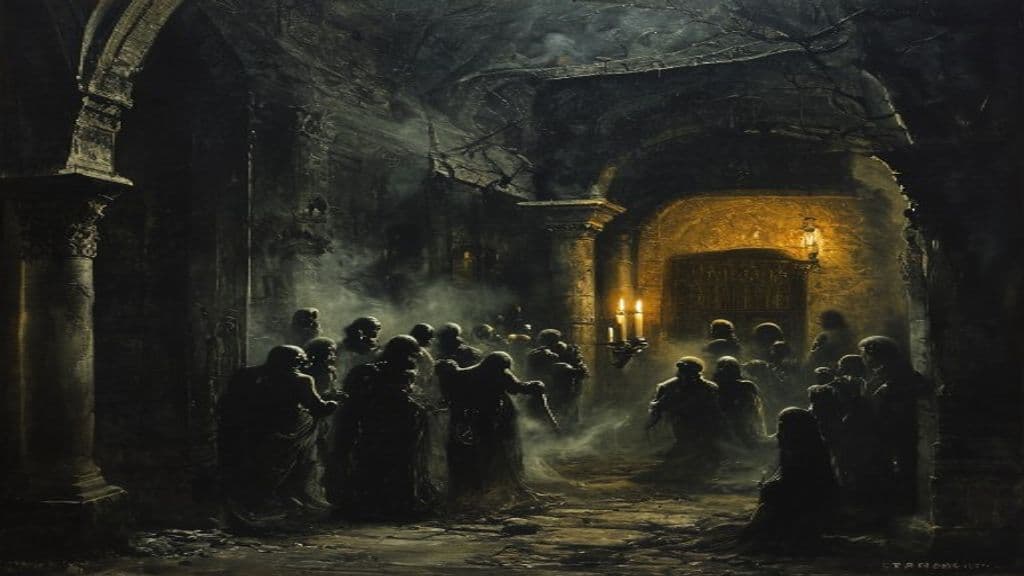
As a collective category the di inferi lack a single consistent iconography in the sources; individual members (Dis Pater, Proserpina, Mors, Orcus, Lemures, Libitina) are personified in literature and art, but the di inferi as such are described ritually rather than visually. Symbolic markers associated with them include nocturnal rites, dark-coloured sacrificial animals, and offerings performed on the ground or in pits (foci), which together convey chthonic and dark symbolism rather than a uniform anthropomorphic appearance (Wikipedia; Pantheon).
Functionally, the di inferi govern death, receive holocaust (burnt) offerings, and occupy the juridical/ritual sphere of the dead. They are recipients of funeral holocausts that integrate the deceased into the Manes and are invoked in binding spells (defixiones) and secret magic that offers enemies to underworld powers (puppies and inedible animals are recorded as chthonic offerings). Civic and liminal rites (for example the Ludi Tauri, Taurian Games, October Horse, and rites properly held outside the pomerium) propitiated them for communal aims. In extreme ritual acts like the devotio a Roman commander pledged his life and enemies to the Di Manes, showing the infernal gods could be the ritual focus for transferring danger or securing victory (Wikipedia; Pantheon).
Weaknesses
- conditionritual separation by proper practice (no shared meal with the dead)
- conditionobservance of spatial taboo (perform chthonic rites outside the pomerium)
- otherlinguistic euphemism (use of benign names for the Manes to avert offense)
Wards
- ritualperform holocaust offerings on the ground or in foci (proper chthonic practice)
- ritualkeep underworld rites and tomb-propitiation outside the pomerium
- otheruse euphemistic naming for the dead (calling Manes 'good' or 'kindly')
- substancewood from inauspicious/apotropaic trees (arbores infelices) used to burn ill-omens

Manes
In ancient Roman religion the Manes (Latin: mānēs) are a collective class of chthonic divine dead — the subterranean spirits of deceased persons — who are propitiated in household, funerary, and civic rites (e.g., Parentalia, Feralia, and foundation rites involving the lapis manalis). They appear in inscriptions (D.M., Dis Manibus) and literary commentary as an institutionalized category of the dead rather than as a single named being.
Lemures
The malevolent restless dead of Roman religion — spirits of those who died without proper burial or with unresolved grievances, haunting their former homes until appeased.
Community Record
- [1]Di inferi - Wikipedia. Wikipedia, 'Di inferi'wiki
- [2]Di Inferi: The Underworld deities of the Roman Religion | Pantheon. Pantheon, 'Di Inferi: The Underworld deities of the Roman Religion'other
- [3]Di inferi - Wikidata. Wikidata, 'Di inferi' (entity Q5270066)other
- [4]Inferi - Wikipedia. Wikipedia, 'Inferi'wiki
- [5]Prayers to Di inferi - NovaRoma. NovaRoma, 'Prayers to Di inferi' (modern reconstruction/interest)other