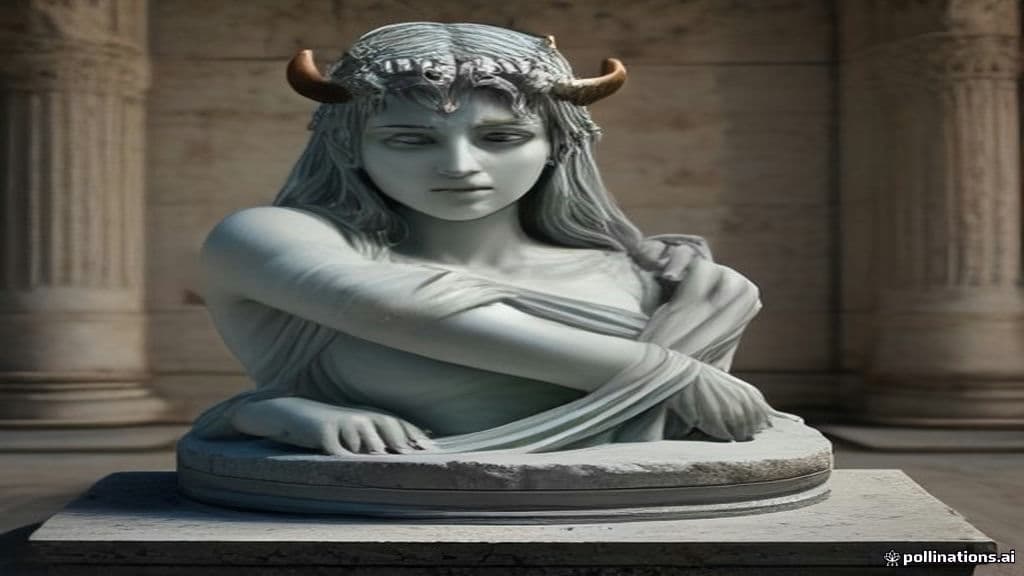
In Greek myth Dirce is a queen of Thebes, wife of Lycus. She is variously reported in classical traditions to be connected by genealogy to river-gods (variant traditions name Achelous or Ismenus) or to other divine lineages in some accounts. Dirce comes to figure in the narrative of Antiope: after Antiope is wronged and returned to Thebes, Dirce is said to have hated and treated Antiope cruelly. Antiope's twin sons by Zeus, Amphion and Zethus, later learn their mother’s identity and take revenge, killing Dirce by binding her to the horns of a bull. Where she dies a spring is said to have arisen, an event credited to Dionysus in the tradition and incorporated into Theban local ritual memory.
Literary sources preserved in the supplied materials give no detailed portrait of Dirce's living appearance. The best-attested visual representation is the violent death-scene: Dirce being tied to a bull's horns and killed. This episode is famously rendered in the monumental sculptural group known as the Farnese Bull (a Roman copy of a Hellenistic original) and the death-scene was also reenacted in Roman spectacles, making the image a prominent part of visual and performative reception.
The sources do not ascribe supernatural powers to Dirce. She is portrayed as a mortal queen notable for social actions — particularly her cruelty toward Antiope — and for being described as devoted to the god Dionysus. Her significance in the sources derives from those actions and from the aetiological/sanctifying consequences of her death (a spring associated with Dionysus) rather than from any personal magical abilities.

Dionysus
Dionysus (Ancient Greek: Διόνυσος) is a major ancient Greek deity associated with wine and winemaking, vegetation and fertility, festivity and theatre, ritual ecstasy and possession, and liminal links with death and the underworld. He is an epiphany-god who travels between worlds, whose cult includes ecstatic rites and mystery initiation.

Amphion
Amphion is a figure (or set of figures sharing a name) in Greek myth best known as the son of Zeus and Antiope, twin brother of Zethus, husband of Niobe, and famed in some traditions for using music to raise the walls of Thebes. The name also appears for several minor mythic characters (an Argonaut, an Achaean at Troy, a centaur), indicating multiple onomastic uses in the Greek corpus.

Lycus
Lycus (Ancient Greek: Λύκος, lit. 'wolf') is not a single supernatural being but an ancient Greek personal name and toponym applied to multiple mythological human figures (notably regents and rulers in Theban cycles) and to several rivers across the classical world. The extant sources present Lycus primarily as mortal mythic actors or as geographic names rather than as an independent class of spirit or creature.
Community Record
- [1]Dirce. Wikipedia: Dircewiki
- [2]Wikidata: Dirce. Wikidata entry for Dirceother