
In the Welsh/Arthurian corpus Drudwas is presented as Drudwas ap Tryffin (Treffin/Trreffin in manuscript variants), styled in a late summary as 'son of Treffin son of the King of Denmark.' He appears in court-lists (e.g., Culhwch and Olwen, later triads) as an Arthurian knight. In a later narrative preserved in Mostyn MS 146 (rendered in English translation in online repositories), Drudwas obtained three powerful birds from his fairy wife; that late tale explains his death when a command he issued to those birds was fulfilled literally. The death-episode survives in a manuscript tradition of uncertain earlier date and may be a later (post-medieval) addition to the material in which Drudwas otherwise appears as a courtly figure.
The surviving texts provide no consistent physical description of Drudwas himself. What is described are his possessions: three very large, intelligent birds variously called 'three griffins' in the English retelling and identified in Welsh tradition as Adar Llwch Gwin. Sources characterize these birds as extremely large raptors—griffin-like in some accounts—capable of understanding human speech. The manuscripts do not give details on Drudwas's clothing, heraldry, or bodily appearance.
Drudwas himself is not depicted as inherently supernatural; his notable capacity in the tradition is ownership and command of the Adar Llwch Gwin, creatures given to him by his fairy wife. The birds obey their master's spoken orders without question and understand human language. In the preserved tale Drudwas sends the birds ahead and commands 'Slay the first who may come to the field'; the birds obey the command literally and later seize and kill Drudwas when he approaches, then descend lamenting because they have slain their master.

Adar Llwch Gwin
Legendary large, intelligent birds from Welsh tradition said to understand human speech and obey their master's commands; best known for tearing their master Drudwas ap Tryffin to pieces when bound by a literal order in an Arthurian battle narrative. The term later came to be applied to raptors and metaphorically to brave men in medieval Welsh poetry.
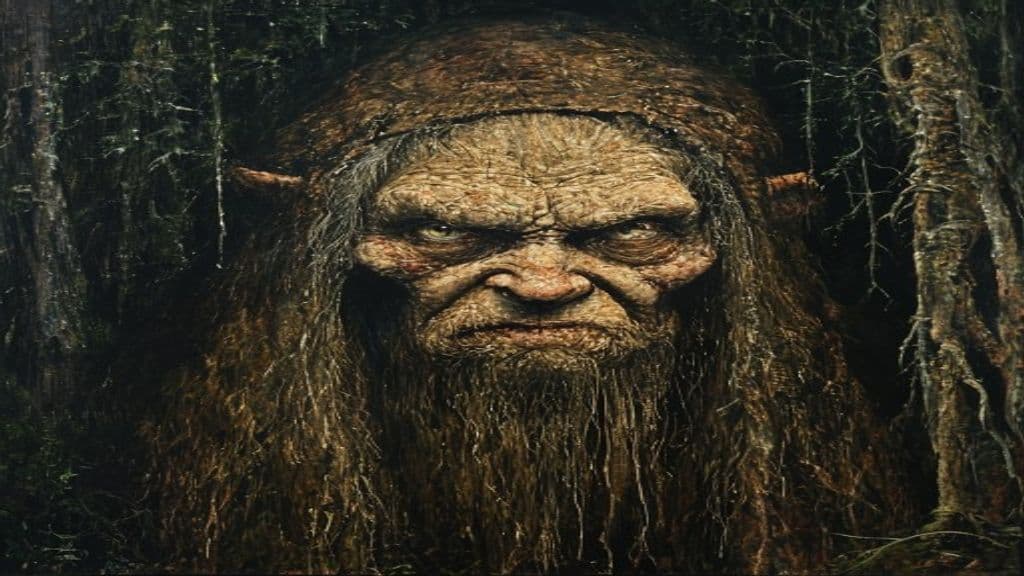
Baba Yaga
Baba Yaga is an ambivalent female figure of East Slavic folktale tradition, depicted variously as a fearsome, child-eating crone or as a helpful, maternal donor. She is associated with the deep forest, a hut described as standing on chicken legs, and the motific accoutrements of a mortar and pestle.
Adar Llwch Gwin
Legendary large, intelligent birds from Welsh tradition said to understand human speech and obey their master's commands; best known for tearing their master Drudwas ap Tryffin to pieces when bound by a literal order in an Arthurian battle narrative. The term later came to be applied to raptors and metaphorically to brave men in medieval Welsh poetry.
Afagddu
Afagddu (also Avagddu, Y Fagddu) is a figure in Welsh tradition noted for extreme ugliness and associated darkness. He appears in the Taliesin/Ceridwen narrative as the intended recipient of Ceridwen's cauldron of inspiration, and functions as a narrative catalyst within bardic origin material and Welsh triadic/name-list contexts.
Afanc
A named monstrous lake-being from Welsh tradition, the afanc is associated with specific lakes and functions as a dangerous localized supernatural hazard that appears in medieval narrative cycles and later antiquarian and local legends.
Caradoc
Caradoc is a semi-legendary heroic/ancestral figure from Welsh and Arthurian tradition, remembered in medieval genealogies and romances as a ruler of Gwent and as a Knight of the Round Table. He is treated in the sources as a human hero whose life is affected by wondrous events (enchantment, serpent-affliction, knightly tests) rather than as an independently supernatural being.
Cath Palug
A monstrous, unusually large cat from Welsh myth later adapted into continental medieval romance (Anglo‑Norman/Old French) as Chapalu/Capalu. Associated with islands, lakes, bogs, and shoreline liminal zones, it functions as a localized animal horror that confronts named heroes (Welsh Cai/Kay; continental sources often transfer the opponent to King Arthur).
Conan Meriadoc
Conan Meriadoc is a legendary ancestral founder and early medieval royal leader credited in Welsh and Breton tradition with founding Brittany (Llydaw). Presented in medieval literary and genealogical sources as a historicized king or prince associated with Magnus Maximus/Macsen Wledig, he functions primarily as a dynastic progenitor and a figure in brittonic prophetic expectation rather than as a supernatural spirit.
Creiddylad
Creiddylad is a named figure from early medieval Welsh narrative tradition, presented in Culhwch ac Olwen as a noblewoman of Arthur's court and daughter of King Lludd (Lludd Llaw Ereint). In the surviving tale she is the object of rivalry between two warriors whose annual May Day combat for her possession has been interpreted by later writers as a seasonal or 'May Queen' motif.
Cyhyraeth
A Welsh spirit whose groaning, sighing wail presages the death of a family member — heard but never seen, specifically associated with the families of Welsh descent.
Drudwyn
A fabulous wild boar figure attested in Arthurian/Welsh tradition; the sources provided identify the well-known monster Twrch Trwyth as a 'fabulous wild boar' whose hunt is narrated in the Welsh prose romance Culhwch and Olwen. The name 'Drudwyn' appears in the query but is not attested in the supplied source excerpts.
Elffin ap Gwyddno
Elffin ap Gwyddno is a human figure in medieval Welsh tradition, presented as the son of Gwyddno Garanhir and the foster-father who finds and raises the poet-seer Taliesin. He functions as a noble household member whose misfortunes and courtly trials provide the narrative context for Taliesin's prophetic and poetic demonstrations.
Geraint son of Erbin
Geraint son of Erbin (Middle Welsh: Geraint uab Erbin / Geraint mab Erbin) is a medieval Welsh legendary hero celebrated in early Middle Welsh englynion for his deeds at the Battle of Llongborth and later as the protagonist of the prose romance "Geraint and Enid," an adaptation of Chrétien de Troyes' Erec and Enide. He functions in the Welsh literary tradition as a martial exemplar situated in the heroic past rather than as a supernatural being.
Glewlwyd Gafaelfawr
Glewlwyd Gafaelfawr is a figure in medieval Welsh and Arthurian tradition presented as the chief porter (gatekeeper) of Arthur’s court and a renowned warrior. Sources portray him as a liminal institutional officer who enforces court protocol and as a veteran hero famed for prodigious size, strength, and ferocity rather than as a supernatural being.
Community Record
- [1]The Death of Drudwas (Mostyn MS 146, translation). The Death of Drudwas, text as preserved in Mostyn MS 146 (English translation online)literary
- [2]The Death of Drudwas (Mostyn MS 146, alternate online text). The Death of Drudwas, text as preserved in Mostyn MS 146 (English translation online)literary
- [3]Drudwas ap Tryffin — Wikipedia. Wikipedia article summarizing appearances in Culhwch and Olwen, triads, and the Mostyn MS 146 death-talewiki
- [4]Adar Llwch Gwin — Wikipedia. Article describing the birds given to Drudwas by his fairy wife and their character as large, obedient raptorswiki
- [5]Adar Llwch Gwin | Monster Wiki. Fandom/cryptid summary describing the birds' obedience and intelligence and linking them to Drudwasother