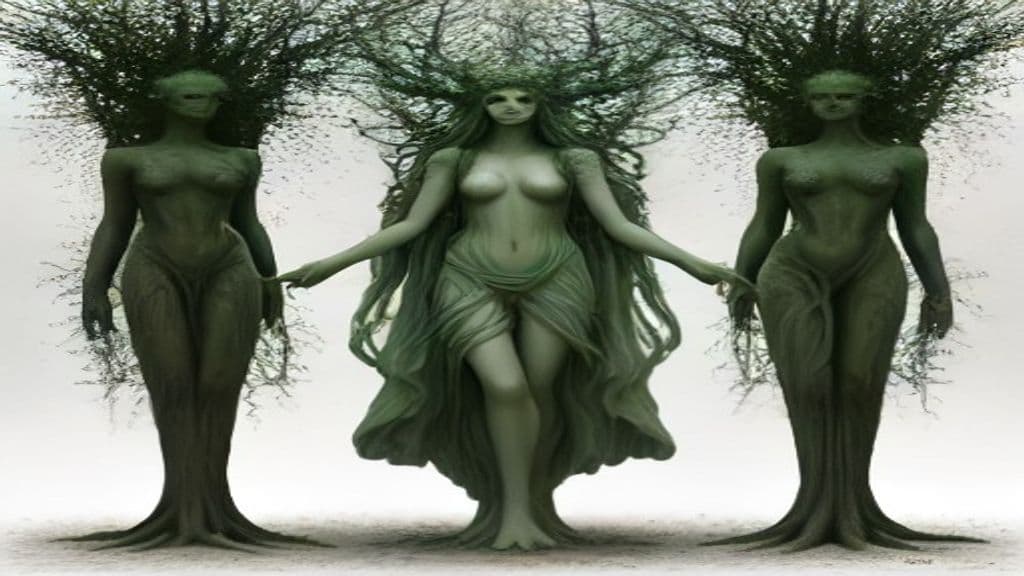
In classical Greek tradition the dryads (Greek Δρυάδες, Dryádes; singular Δρυάς, Dryás) are tree‑linked nymphs whose name derives from δρῦς (drys), meaning 'tree' and more specifically 'oak.' Certain subgroups appear in mythic genealogies: for example, the Meliae are ash‑tree nymphs whom Hesiod associates with the birth and early tending of Zeus (classical accounts cited in compilation sources). Hamadryads are portrayed in the classical corpus as nymphs ontologically bound to an individual tree so that the life of the nymph is tied to the life of that tree. Over time the English term 'dryad' has been used more broadly to denote tree nymphs in general, a semantic extension from its specifically oak‑linked Greek origin.
Classical summaries treat dryads as personified tree spirits rather than providing a single systematic physical portrait in surviving summary sources; the etymology and poetic uses imply a close identification with trees (often oak) and poetic literature addresses them with natural and arboreal epithets (e.g., Keats' figurative addressing of the nightingale as a 'light‑winged Dryad of the trees' in later literary reception). Modern and fantasy sources present a wide variety of visual depictions, but those later imaginative traits derive from literary adaptation rather than direct classical description in the supplied materials.
Sources report that dryads, as nymphs, were supernaturally long‑lived. The hamadryad subtype is explicitly described as being inextricably connected to a single tree: if that tree died, the hamadryad would die as well. Classical and summary sources also record a social‑religious function: dryads (together with the gods) punished mortals who harmed trees without first performing appropriate appeasement, indicating a role enforcing respect for trees. The provided materials do not supply a wider catalogue of supernatural powers (for example, specific shapeshifting, enchantment, or speech formulas) from classical texts; many such abilities in modern media are later accretions.
Weaknesses
- conditionLife tied to tree (hamadryad)
- otherVulnerability to mortal harm to its tree (for hamadryads)
Wards
- ritualAppeasement of tree‑nymphs
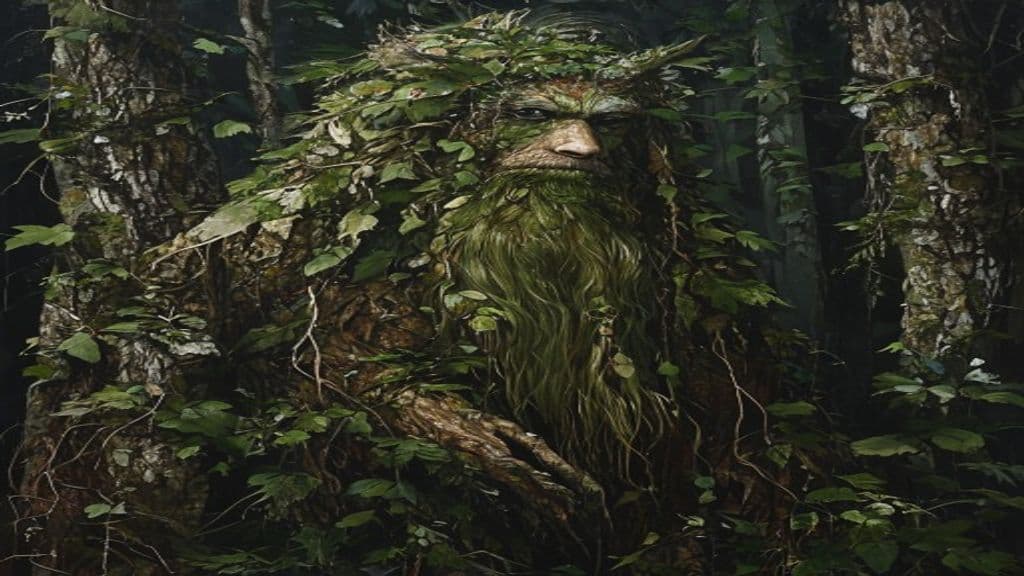
Leshy
A tutelary forest being in Slavic folklore; an embodied, territorial power of the woods that can protect, mislead, or punish humans depending on their behaviour toward the forest. Highly variable in form and described across many regional variants and names.

Hulder (Huldra)
The hulder (Norwegian huldra) is a class of Scandinavian 'hidden folk' — a forest-associated local spirit traditionally conceived as a race or kind rather than a single individual. They are counted among the rå (wardens/keepers) of particular natural places and are widely attested in Scandinavian toponyms and folk belief.

Mavka (Nyavka)
A female forest spirit in Ukrainian folklore, the mavka (also nyavka) represents the soul of a girl who died prematurely or unnaturally. Mavkas are ambivalent: various accounts portray them as alluring, dangerous seductresses who may lure men to death, while other local beliefs credit them with tending cattle and protecting flocks.
Community Record
- [1]Dryad. Wikipedia: Dryadwiki
- [2]Keats, poetic reference (as cited in Dryad entry). Keats' poetic invocation cited in the Dryad article (literary reception)literary
- [3]The Chronicles of Narnia — literary reception (as cited in Dryad entry). C. S. Lewis' use of dryads in The Chronicles of Narnia cited in the Dryad article (literary reception)literary