
Eanmund is presented in the poem Beowulf as a son of Ohthere and brother of Eadgils, members of the Scylfing (Swedish) royal kin-group. After Ohthere's death, his younger brother Onela usurped the Swedish throne; in consequence Eanmund and his brother Eadgils sought refuge with the Geats. Their exile and claim to the royal line set the stage for a military response when Onela attacked the Geats, during which Eanmund was slain. The narrative role of his death is to provide motive for later vengeance by Eadgils, an episode that the poem records and which also appears in Scandinavian sources.
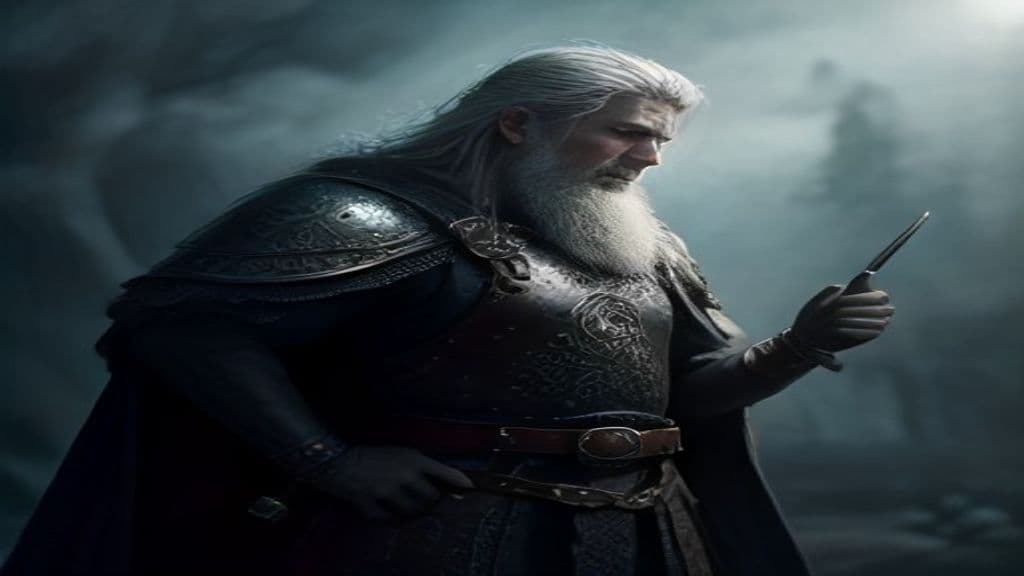
The Old English sources provide no physical or supernatural description of Eanmund. Beowulf treats him as a mortal prince and member of a royal household rather than as an otherworldly being. Linguistic scholarship records probable earlier forms of his name (reconstructed as Proto-Norse *Aiwamunduz with Old East Norse reflexes Ēmund or Āmund), but the poem itself offers no details of his stature, dress, or distinguishing features.
No supernatural abilities are attributed to Eanmund in the available sources; his role is political and genealogical. He is portrayed as a claimant to the Swedish throne whose exile to the Geats provokes armed conflict. In the poem his death at the hands of Onela's champion Weohstan and the subsequent appropriation of his sword (later inherited by Weohstan's son Wiglaf) link him into intergenerational chains of loyalty and memory within the heroic tradition. His significance lies in how his fate motivates Eadgils' later vengeance and in the transmission of his weapon as an heirloom within the narrative.
Community Record
- [1]Eanmund — Wikipedia. Wikipedia contributors. "Eanmund." Wikipedia, The Free Encyclopedia.wiki
- [2]Eanmund — Wikidata. Wikidata entry Q5325613, "Eanmund."other
- [3]Beowulf (references to Eanmund). Summary of attestations in Beowulf as presented in secondary compilation (see Wikipedia 'Eanmund' article).literary