Sources give variant genealogies and origins. Hesiod and literary traditions sometimes present Eileithyia as a daughter of Hera (and Zeus in some accounts), while other early testimonia (as reported by Pausanias from Olen and in Pindar) cast her in older or allied roles beside the Moirai, suggesting affinities with fate or pre-Greek ritual practices. The name is attested in Linear B (e-re-u-ti-ja), and scholars have argued for both Greek derivation (from ἐλεύθω, "to bring") and a pre-Greek origin; the evidence supports long regional continuity rather than a single coherent origin narrative.
Literary and iconographic sources depict Eileithyia attending births; vase-paintings show figures labelled as Eileithyiai in groups, often with raised hands in an epiphany gesture. Pausanias describes a cult image at Aigion: a wooden body covered in finely-woven drapery with the face, hands and feet rendered in Pentelic marble. Archaeological and artistic evidence thus records clothed cult statues and portrayals of one or more childbirth goddesses present at delivery scenes.
Classical texts and hymns attribute to Eileithyia the power to cause and to relieve childbirth pains. Homer describes childbirth pangs as "the piercing dart that the Eilithyiae... send," while hymnic and cultic invocations call her to "come" and bless labour with easy birth. In mythic narratives she both obstructs and facilitates parturition: for example, in the Alcmena cycle her presence delays birth in some tellings, and in the Galanthis episode mythic tradition reports that Galanthis was transformed (into a weasel) after deceiving the childbirth goddess to allow delivery. She is also depicted in some sources as seated beside the Moirai, emphasizing an association with the allotment or production of offspring.
Weaknesses
None recorded.
Wards
- ritualvotive offerings and hymnic invocations at shrines
- ritualvotive terracotta figurines of children left at cult sites

Artemis
Artemis is an ancient Greek goddess of hunting, the wilderness and wild animals, transitions (especially childbirth and puberty), vegetation, and chastity. Twin sister of Apollo and daughter of Zeus and Leto, she functions as a protector of young children and maidens while also capable of inflicting disease or punishment for transgressions against her sacred laws.
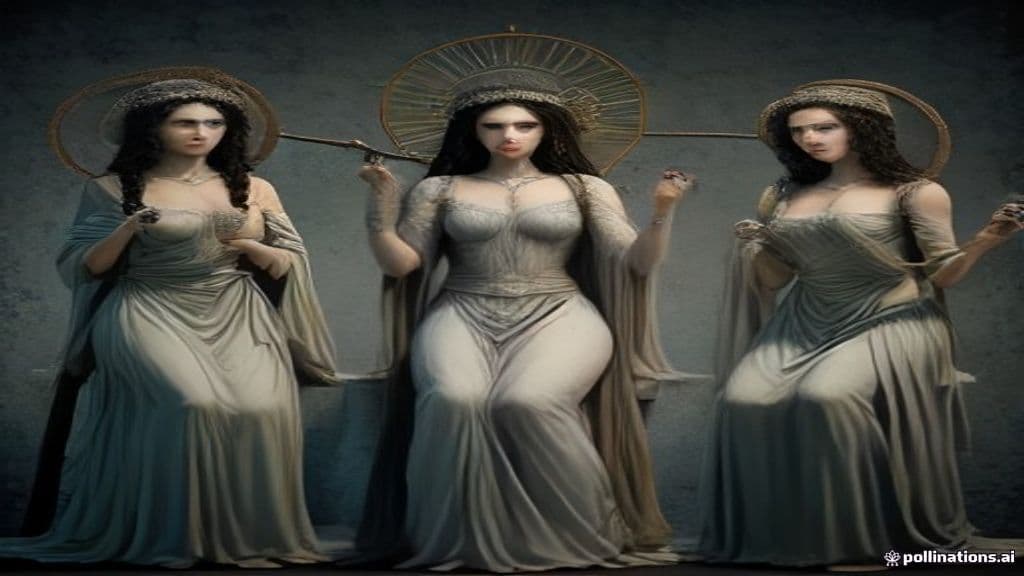
Moirai
In ancient Greek religion and mythology, the Moirai (μοῖραι) are a triad of personified destinies who spin, allot, and cut the thread of life. They function as apportioners of fate, ensuring that both mortals and gods live out the portions assigned by the universe's ordering principles.
Community Record
- [1]Eileithyia - Wikipedia. Wikipedia contributors, 'Eileithyia', Wikipedia, The Free Encyclopedia.wiki
- [2]Eileithyia Cave - Wikipedia. Wikipedia contributors, 'Eileithyia Cave', Wikipedia, The Free Encyclopedia.wiki
- [3]Eileithyia - in ancient sources @ attalus.org. Attalus.org, 'Eileithyia — in ancient sources'.other
- [4]Pausanias (description of cult statue at Aigion) — as summarized in research notes. Pausanias, description of Eileithyia's image at Aigion (summary as provided in research notes).literary
- [5]Myth summaries (Alcmena, Galanthis) — marvunapp and other summaries. Myth summaries of Alcmena and Galanthis episodes (summarized in provided research notes).literary
- [6]Show Caves: Spilia Illithias - Cave of Ilithias. Show Caves of Greece, 'Spilia Illithias - Cave of Ilithias'.other