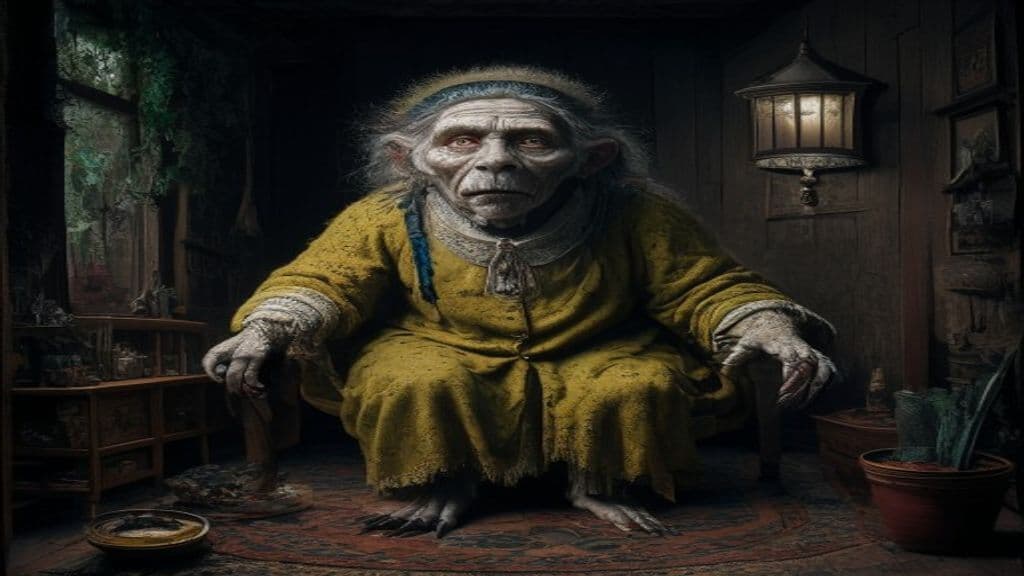
Archival and popular sources do not record a single, authoritative origin myth for El Cucuy. In the folkloric record and lullaby tradition (e.g., quoted Spanish lullaby lines, USC Folklore Archive entries) the figure functions as an unnamed night‑figure invoked by caregivers to enforce behavior rather than a being with a narrated cosmogony. Contemporary media adaptations (television) and a modern paranormal investigator's case report recast the Cucuy in new origin framings—television fiction makes it a wandering justice figure; a single investigator report treats it as a demon allegedly summoned by an occult card deck—but these are case‑specific or artistic retellings and not recorded as communal origin narratives in the archival material (Sources: USC Folklore Archive; Wikipedia lullaby; Grimm episode summary; Archive investigator report).
Traditional archival excerpts and lullaby references present no fixed physical description, treating El Cucuy as an amorphous frightening presence analogous to the Boogeyman. A televised fictional portrayal (Grimm episode) depicts a yellow‑eyed, clawed creature able to take human form (an old woman) and capable of lethal violence; this TV depiction is explicitly a creative media representation and not a canonical ethnographic description. The USC Folklore Archive entries label the figure as the Boogeyman without specifying features (Sources: USC Folklore Archive; Grimm episode summary; Wikipedia).
In folkloric use El Cucuy's primary 'ability' is social: invoked to frighten children and enforce compliance (USC archive; lullaby citation). Media adaptations attribute active supernatural agency—e.g., the Grimm television episode portrays a nomadic, justice‑dispensing being that responds to pleas, senses certain supernatural identities, shapeshifts, and kills violent offenders—while a contemporary paranormal investigator's case report frames the Cucuy as an intrusive spirit capable of attachment, growling EVP phenomena, and cross‑border movement after an alleged summoning. The archival folkloric sources do not support claims of consistent occult powers; the active, violent powers derive from a fictional episode and a single investigator's account and should be treated as modern reinterpretations (Sources: USC Folklore Archive; Grimm episode summary; Archive investigator report).
Weaknesses
- ritualRoman Catholic blessing / aspersion baptism (case‑specific)
- ritualSmudging by a psychic medium (case‑specific)
- otherDestruction of objects used in alleged summoning (burning of card deck) (case‑specific)
Wards
- ritualRoman Catholic blessing / aspersion baptism (documented in one investigator case)
- ritualSmudging (performed by a psychic medium; documented in one investigator case)
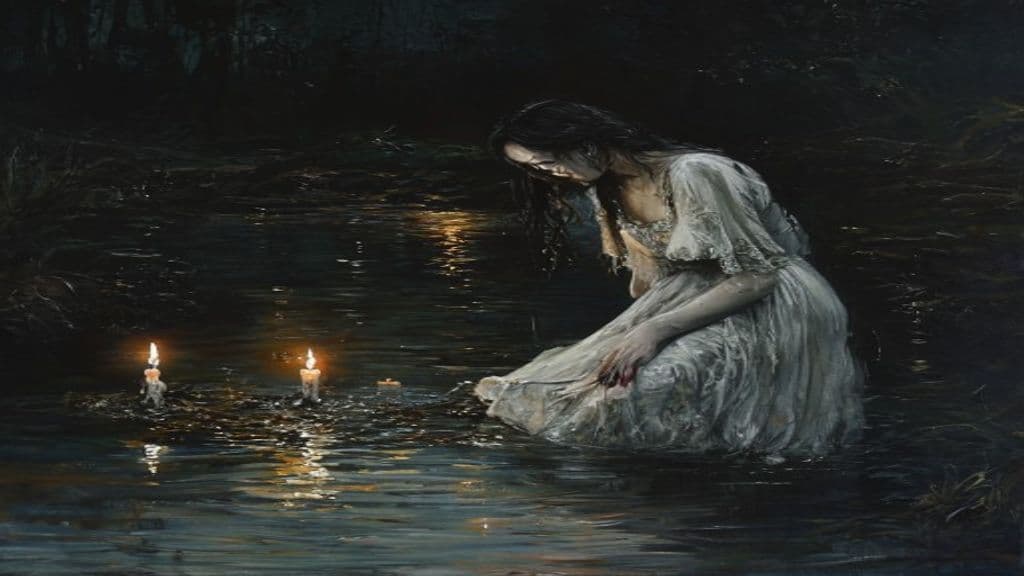
La Llorona
The Weeping Woman of Mexican folklore — the ghost of a mother who drowned her children and now wanders rivers and lakes, weeping for them and taking other children she finds at night.
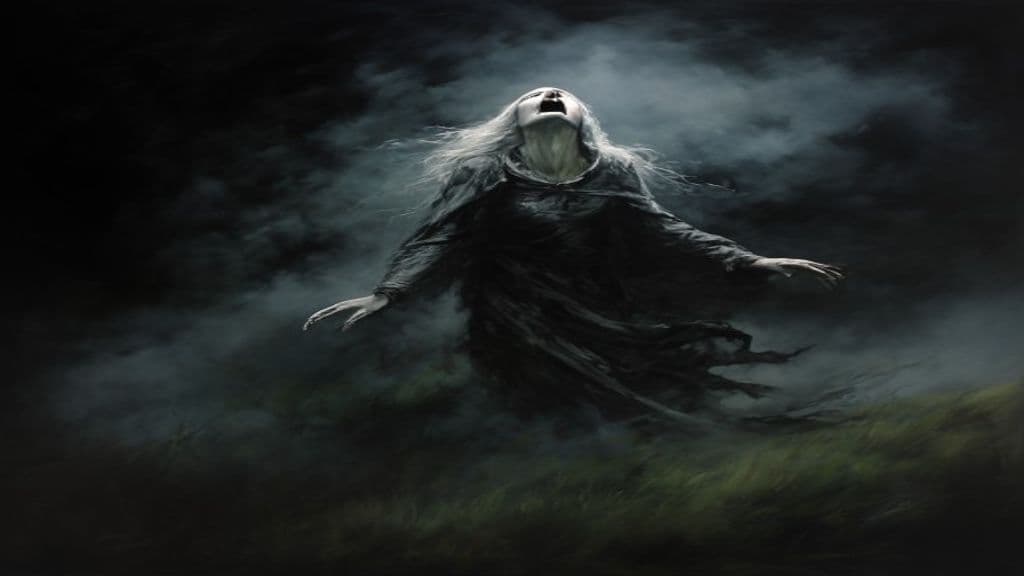
Banshee
A female spirit of Irish and Scottish folklore whose wail heralds an impending death in a family of Gaelic descent. Not a cause of death — a witness to it.

Bogeyman
A folkloric, non‑canonical monster figure invoked across cultures as a disciplinary device to frighten children into compliant behaviour; presented in sources as a flexible category rather than a single, systematized being and often used figuratively as a personification of terror.
Ekek
A nocturnal birdlike human predator from Philippine folklore, the Ekek (or Ek Ek) is a winged creature said to hunt at night for flesh and blood, particularly targeting sleeping pregnant women and draining fetuses with a long proboscis.
Ekke Nekkepenn
Ekke Nekkepenn is a North Frisian folkloric figure, presented in 19th-century sources as a composite character: Christian Peter Hansen depicted him as a sea-dwelling 'merman' with a wife Rahn, while Theodor Storm later used a similar name for a small fiery, maleficent being. The figure combines a local water-man legend with a Rumpelstiltskin-type name-motif in Hansen's retelling.
El
El (ʼEl, ʾil, ʾilu) is a Northwest Semitic term meaning 'god' that also functions as the proper name and title of a senior, patriarchal deity in Canaanite/Ugaritic and related West Semitic traditions. He is portrayed in surviving texts as the father of the gods, presiding over a divine council, a progenitor of major deities and humankind, and a figure whose attributes were later conflated with those of Yahweh in Israelite religion according to scholarly reconstructions.
El Bilga Khatun
El Bilga Khatun was the wife of Ilterish (Ilterish Qaghan), founder of the Second Turkic Khaganate, and mother of Bilge Qaghan and Kul Tigin. She appears in the Orkhon inscriptions and later historiography as a political partner and honored elite figure of the 8th-century Göktürk polity.
El Borak (Francis Xavier Gordon)
El Borak is a fictional American adventurer created by Robert E. Howard, known by the Arabic epithet meaning "The Swift" for his exceptional speed, martial skill, and guile. Set in early 20th‑century pulp adventure contexts across Afghanistan and adjacent regions, he is portrayed as a legendary human operative whose reputation mediates tribal and political conflict rather than a supernatural being.
El Caganer
El Caganer is a small, conventional figurine placed within Catalan and neighbouring nativity scenes (pessebres), typically depicted squatting and defecating. It functions as a recurring, recognisable character in the constructed visual landscape of the Christmas nativity, carrying symbolic roles including fertility symbolism, social satire, and a playful family custom of hiding and seeking.
El Naddaha
El Naddaha (Arabic النداهة, "the caller") is an Egyptian popular-legend female water spirit associated with the Nile and its canals. She is portrayed as an alluring, voice-centered figure who calls men—often by name—with a hypnotic voice, drawing them toward the riverbank where they are believed by locals to disappear or drown.
El Shaddai
El Shaddai (Hebrew: אֵל שַׁדַּי, ʾĒl Šadday) is a theonym used in the Hebrew Bible for the God worshipped by the patriarchs and Israel. The compound name is attested across Genesis, Exodus, Job and prophetic texts and has a contested etymology variously read as mountain‑, wilderness‑, destructive, or fertility‑related imagery rather than a single fixed English equivalent.
El Silbón
El Silbón (Spanish: "The Whistler") is a legendary lost-soul figure from the Llanos of Venezuela and the eastern Colombian plains, known in popular accounts for announcing itself by a distinctive whistle and for haunting open plains landscapes in regional storytelling and media.
El Sombrerón
El Sombrerón is a legendary folk character best known from Guatemala and also attested in Mexican and Colombian/Venezuelan collections; portrayed as a nocturnal suitor-like figure who courts or troubles young women, braids animal manes and tails, and travels neighborhoods at dusk with a string of mules carrying coal.
El Tío
El Tío ('The Uncle') is the subterranean lord and local spiritual power of mines in the Bolivian Altiplano (especially Cerro Rico, Potosí). Miners propitiate him with statues and offerings because he is believed to both protect and punish; his identity overlaps with the indigenous Supay and is shaped by colonial and mining contexts.
Elagabal/El‑Gabal (Elagabalus, Heliogabalus)
Elagabal (El‑Gabal), Latinized as Elagabalus and syncretized as Heliogabalus, is the Emesene mountain and sun god represented by a sacred cult‑stone (baetyl). A local Baal‑type deity of Emesa (modern Homs), the cult was historically notable for its transplantation and promotion to Rome during the reign of the emperor commonly called Elagabalus (218–222 CE).
Community Record
- [1]El Cucuy — Wikipedia. Wikipedia, 'El Cucuy' (opening lullaby quote and summary linking El Cucuy to the Boogeyman)wiki
- [2]El Cucuy | USC Digital Folklore Archives (entry 11). USC Digital Folklore Archives, 'El Cucuy' (archival entry equating El Cucuy with the Boogeyman; use in parental warnings/lullabies)folk
- [3]El Cucuy | USC Digital Folklore Archives (entry 15). USC Digital Folklore Archives, 'El Cucuy' (archival entry equating El Cucuy with the Boogeyman; folkloric context)folk
- [4]Grimm (television) episode summary — quoted lullaby and creature depiction. Television summary cited in Wikipedia: Grimm episode portrays a yellow‑eyed, clawed shapeshifting 'El Cucuy' that responds to pleas and dispenses violent justice (media portrayal)literary
- [5]A Sacramento Demon Case & Haunted Tatra Mountains, Poland (Archive.org). Archive.org investigator report documenting an alleged Cucuy summoning via a card deck, EVP growling, a Roman Catholic blessing/aspersion baptism, smudging, and destruction of the card deck (case‑specific paranormal account)other
- [6]Bogeyman — Wikipedia. Wikipedia, 'Bogeyman' (comparative concept; English analogue used to contextualize El Cucuy in archival notes)wiki
- [7]La Llorona — Wikipedia. Wikipedia, 'La Llorona' (related example of Hispanic folklore appearing alongside El Cucuy in media treatments)wiki