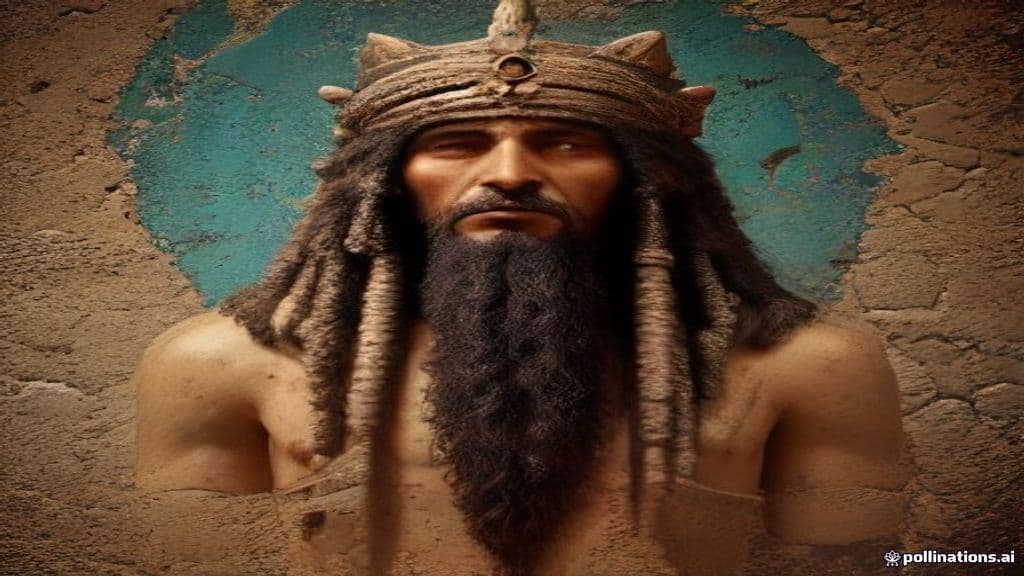
Surviving Ugaritic and Northwest Semitic texts present El as the patriarchal head of the pantheon: an elder divine figure who fathers major gods (e.g., Baal, Yam, Mot) and is a progenitor of humankind. The name derives from Proto‑Semitic *ʔil- and appears across Northwest and East Semitic languages both as the generic word for 'god' and as the proper name/title of this senior deity. In Israelite religious development El’s independent cult and attributes are reconstructed by some scholars as being gradually absorbed into the figure of Yahweh ('pantheon reduction'), though primary texts show both distinct and overlapping usages of the El-stem.
Primary surviving materials do not preserve a sustained, authoritative physical description of El. Ugaritic and related texts characterize him in relational and titular terms (father, king, elder). Scholarly reconstructions suggest that in the early Levantine milieu senior deities could be depicted anthropomorphically and with regal or bull-associated attributes, but specific iconography of El is not documented in the provided sources and such reconstructions remain interpretive.
El functions as supreme paternal authority and council presider in the Ugaritic/Canaanite pantheon; he is ascribed roles of fatherhood (of gods and of humans), kingship, wisdom, and foundational creative authority. Epithets (e.g., 'Bull El,' 'El the King') indicate strength and rulership; El appears in covenantal and treaty idioms, and is invoked in blessings (e.g., El Elyon in priestly/kingly contexts such as Melchizedek's blessing of Abraham). In later Israelite contexts many of El's attributes are argued by scholars to have been merged with or ascribed to Yahweh.

Baal
Baal (bāʿal) is a Northwest Semitic title meaning 'owner' or 'lord' that served as a theonym in the ancient Levant; in Ugaritic and Canaanite texts it appears as the name/title of a prominent storm and fertility god (often rendered Baʿal Haddu) who features centrally in the Baal Cycle and in regional cults tied to rain, fertility, and kingship. In later monotheistic literatures the term becomes a polemical label for rival or foreign deities and is reinterpreted in various receptions.

Asherah
Asherah is a major ancient Northwest Semitic mother-and-fertility divine figure closely associated with sacred trees and wooden cult poles. Attested across Ugarit, Canaanite/Phoenician, Israelite, Akkadian and related Levantine contexts, her cultic presence is debated in later Israelite texts where references are often recast as objects (asherah poles, groves) and subject to iconoclastic reform.
Community Record
- [1]El (deity) - Wikipedia. Wikipedia contributors, 'El (deity)', Wikipedia, The Free Encyclopediawiki
- [2]Wikidata: El. Wikidata entry Q1316633other
- [3]Genesis (Melchizedek and El Elyon) - biblical citation (summary in sources). Referenced summary of Genesis narrative noting Melchizedek as priest of El Elyon who blesses Abraham (as cited in compiled notes)literary
- [4]Francesca Stavrakopoulou (scholarship summary). Summary of scholarly argument (Stavrakopoulou) presented in source material regarding 'pantheon reduction' and Yahweh's absorption of El's attributesother
- [5]Various archival and lexicon references (supporting linguistic and cultural notes). Hebrew word study and assorted compiled references cited in the research notesother