
In the Ugaritic mythic corpus Baal emerges as a central storm and fertility figure whose narrative role includes contests with other cosmic powers: he battles the sea/god Yam (Yammu) and the death/underworld deity Mot, and his seasonal descent and return explain dry summers and autumnal storms that revive the land. In Canaanite religious practice the title baʿal ('owner, lord') functions both as a generic honorific for local divine lords and, in Ugaritic texts, as the proper name/title of this powerful storm god sometimes vocalized Baʿal Haddu; elsewhere the title is applied to local manifestations (for example, later Baal Hammon in Carthage). Some literary fragments present Baal in contests over kingship among the gods (e.g., an excerpt naming him 'Mighty Baal, son of Dagon'), reflecting his association with royal legitimacy in the divine assembly.
The textual record in the supplied sources does not supply a uniform anthropomorphic iconography but repeatedly links Baal with storm imagery. Epithets such as 'rider (or mounter) of the clouds' emphasize a sky-storm association, and literary descriptions imagine Baal as a powerful weather-lord connected to lightning, wind, and rain. Regional variation in the use of the title means that visual representations, where they exist outside these excerpts, are diverse; the provided materials stress symbolic association with the stormy sky and fertility rather than a single consistent physical depiction.
In Ugaritic and Canaanite material Baal exercises control over weather phenomena—lightning, wind, and rain—and through these powers governs agricultural fertility and seasonal renewal. Myths frame his death/return cycle as an aetiology for the dry summer and the later storms that restore the land. Baal is portrayed as an intervening deity in human affairs: he is invoked in contexts of battle and linked to kingship and political legitimacy. Mythically he contests cosmic adversaries such as Yammu (the sea/chaos) and Mot (death), portraying a role in ordering the cosmos against chaos and death. In later monotheistic traditions the name functions polemically as the paradigmatic rival god opposed by Israelite prophets.
Weaknesses
- otherNone recorded in supplied sources
Wards
- otherNo indigenous ritual wards against Baal recorded in the provided excerpts; later polemical responses consist of exclusive worship of Israel's God rather than specific ritual wards
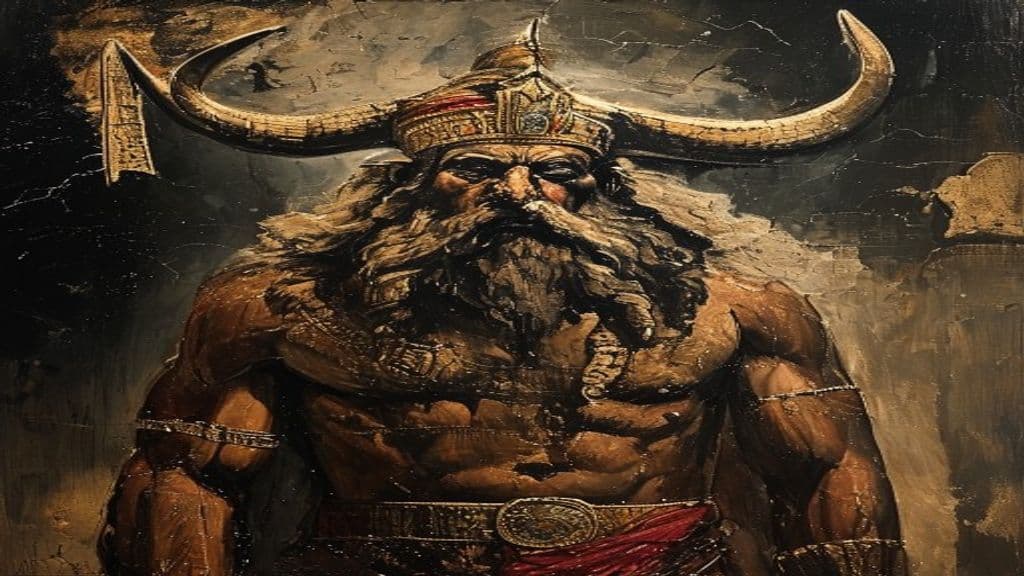
Hadad (Haddu / Adad / Iškur)
Hadad is the ancient Near Eastern storm and rain deity attested across Levantine and Mesopotamian traditions (Ugaritic Haddu, Akkadian Adad, Sumerian Iškur). He is a high-ranking weather-lord associated with rain, thunder, fertility of fields, and a dual capacity to nourish crops and to unleash destructive storms; he plays central roles in temple cult, royal ideology, and mythic battles (notably the Ugaritic Baal Cycle).
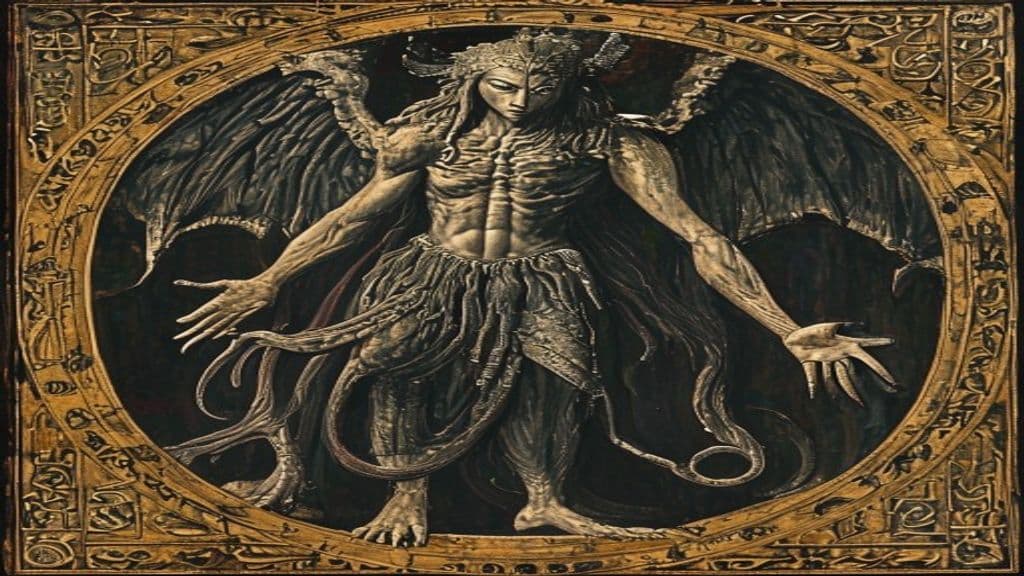
Dagon (Dagan)
Dagon (also Dagan) is an ancient Near Eastern deity attested across inland Syria and the middle Euphrates, with principal temples at Tuttul and Terqa. In inland contexts he functions as a senior, paternal god — a source of prosperity and royal legitimacy — and was syncretized with Mesopotamian and Hurrian senior gods in later theological lists. Later Biblical and medieval receptions reinterpreted the name (including an incorrect fish-association) and the theonym has been reused in modern literature and media.

Community Record
- [1]Baal — Wikipedia. Wikipedia, 'Baal' article (summary of scholarly literature and sources)wiki
- [2]Baal (Ugaritic material) — Hanover Ancient History Excerpt. Hanover College ancient history excerpt quoting Ugaritic/Canaanite mythic materialacademic
- [3]United Colors of Israel (archive) — What Other Gods?: contextual materials. Archived materials cited in the research notes (contextual compilations and discussions)other
- [4]What Other Gods? (archive). Archived discussion of ancient Near Eastern religious contexts cited in research notesother
- [5]Biblical Cyclopedia — Baal. Biblical Cyclopedia entry on Baal and its polemical treatment in monotheistic textsliterary
- [6]Thelemapedia — Baal (receptional note). Thelemapedia entry noting later occult/demonological receptions of the name (secondary use)other