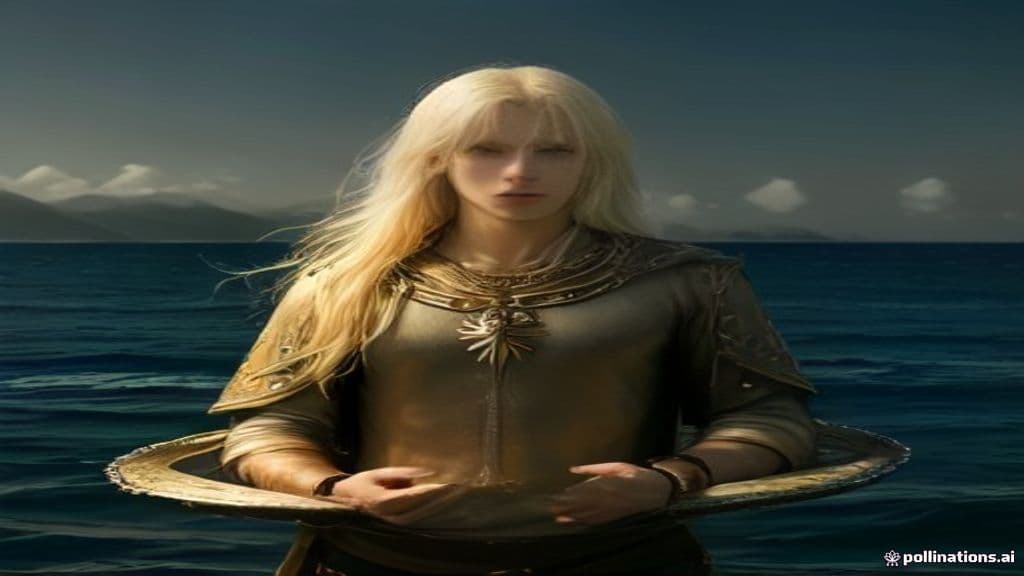
Medieval Irish compilations and narrative cycles present Elatha as a king among the Fomorians who comes over the sea in a silver vessel to meet the land-goddess Ériu; their union produces Eochu Bres in the account of the Cath Maige Tuired. Various medieval sources and later summaries attribute additional parentage to him — in some lists he is named father of the Dagda, Ogma, Delbaeth and Lir/Elloth — creating genealogical overlap between the ostensibly hostile Fomorians and the Tuatha Dé Danann. These variant attributions appear across texts such as Cath Maige Tuired and genealogical material collated in traditions summarized from the Lebor Gabála Érenn and later compilers, and reflect medieval attempts to reconcile or explain competing ancestries.
Sources describe Elatha as strikingly handsome and youthful: arriving from the sea in a silver vessel 'having the appearance of a young man with yellow hair, wearing clothes of gold and five gold torcs.' Medieval summaries and later commentators emphasize golden hair and gold-adorned clothing as recurrent motifs; a modern epithet ('beautiful Miltonic prince of darkness') also appears in later summaries but is not presented in the supplied primary medieval text citations.
In the surviving narrative material Elatha's agency is chiefly political, genealogical and symbolic rather than described as a catalogue of magical powers. He is attested as a Fomorian king who takes part in the mythic context of the Second Battle of Mag Tuired, and is explicitly recorded as watching over his son the Dagda's harp Uaithne during that battle. He fathers important Tuatha Dé Danann figures (notably Bres in the Cath Maige Tuired episode) and is associated with light and noble martial imagery (epithets in the Lebor Gabála Érenn include 'glory of weapons' and 'a wolf of division against men of plunder'). Lady Gregory and other commentators suggest an etymological link of his name to 'art' or 'knowledge' (bardic skill), a reading that aligns with his being named father of Ogma in some genealogies. The supplied sources do not enumerate explicit supernatural powers (transformations, elemental command, or defined magical attacks) beyond these narrative roles.

Fomorians
A distinct supernatural race in early Irish myth who function as recurring antagonists to successive settler and divine groups in Ireland. They are frequently associated with hostile, chaotic forces of nature (sea, darkness, blight) and appear in origin‑war narratives as opponents of the Tuatha Dé Danann and earlier settler groups.
Bres
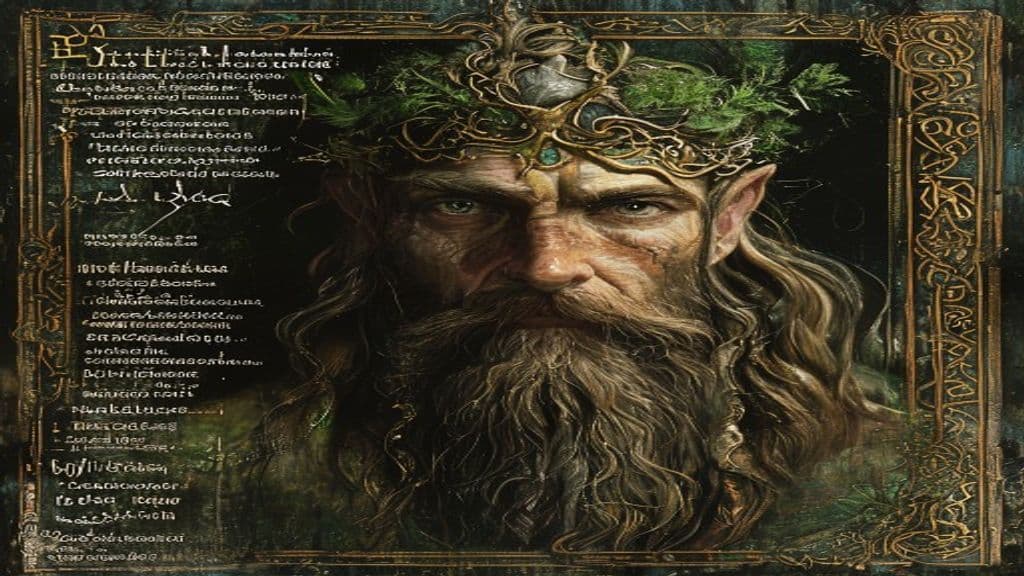
Bres (also Bress, Eochaid/Eochu Bres, Bres mac Elathan) is a contested royal figure in Irish myth who, born of Fomorian and Tuatha Dé Danann parentage, ruled as king of the Tuatha Dé Danann before being deposed; his reign and fate appear in accounts of the First and Second Battles of Magh Tuiredh and related dindsenchas poetry.
Community Record
- [1]Cath Maige Tuired (The Second Battle of Mag Tuired) — text (UCC). Cath Maige Tuired, as published by the CELT project, lines describing Elatha's coming to Ériu and the birth of Eochu Bres; also mentions Elatha guarding the Dagda's harp in narrative variants.literary
- [2]Elatha — Wikipedia article. Overview article summarizing medieval attestations, name variants (Elotha, Elier, Elada), appearance descriptions ('young man with yellow hair; clothes of gold; five gold torcs'), epithets from Lebor Gabála Érenn, Lady Gregory's etymological note, and references to genealogical variants.wiki
- [3]The Religion of the Ancient Celts: Chapter IV. The Irish ... — Internet Sacred Text Archive. Comparative commentary noting that figures such as Bile, Balor, and Elatha are treated as Goidelic equivalents of a shadowy ancestral figure (Beli) while remaining distinct personalities; used in supplied notes to contextualize overlapping ancestries.other