
Rather than a single origin, the name Elatus is attached to several narrative persons within Greek myth. One Elatus is presented in Arcadian genealogies as a son of Arcas who aided locals against the Phlegyans and became renowned as the founder and eponym of the city Elatea; Pausanian-style local memory is attested in reports that an image of him was carved on a stele in the Elatean marketplace. Another Elatus is recorded as a Lapith chieftain of Larissa and ancestor in a dynastic line whose children include notable figures such as Caeneus, Polyphemus, and the seer Ampycus. A separate tradition names Elatus as a centaur who fought Heracles and was mortally wounded by a poisoned arrow that passed through him and — in the narrative consequence — continued to wound Chiron. Additional brief attestations portray minor personages named Elatus (charioteer of Amphiaraus called Baton in a variant, a Trojan ally from Pedasus killed by Agamemnon, and a suitor of Penelope slain by Eumaeus) situated within epic cataloguing.
Descriptions in the surviving summaries focus on social identity rather than physical detail. Human/princely Elatus figures are attested through kinship, civic, and onomastic markers (son, husband, father, eponym) with no preserved physical portrait in the cited sources. The centaur Elatus is explicitly identified as a centaur (a creature of mixed human and equine form in Greek myth); source narratives emphasize his role in combat and the wound caused by Heracles' poisoned arrow rather than providing additional corporeal specifics. A localized memorial image of the founder-eponym is reported to have been carved on a stele in the Elatean marketplace, indicating cultic or civic visual commemoration in local tradition.
Elatus figures are portrayed with ordinary heroic-age capacities appropriate to their roles rather than supernatural powers. The Arcadian/princely Elatus functions as a culture-hero and military helper who assisted inhabitants against the Phlegyans and became the eponymous founder of a city. The Lapith Elatus appears as a dynastic progenitor whose significance is genealogical (fathering named offspring who themselves figure in myths). The centaur Elatus participates in violent combat with heroes and is mortal — his wound from Heracles' poisoned arrow is narratively significant because the arrow passes through him and continues to harm Chiron. Other minor Elatuses perform conventional epic roles (charioteer, ally, suitor) and are susceptible to mortal death in battle or retribution.
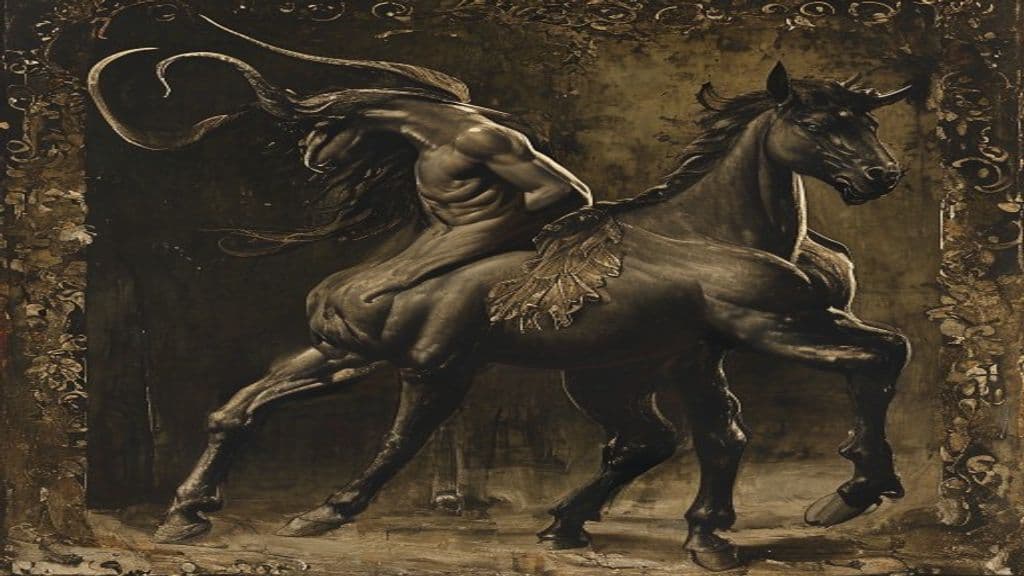
Centaur
A mythic hybrid from ancient Greek tradition with the upper body of a human and the lower body and legs of a horse. Centaurs appear as a tribal population associated with mountainous and wooded regions of Greece and embody tensions between human social order and untamed nature.
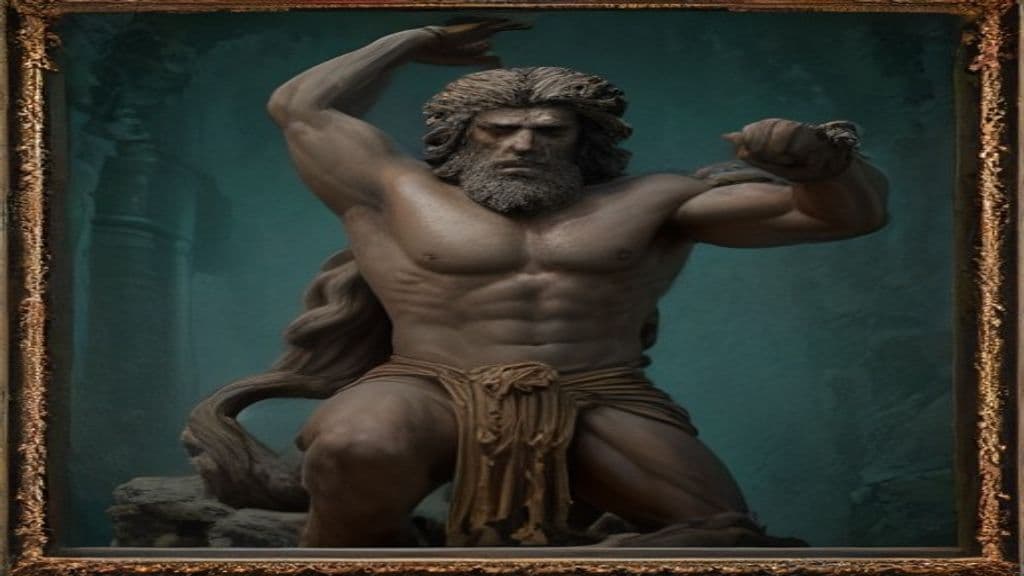
Heracles
Heracles is the greatest hero of Greek myth whose career bridges mortal hero-cult and full divinization. Celebrated for his Twelve Labours, martial prowess, and travels between the mortal world, the underworld, and Olympus, he functioned as a civic patron, ancestor of royal lines (the Heracleidae), and object of cult that treated him both as chthonic hero and as god.
Abderus
Abderus (Ancient Greek: Ἄβδηρος, romanized Ábdēros) is a mortal heroic figure in Greek myth closely associated with Heracles, remembered as the youth left in charge of the Mares of Diomedes who was killed by them. He functions as an eponymous local/divine-hero ancestor for the city of Abdera and received funerary commemoration and athletic agones at his tomb.
Acamas
Acamas (Ancient Greek: Ἀκάμας) is a personal name recurrent in ancient Greek narrative traditions applied to multiple human characters (warriors, princes, suitors), once to a Cyclops, and once as a hound's name. Rather than a single supernatural entity, bearers of the name appear episodically across the Trojan War, Theseid, and Theban cycles as mortal actors whose deeds intersect with gods and fate.
Acarnan
Acarnan (Ancient Greek: Ἀκαρνάν) is an anthroponym attested in Greek mythic and epic tradition as the name of at least two distinct mortal figures: a son of Alcmaeon and Callirrhoe, and a human suitor of Penelope from Dulichium. The lexical form also appears adjectivally/ethnically (Acarnanian), linking the word to the region Acarnania; etymologically the name is reported as derived from a Greek fish-name (akarnan).
Acastus
Acastus is a mortal heroic figure of ancient Greek tradition: son of Pelias who became king of Iolcus, an Argonaut who sailed with Jason, and an actor in the post-Argonautic cycle involving Medea, Peleus, and the aftermath of Pelias’s death. He is attested as performing civic and ritual actions (burying Pelias, instituting funeral games, purifying Peleus) and as a participant in vendetta episodes that end in violent reprisals.
Acmon
Acmon (Ancient Greek: Ἄκμων, 'anvil') is a polyvalent personal name in Greek myth borne by several distinct minor figures — a Dactyl (artisan), a Phrygian eponymous king, a mischievous woodland creature, companions in epic cycles (one companion of Diomedes transformed into a bird; an Aenead), and in some brief traditions an alleged father of Uranus. The name therefore functions across artisanal, topographical, trickster, and metamorphosis motifs rather than denoting a single unified supernatural species.
Acrisius
Acrisius (Ancient Greek: Ἀκρίσιος, Akrisios) is a mythic-historical king of Argos in Greek tradition whose narrative is defined by an oracular prophecy foretelling his death by his daughter's son. He is portrayed as a mortal ruler entangled with dynastic rivalry, oracular authority, and the eventual accidental fulfillment of fate.
Aeacidae
The Aeacidae are a dynastic lineage in Greek myth and historiography descended from the hero Aeacus, son of Zeus and the nymph Aegina. The name functions as a patronymic designation for those 'of Aeacus' and is used to claim genealogical legitimacy and political prestige in regions such as Aegina and Molossian Epirus.
Aegipan
Aegipan (Αἰγίπαν / Αἰγίπανος) is an ancient Greek mythological figure associated with goat attributes and with the sea‑goat imagery of the constellation Capricornus. He appears in classical myth as a semi‑divine helper (notably in the Typhon episode) and, in later natural‑history and medieval bestiary reception, the name is applied to satyr‑like or ape‑like wild men in distant lands.
Aegisthus
Aegisthus (Greek Αἴγισθος, Aigisthos) is a mortal member of the House of Atreus in Greek myth who, born of incestuous circumstances and raised by shepherds and a goat, participates in dynastic murder and usurpation — notably the slaying of Atreus in some accounts and the conspiracy (with Clytemnestra) that results in Agamemnon's death — and is later killed by Orestes, an episode that figures in narratives about inherited guilt, vengeance, and the transition from private retribution to public justice.
Aepytus
Aepytus (Ancient Greek: Αἴπυτος, Aíputos/Aípytos, lit. 'steep, high, lofty') is a personal name in Greek myth borne by several legendary kings tied to Arcadian and Heraclid genealogies. The figures named Aepytus function as ancestral/dynastic nodes in literary genealogies and later literary receptions rather than as supernatural beings.
Aeson
Aeson (Ancient Greek: Αἴσων) is a legendary mortal king of Iolcus in Thessaly in Greek myth, best known as the father of the hero Jason. His fate—imprisonment by his half-brother Pelias and either suicide or a miraculous restoration performed by Medea—provides the dynastic and moral background for the Argonautic cycle.
Aethalides
Aethalides is a personal name borne by two distinct figures in ancient Greek myth: one listed among the Argonauts as a son of Hermes and Eupolemeia, and another named among the Tyrrhenian sailors who attempted to deceive Dionysus and was transformed into a dolphin. The sources treat Aethalides as named human mythic personages appearing in separate narrative contexts rather than as a class of supernatural being.
Community Record
- [1]Elatus — Wikipedia. Wikipedia entry 'Elatus' (summary of mythographic attestations and name form Ἔλατος)wiki
- [2]Wikidata: Elatus. Wikidata item Q4530734 (labels and structured identifiers; lists Lapith prince among uses)wiki
- [3]31824 Elatus — Mark Andrew Holmes (asteroid note referencing the centaur name). Web note linking the centaur Elatus tradition to the asteroid 31824 Elatusother
- [4]Chiron and Friends — Elatus (web summary). Online summary describing the centaur Elatus and the arrow wound passing through him to Chironother
- [5]Philolithus elatus — Wikipedia (name-usage example). Wikipedia page showing modern biological epithet usage of the name 'elatus' (illustrates modern reuse, not ancient ritual)wiki