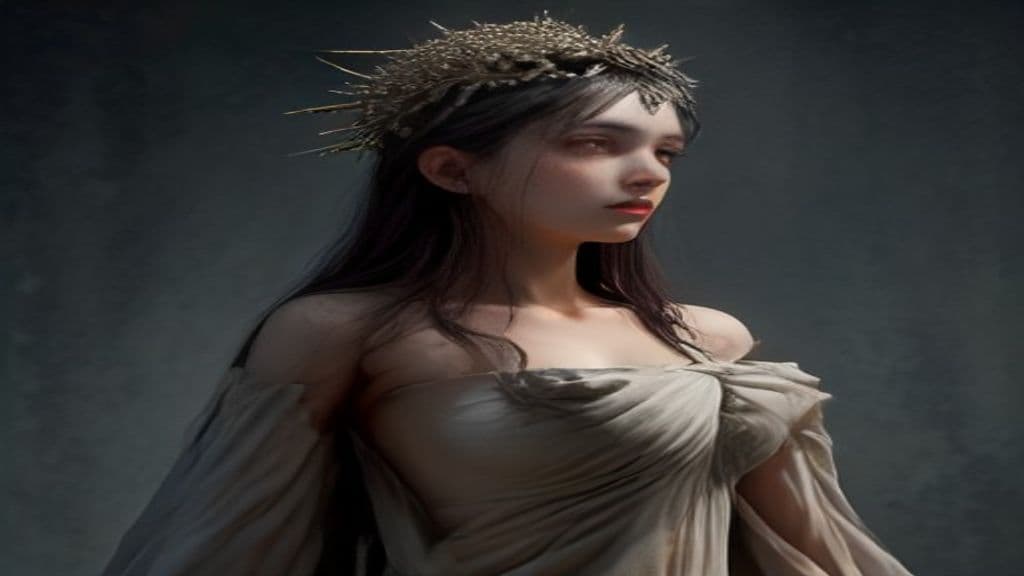
Electra is presented in the classical mythic cycle as the daughter of King Agamemnon of Mycenae and Queen Clytemnestra. The household is torn when Agamemnon returns from the Trojan War and is murdered by Clytemnestra (motivated in the cycle in part by Agamemnon's sacrifice of their daughter Iphigenia). Electra survives or returns to her father's house and, in concert with her brother Orestes (and sometimes with Pylades), participates in or instigates the killing of Clytemnestra to avenge Agamemnon, an act that triggers moral, ritual, and divine ramifications in the narratives.
In the surviving dramatic texts Electra is repeatedly staged as meanly clad and marked by signs of degradation or mourning. Stage directions in Sophocles and Euripides describe her entering poorly dressed and, in Euripides, carrying a water pitcher on her head; in Aeschylus she is depicted offering libations at her father’s tomb. These outward signs function onstage to show poverty, grief, and her obsessive devotion to familial duty.
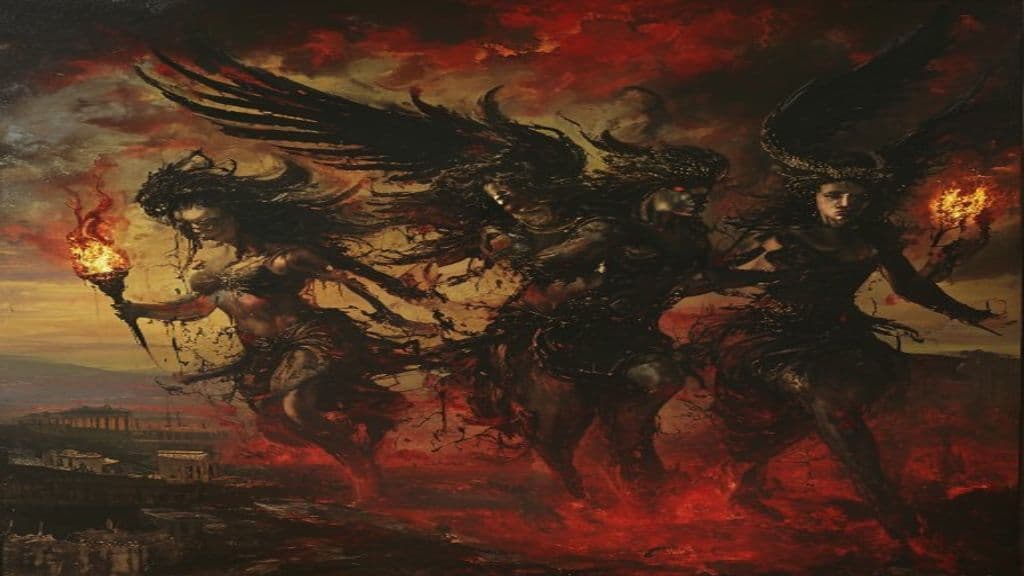
Electra possesses no supernatural powers in the sources; her 'abilities' are moral and social: fierce filial devotion, rhetorical force, and, depending on author, the capacity to plan, manipulate appearances, and take part in or orchestrate matricide to restore familial honour. Aeschylus portrays her as an uncertain participant who performs libations and relies on Orestes; Sophocles makes her a more active and implacable partner to Orestes; Euripides presents her as shrewd and able to feign behaviour (e.g., maternal affect) to trap Clytemnestra. The narratives link her actions to institutions such as the Delphic oracle and to the Erinyes, who pursue Orestes after matricide in some versions, though Electra herself is not described as being pursued in Euripides.
Weaknesses
- conditionhuman mortality and reliance on male co-agent (varies by author)
Wards
- othernone (no warding practices against Electra are presented in the supplied sources; she is treated as a human agent rather than a hostile spirit)
Community Record
- [1]Electra - Wikipedia. Wikipedia, 'Electra' (overview and summaries of Aeschylus, Sophocles, Euripides portrayals)wiki
- [2]Electra by Euripides (Internet Classics Archive). Euripides, Electra — stage directions and text (Internet Classics Archive translation)literary
- [3]Electra by Sophocles (Internet Classics Archive). Sophocles, Electra — stage direction and play text (Internet Classics Archive translation)literary
- [4]The Electra of Euripides (Project Gutenberg). Euripides, The Electra of Euripides, translation (Project Gutenberg)literary
- [5]Electra complex - Wikipedia. Wikipedia, 'Electra complex' (modern psychological reception noting Jung and later uses)wiki