
The name Eliphaz appears in the Hebrew Bible as the first-born son of Esau by Adah (Genesis tradition), presented as a tribal/ancestral founder whose sons include Omar, Teman, Zepho, Gatam, Kenaz and Amalek (the latter by concubine Timna). Separately, Eliphaz the Temanite appears in the Book of Job as one of three friends who visit Job to console and debate with him; he delivers multiple discourses (Job 4:1–5:27; 15:1–35; 22:1–30 in traditional divisions). The supplied sources treat these attestations as distinct human roles sharing a common theophoric name rather than a single mythic origin.
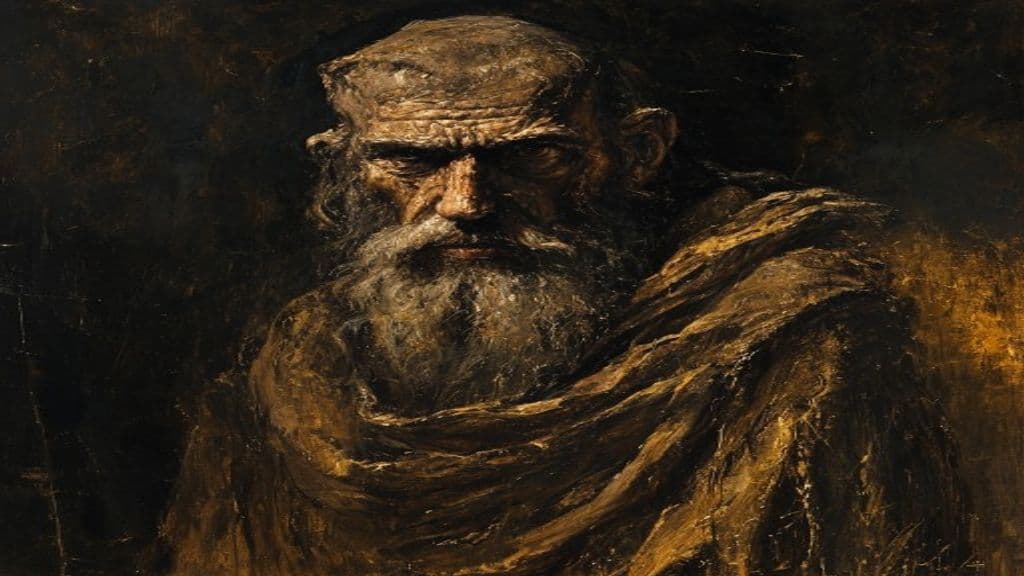
The provided sources do not supply any physical description. Both attestations treat Eliphaz as an ordinary human interlocutor or genealogical ancestor; no supernatural or bodily features are recorded in the supplied material.
No supernatural powers are ascribed. As Eliphaz son of Esau he functions as a filial agent and tribal progenitor: in a Midrashic episode he is sent by Esau to pursue Jacob, accepts Jacob's gift of possessions, and spares his life, and he fathers sons who become ancestral lines (including Amalek). As Eliphaz the Temanite he functions rhetorically and socially as a counselor and interpreter of suffering, delivering a sequence of speeches that argue moral-theological positions (notably that suffering can be punitive for secret sin and that Providence does not wholly abandon the truly good).
Community Record
- [1]Eliphaz (Wikipedia). Wikipedia, 'Eliphaz'wiki
- [2]Eliphaz (Job) (Wikipedia). Wikipedia, 'Eliphaz (Job)'wiki
- [3]Job : a practical commentary (index of discourses). Job: a practical commentary (indexing First, Second, Third Discourses of Eliphaz)academic
- [4]Eliphaz - Biblical Cyclopedia. Biblical Cyclopedia entry 'Eliphaz' (provides name forms and glosses)literary
- [5]Midrashic material and Rashi reference (summarized in research notes). Summarized Midrash on Eliphaz pursuing Jacob; Rashi reference cited in research notesliterary
- [6]Assorted Q&A and hermeneutics discussions (contextual commentaries). Judaism.StackExchange and Hermeneutics thread summaries cited in research notesother