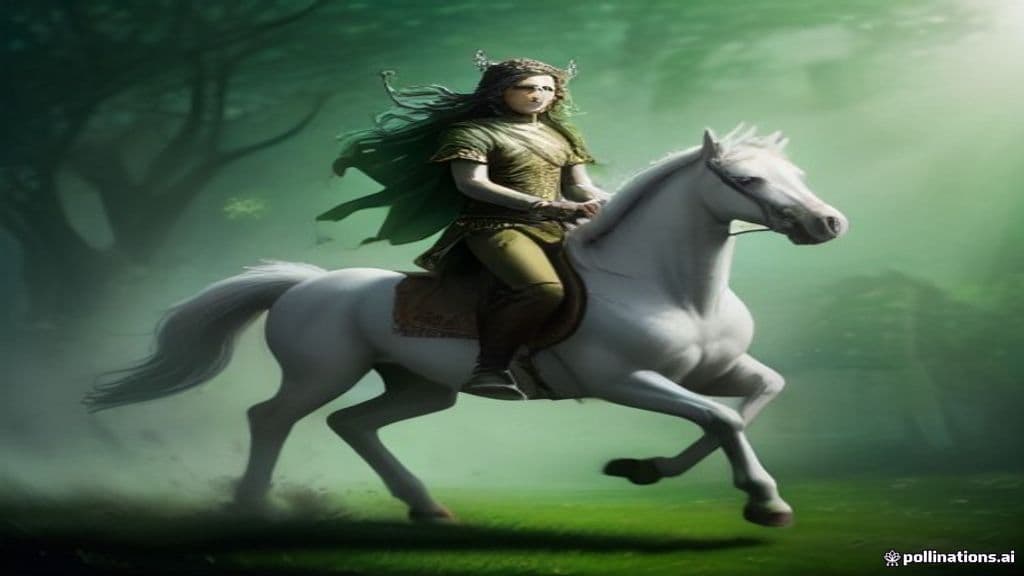
Enbarr appears in the Irish tale Oidheadh Chloinne Tuireann (The Fate of the Children of Tuireann) as the horse belonging to the sea‑god Manannán mac Lir. In that episode Lugh arrives mounted on Aonbharr among a fairy cavalcade from the Land of Promise (Tír Tairngire). The horse is presented as one of Manannán's enchanted possessions that may be lent to favoured figures; in the tale its ownership and loaning (or refusal to loan) are matters of narrative and social import.
Medieval sources and the available summaries supply only limited, inconsistent visual detail. The horse is consistently identified as a named steed; later retellings and commentators sometimes depict the fairy cavalcade as mounted on white horses, a detail used by some 19th‑century retellers. John Rhys offered an etymological conjecture that led him to treat Enbarr as a mare and even to suggest an image involving a bird's head, but this is an interpretive proposal rather than a canonical physical description. Overall the tradition records Enbarr as a remarkable otherworldly horse without a fixed, detailed iconography in the cited sources.
In the cited material Enbarr is credited with the ability to traverse both land and sea and is described as swifter than the 'naked cold wind of spring' (a phrase used to indicate great speed). The tale tradition attributes to the horse the property that whoever was mounted upon its back 'could not be killed'—a protective quality as described in Oidheadh Chloinne Tuireann and summarized in modern references. Enbarr is presented functionally as an enchanted conveyance and protective boon owned by Manannán rather than as an independently hostile or trickster entity in the available sources.
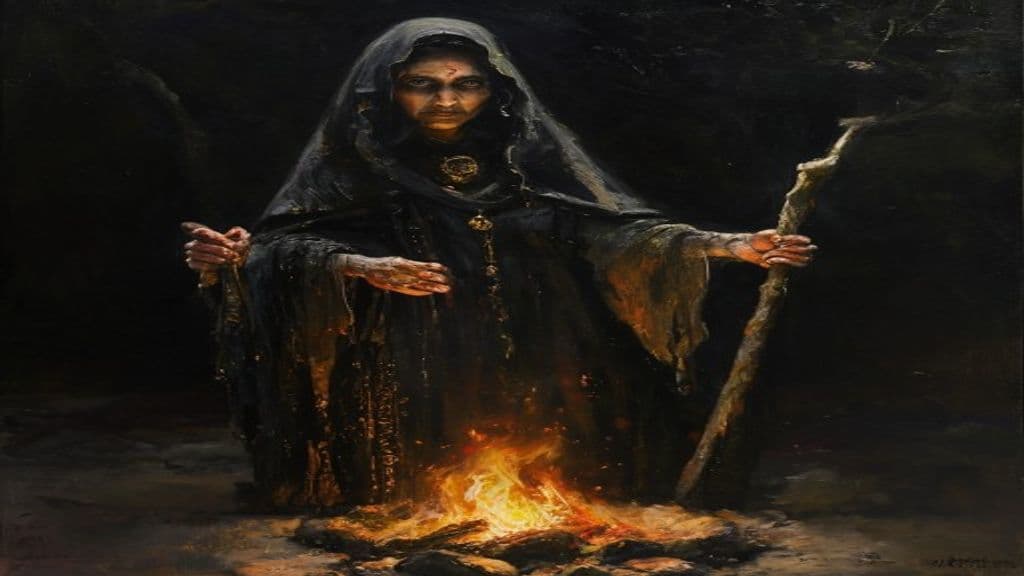
Manthara
A Dayan witch of approximately 400 years — named for the scheming Manthara of the Ramayana, her power has shifted from seduction to manipulation, able to bend the fates of entire families through whispered influence.
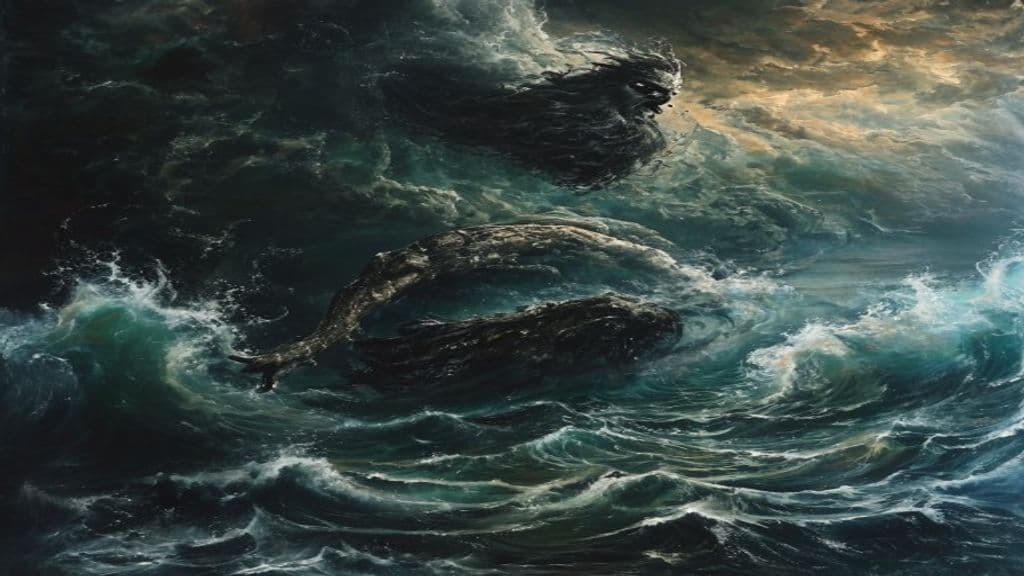
Marid
The most powerful class of jinn in Islamic tradition — beings of the sea, associated with the deep ocean, storms, and the granting of wishes at terrible cost. The classic genie of the Arabian Nights.
Community Record
- [1]Enbarr (Wikipedia summary). Wikipedia: 'Enbarr' article (summary information on abilities, ownership, and narrative context)wiki
- [2]Wikidata: Enbarr. Wikidata entry for Enbarr (identifier Q634475)wiki
- [3]Oidheadh Chloinne Tuireann (narrative context as summarized). Archive hosts retellings/collections summarizing the tale in which Aonbharr appears as Lugh's mountliterary
- [4]Etymological and retelling notes (Cormac, O'Curry, John Rhys, Mackillop summaries). Collected notes and retelling summaries referencing medieval gloss (Cormac), O'Curry's glosses, John Rhys's conjecture and James Mackillop's glossesother