
In the Gilgamesh cycle Enkidu is presented as a being created by the gods to counterbalance Gilgamesh's power as king of Uruk. The Sumerian name is written en.ki.du10 in cuneiform; etymological readings vary in the scholarship and ancient practice, with elements ki.du10 attested as 'good place' in Early Dynastic names and an alternative proposal reading the name as 'creation of Enki.' Literary manuscripts occasionally mark his name with the divine determinative, signaling a borderline status between heroic human and a figure with divine essence within the narrative, but he is not otherwise attested as an independently worshipped deity in Mesopotamian god lists.
Literary sources characterize Enkidu as the archetypal 'wild man'—a figure associated with the natural world, herds, and uncultivated places—and older summaries describe him as 'half man and half beast' in the sense of representing a noncivilized human rooted in nature. Some modern scholars have hypothesized a possible identification with 'bull-man' imagery in Mesopotamian art (a man with bovine attributes), but this iconographic link is explicitly tentative rather than canonical. Narrative accounts show him beginning life in a primitive, animal-associated condition and later becoming more human and socialized through contact with people.
Enkidu is portrayed as physically matching Gilgamesh in strength and bearing and performs a range of epic heroic deeds: he wrestles Gilgamesh (an episode leading to their friendship), participates in the expedition to the Cedar Forest and helps to dispatch the monstrous guardian Humbaba (in some versions delivering the killing blow after Gilgamesh injures it), seizes the Bull of Heaven by the tail while Gilgamesh strikes its head, and in other compositions is depicted in roles such as a night herd-keeper. After his death he becomes a shade in the Netherworld who, in at least one composition, is caused by the god Enki to briefly rise and answer Gilgamesh's questions about the fate of the dead. These portrayals are literary heroic feats and social/ritual functions within the epic tradition rather than demonstrations of systematic magical powers.
Weaknesses
- conditionmortality (punishment of the gods)
- otherdies of an inflicted illness as divine punishment after the slaying of Humbaba and the Bull of Heaven
Wards
None recorded.

Bull of Heaven
A colossal mythic bull in ancient Mesopotamian literature, released by the goddess Inanna/Ishtar as an instrument of divine wrath and identified with the constellation Taurus. It appears in epic narratives (notably the Epic of Gilgamesh) as a world‑ravaging beast whose slaying carries grave divine consequences.
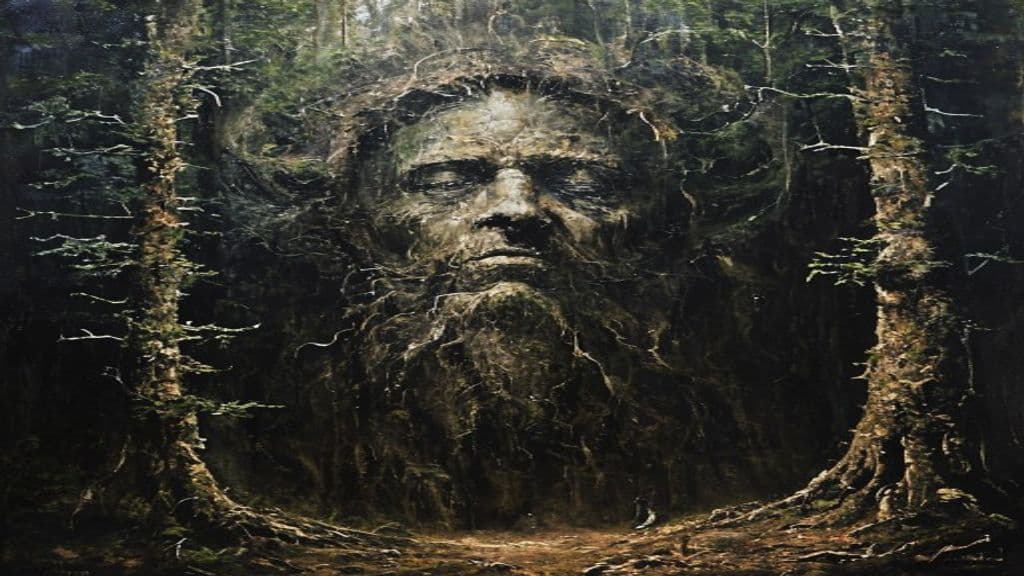
Humbaba
The divine guardian of the Cedar Forest appointed by Enlil, a terrifying giant whose roar was the flood, whose breath was fire, and whose gaze was death — slain by Gilgamesh and Enkidu.
Community Record
- [1]Enkidu (Wikipedia). Wikipedia entry 'Enkidu' (used as the principal synthesized source for literary tradition, etymology discussion, narrative roles, and later invocation evidence).wiki
- [2]Gilgamesh, Enkidu, and the Netherworld (Wikipedia). Wikipedia entry 'Gilgamesh, Enkidu, and the Netherworld' (used for details of Enkidu's fate as a shade and the Netherworld composition).wiki
- [3]An Old Babylonian Version of the Gilgamesh Epic (Project Gutenberg). Project Gutenberg, 'An Old Babylonian Version of the Gilgamesh Epic' (reference to the wider manuscript and epic tradition where Enkidu appears).literary
- [4]IMG 1164 (Archive image: 'Shamat reveals herself to Enkidu'). Archive.org image titled 'Shamat reveals herself to Enkidu' (used as visual/documentary evidence of the civilizing episode in the narrative tradition).other
- [5]Gilgamesh - Enkidu and Gilgamesh Slay Humbaba (excerpt). Online excerpt and commentary on the Humbaba episode (used for details about Enkidu's role in the slaying of the Cedar Forest guardian).literary