
In the literary corpus of ancient Mesopotamia the Bull of Heaven is a numinous beast associated with the high gods and the sky. In the Akkadian Epic of Gilgamesh (Tablet VI) and an earlier Sumerian poem the goddess Inanna/Ishtar, angered after being spurned, demands the Bull from the sky‑god Anu (An); the bull is then released to punish mortals and challenge the hero(s) Gilgamesh and Enkidu. Scholarly traditions also note its naming in Babylonian astronomical lists as GU4.AN.NA, 'Bull of Heaven,' linking the narrative creature to an astral identity (the constellation Taurus).
Surviving textual descriptions and cylinder‑seal imagery portray the Bull as abnormally large and ferocious — a monstrous bull of extraordinary size. Epic lines describe its breath as physically devastating (creating enormous holes in the ground that swallow scores of men), and iconography from the Akkadian period commonly depicts a monumental bull figure engaged with heroic combatants.
Acts as an instrument of divine will: when unleashed by Ishtar (after receiving it from Anu) the Bull tramples the land, breathes destructive blasts that create vast pits, and causes mass casualties. It is both a terrestrial monster that devastates human communities and an astral being identified with Taurus. Its slaying by Gilgamesh and Enkidu provokes divine judgment (Enkidu's death), so the creature's narrative role extends beyond physical destruction to significant cosmic and moral consequences.
Weaknesses
- otherslain by heroic martial combat (Gilgamesh and Enkidu: sword thrust to the neck; Enkidu pulls the tail)
Wards
- otherNo documented magical wards or prophylactic rituals in surviving sources — human response in the narrative is martial confrontation and offering the bull's heart to Shamash after its slaying

Inanna
Inanna is a major ancient Mesopotamian goddess, primarily worshipped in Sumer and later identified with the Akkadian Ishtar. Her domains include love, sex, war, political power, divine law and procreation; she is a principal cult figure of Uruk and bearer of the mes, the decrees of civilization.

Shamash (Utu)
Shamash (Akkadian šamaš; Sumerian Utu) is the ancient Mesopotamian sun god, a principal deity responsible for the visible sun and for juridical, protective, and divinatory functions. He is venerated especially at Sippar and Larsa, appears in major myths as an ally of heroes, and is regarded as the divine witness whose sight underwrites justice and truth.
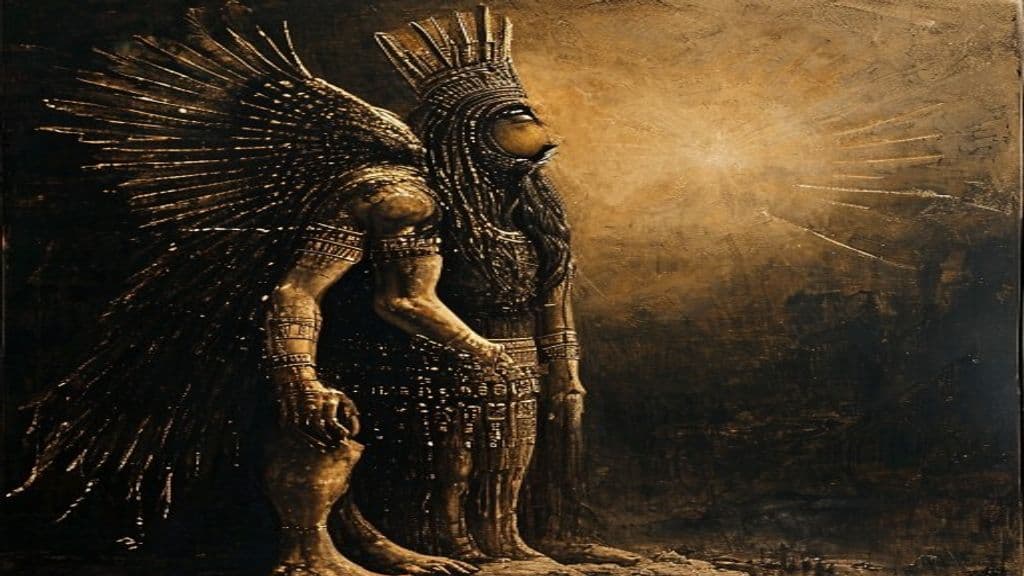
Anu
Anu (Sumerian An; Akkadian Anu/Anum) is the divine personification of the sky in ancient Mesopotamian religion, traditionally ranked at the top of god‑lists as the source of heavenly authority (anûtu/anuti) and the fount of legitimate rule for gods and kings. Though supreme in genealogies and astronomical schema, many periods portray him as a relatively passive or figurehead deity whose active cultic role is limited until a late Seleucid reinvention in Uruk.
Community Record
- [1]Bull of Heaven. Wikipedia, 'Bull of Heaven'.wiki
- [2]Bull of Heaven (Wikidata). Wikidata entry for Bull of Heaven.other
- [3]Gilgamesh Part 3 – the Bull of Heaven. Storynory retelling of the Epic of Gilgamesh (Tablet VI material summarized).literary