Accounts place Erechtheus in Athens' legendary prehistory as an earth-born (autochthonous) figure and early king tied into Athenian genealogies (connected to Cecrops, Erichthonius, Pandion). Homeric reference calls him a 'son of grain-giving Earth', emphasizing autochthony; later epic, tragic, and local traditions historicize him within king-lists and civic etiologies. Variants in the tradition treat multiple similarly named figures (later genealogists distinguish Erechtheus I and II) and sometimes conflate him with nearby ancestral names such as Erichthonius. His mythic career includes leading Athens in war (against Eumolpus and Eleusis), a divine-inflicted death in some versions (struck or driven into the earth by Poseidon), and the foundation of cultic offices and a shrine (the Erechtheion) as an institutional resolution to the crisis surrounding his death.
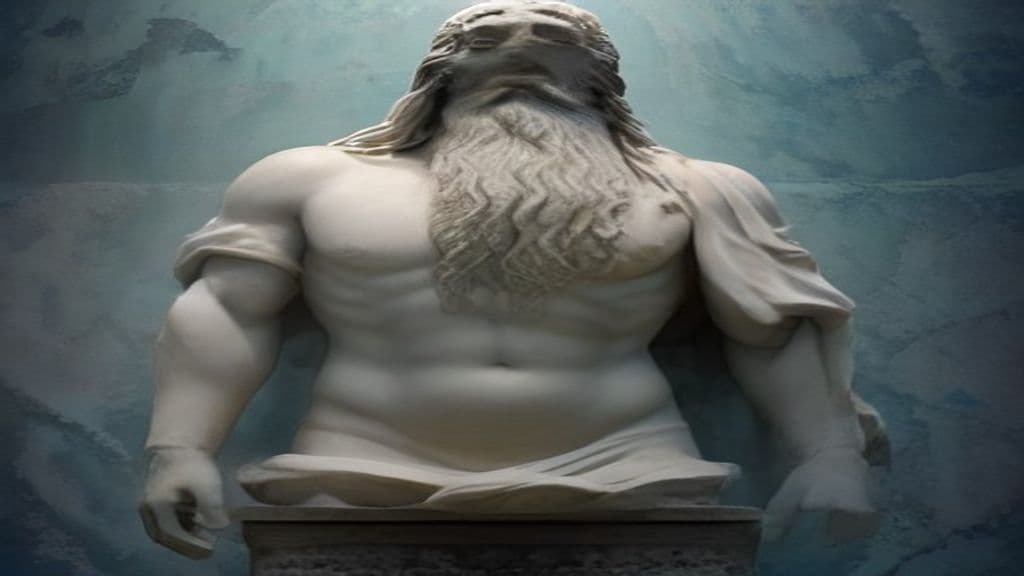
Surviving evidence does not preserve a consistent or detailed iconography for Erechtheus. Literary and cultic references emphasize his genealogical, ritual, and civic roles rather than a sustained physical description; extant fragments of drama (Euripides' Erechtheus) and later summaries record actions and institutional outcomes but not a canonical bodily portrait. Thus no reliable, standardized dress, attributes, or visual markers are attested in the provided material.
Erechtheus' capacities in the sources are those of a mythic king and cultic ancestor rather than explicit supernatural 'powers': he commands and secures victory for Athens in legendary battles (notably against Eleusis/Eumolpus) in the narrative tradition; his autochthonous birth legitimizes claims of civic descent (the Erechtheidai); and his name functions as a cultic designation at the Erechtheion, where sacrifices to 'Poseidon Erechtheus' were performed from a single altar by a single priest, indicating local syncretism with Poseidon. He is also depicted as subject to divine retribution (variants report his death inflicted by Poseidon) and as the central figure in an oracle-driven ritual crisis requiring the sacrifice or self-sacrifice of his daughters for the city's survival.
Weaknesses
- conditionvulnerability to Poseidon's wrath / sea-power
- conditionmortality and susceptibility to divine-inflicted death (driven into the earth or struck down in variants)
- conditioncompelled obedience to oracles (oracle demanding a daughter's death), making familial sacrifice a narrative weakness
Wards
- ritualErechtheion cult and shrine construction
- ritualsingle altar/single priest practice for Poseidon Erechtheus
- ritualappointment of hereditary priesthoods (e.g., Boutidai/house of Butes) and priestess duties (Praxithea's preliminary fire-sacrifices)
Community Record
- [1]Erechtheus - Wikipedia. Wikipedia article 'Erechtheus' (summary and cited classical references incl. Homer, Euripides, and Burkert)wiki
- [2]Erechtheus – Diotíma (Euripides fragments translation). Translation and commentary on Euripides' Erechtheus fragments (Diotíma project)literary
- [3]Erechtheus - name-index (attalus.org). Attalus name-index entry summarizing ancient source citations for Erechtheusacademic
- [4]Erechtheus in classical scholarship (GRBS article). Scholarly article discussing Euripides' Erechtheus and the Erechtheion (GRBS)academic
- [5]Wikidata: Erechtheus. Wikidata entry for Erechtheus (identification as legendary king of Athens)other
- [6]Archive: Athenian fables (LP0019). Archive texts providing wider Athenian mythic context referenced in the sources listother
- [7]Swinburne, The Poems of Algernon Charles Swinburne (archive). 19th-century poetic treatment indicating later literary reception (archive edition)literary