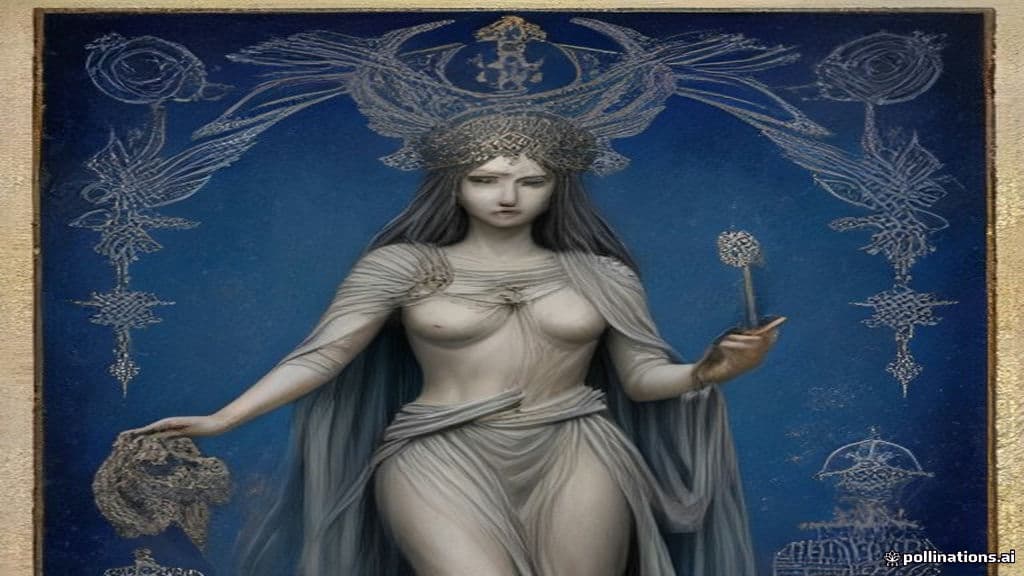
In the mythographic tradition summarized by modern references to ancient lexica and handbooks, Erymede is named as the daughter of Damasiclus (himself a son of Icarius) and as mother of Taenarus by Elatus (also a son of Icarius), making the parental pair an avunculate in that account. Her primary narrative function in these sources is etiological: her son Taenarus is the eponym for Cape Taenarum, Mount Taenarum, and the city Taenarus in the Peloponnese. Variant traditions recorded in the same body of material attribute Taenarus instead directly to Icarius in other genealogical versions (as noted in the primary ancient summaries cited in the modern sources). The principal attestations for these genealogical links are preserved in summaries of ancient authors such as Stephanus of Byzantium and in mythographic compilations cited by modern reference works.
No physical or iconographic description of Erymede survives in the attested ancient handbooks and lexica cited in the modern sources. The sources that record her name and relationships (e.g., summaries of Stephanus of Byzantium and related mythographic material) provide no details of age, dress, features, or distinguishing marks.
The cited sources record no supernatural powers, magic, or extraordinary deeds for Erymede. She appears solely as a mortal member of a mythic genealogy whose significance lies in familial relationships and eponymic function rather than in performed actions or abilities.

Damasiclus
Damasiclus (Ancient Greek: Δαμάσικλος / Δαμασίκλου), also called Amasiclus or Amasichus, is a mortal figure in Greek myth genealogies presented as a Spartan son of Icarius. He functions as a kinship node in variant traditions and is chiefly notable for his place in lineages that connect to the eponym Taenarus.

Elatus
Elatus (Ancient Greek: Ἔλατος) is a personal name borne by multiple distinct figures in ancient Greek mythic tradition — including an Arcadian founder-eponym, a Lapith prince, a centaur slain in combat with Heracles, and several minor epic personae (charioteer, Trojan ally, suitor). The name functions as an onomastic label across genealogical, foundation, and heroic-age narratives rather than designating a single recurring supernatural class.
Community Record
- [1]Erymede — Wikipedia. Wikipedia contributors, 'Erymede', Wikipedia, The Free Encyclopediawiki
- [2]Erymede — Wikidata entry. Wikidata entry Q138755197 for Erymedewiki
- [3]Damasiclus — Wikipedia. Wikipedia contributors, 'Damasiclus', Wikipedia, The Free Encyclopediawiki
- [4]Icarius in Greek Mythology — Greek Legends and Myths. GreekLegendsAndMyths.com, 'Icarius in Greek Mythology'other