Ancient Greek writers describe Eryx as a legendary king of the Elymians who gives his name to the city and mountain Eryx (modern Erice). Genealogical traditions vary: some sources present him as a son of Poseidon, while another preserved account (via Diodorus Siculus as summarized in modern references) records him as son of Aphrodite and Butes. Virgil’s Aeneid locates a prominent temple to the Paphian Venus on the top of Eryx, which situates the figure within local foundation and cultic narratives. These variant parentages and the eponymous link to the place reflect how Greek and Roman authors used semi-divine genealogy to explain local origins and sacred topography in western Sicily (sources: Wikipedia summary of Eryx; Theoi; Diodorus-preserved account cited in modern summaries; Virgil, Aeneid, Book V).
The surviving citations and summaries do not provide a physical or iconographic description of Eryx as an individual. Ancient treatments identify him by role (king of the Elymians, eponym of the mountain and city) and by genealogy rather than by bodily features; thus his presence in the sources is primarily literary and toponymic rather than descriptive (sources: Wikipedia; Theoi; classical summaries).
Eryx’s attributed capacities in the sources are those of a local mythic king and eponym: territorial rulership over the Elymian city/mountain called Eryx and an association with the prominent temple of Aphrodite (Paphian Venus) on the site. Some mythographic summaries record a tradition in which Eryx is slain by the hero Heracles, placing him in the wider cycle of heroic conflict in Sicily (Theoi). Beyond rulership, parentage linking him to deities (Poseidon; Aphrodite and Butes) is attested, but no specific supernatural powers, priestly functions, or ritual competencies for Eryx himself are recorded in the provided sources (sources: Wikipedia; Theoi; Virgil; Polybius summary).
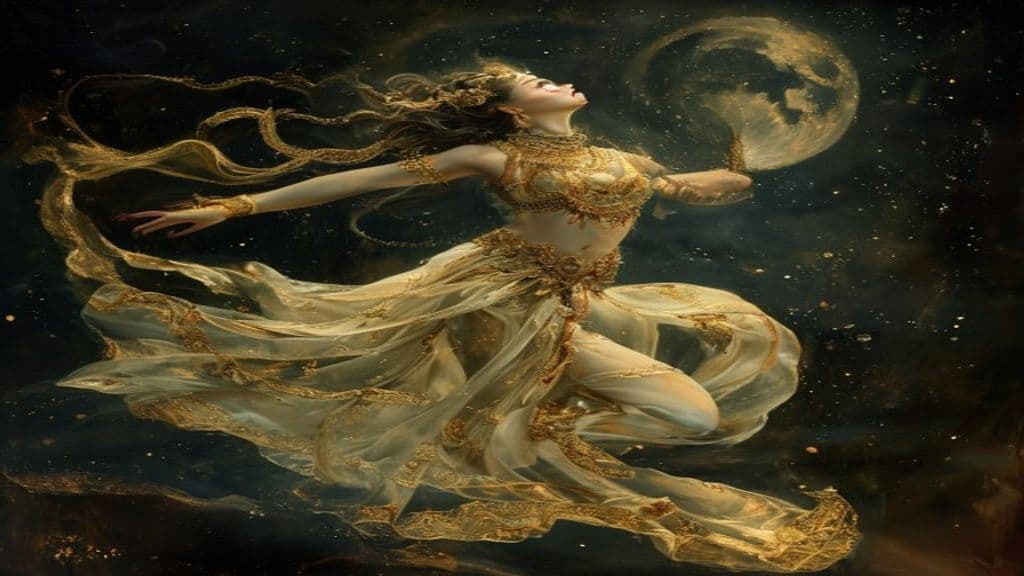
Apsara
Celestial dancers and water nymphs of Hindu cosmology — beautiful semi-divine beings who dance at the court of Indra and, by his command, descend to earth to distract sages from excessive asceticism.
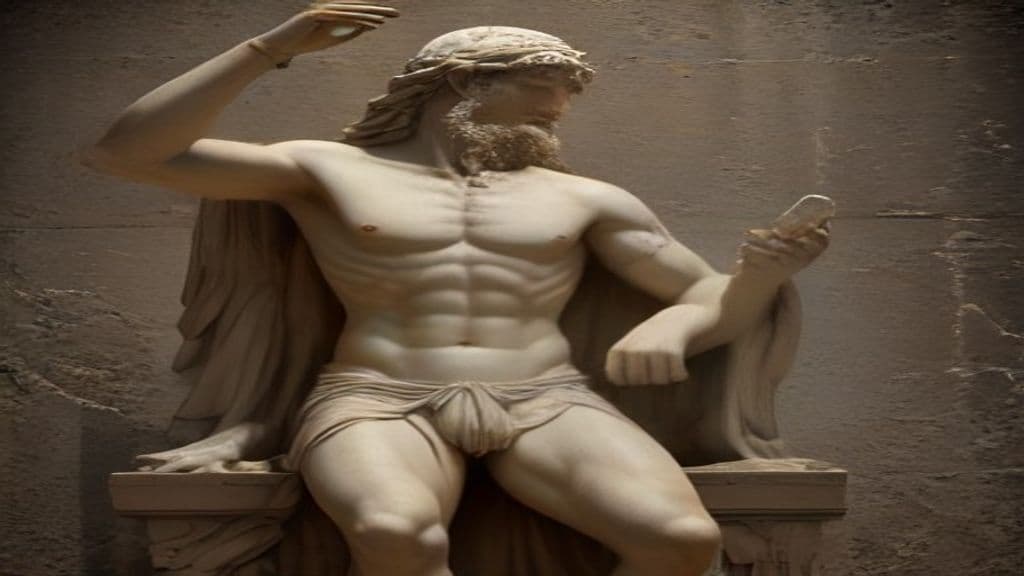
Hermes
Hermes is an Olympian god in ancient Greek religion who functions as the herald of the gods, an intermediary between mortal and divine realms, and a psychopomp guiding souls to the afterlife. He is associated with travel, boundaries, commerce, thieves, oratory, and liminality; in Hellenistic contexts he is syncretized with Egyptian Thoth as Hermes Trismegistus.
Community Record
- [1]Eryx (king of Sicily) – Wikipedia. Wikipedia entry summarizing ancient traditions about Eryx, variant parentages (Poseidon; Aphrodite and Butes) and association with the Elymians and the city/mount Eryx.wiki
- [2]ERYX - Sicilian King of Greek Mythology (Theoi Project). Theoi summary noting parents (Poseidon or Butes and Aphrodite), role as king of Eryx in Sicily, and tradition that he was slain by Heracles.literary
- [3]Aeneid, Book V (Virgil). Virgil locates a rising temple to the Paphian queen on the top of Eryx and places Aeneas in alliance with a local king of Eryx (Acestes), linking the site to Roman epic tradition and cultic topography.literary
- [4]The Histories of Polybius (summary / Brian Carnell's Wiki). Summary of Polybius noting that a commander seized Eryx and became master of both the temple of Aphrodite and the city, attesting to the temple's political and cultural prominence at the site.other
- [5]Erice / Eryx — RomeArtLover travel summary. Modern summary linking ancient tradition, the mountain-city of Erice (Eryx), and its cultic importance in Sicily.other
- [6]Sicilian History (Dieli.net summary). Regional history pages noting Elymian settlement in western Sicily and the cultural backdrop for legends tied to Eryx/Ericé.other