
Ancient sources and later summaries present multiple, overlapping accounts for the island-name. One etymology records Εὔβοια as derived from εὖ 'good' + βοῦς 'ox' ('(the land of) the well(-fed) oxen'). Classical authors (as summarized by Strabo in later geographical tradition) offer variant mythic explanations: derivation from a heroine named Euboea, or derivation from a cave called Boösaule ('cow's stall') on the Aegean coast associated with the Io–Epaphus narrative. These competing accounts show the name operating as agricultural descriptor, eponymous heroine, and local topographic myth at once.
As a geographic entity Euboea is described in physical, non-anthropomorphic terms: a long narrow island roughly 180 km in length with a mountain range (peaks such as Dirfi, Kantili, Pyxaria, Ochi) and separated from Boeotia by the narrow Euripus Strait. As mythic personae the sources attest only that Euboea was the name of several women in Greek myth — for example, an Argive naiad daughter of the river-god Asterion — without surviving corporeal or descriptive details; these women are identified by lineage (naiads, daughters of a river-god) and social role rather than by a physical portrait.
The island's 'capacities' in the sources are geographic, economic, and historical rather than explicitly supernatural: ports and cities (Chalcis, Eretria) engaged in colonization and trade, and the island's maritime conditions (the extraordinary, anciently noted changing currents of the Euripus Strait) affected navigation and human activity. The mythic women named Euboea are recorded in a caregiving role — Euboea and her sisters Acraea and Prosymna are described as nurses of the infant Hera — but the supplied material attributes no specific miraculous powers or active supernatural agency to them.

Äio
No folkloric or mythological entity named "Äio" is attested in the provided source set. The available materials contain unrelated uses of similar letter sequences (e.g., the plant genus Aiouea, the astronomical body Io, software terms "io"), but none describe a being, tradition, or rituals called Äio.
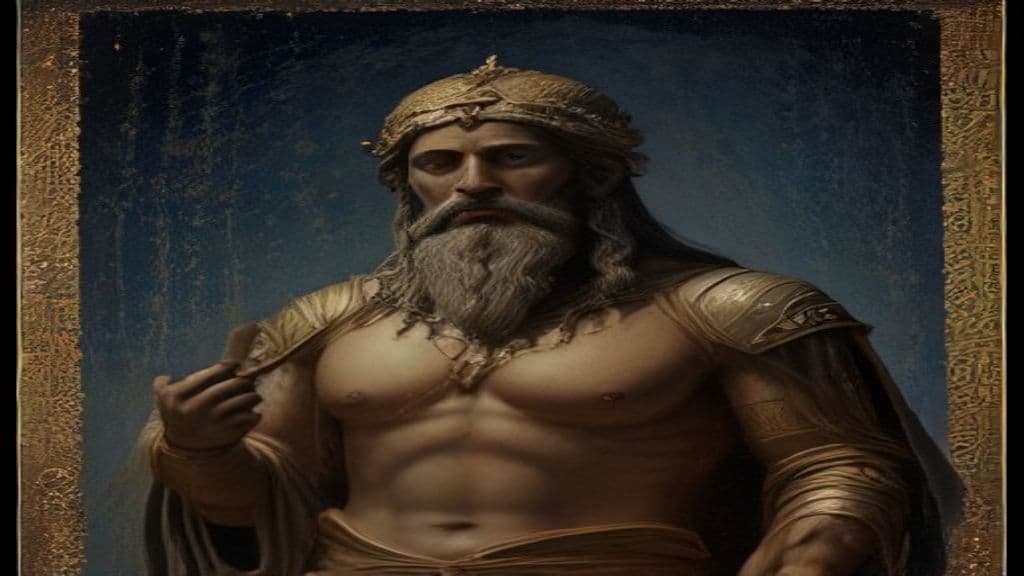
Epaphus
Epaphus (Ancient Greek Ἔπαφος) is a mythic human figure in Greek tradition, presented as a son of Zeus and Io who becomes king of Egypt and an eponymous ancestor in genealogical myths. He functions as a legendary founder-king linking Olympian divinity to foreign lands (notably Egypt and Libya) and as a progenitor in lineages that lead to figures such as Belus, Agenor, Cadmus, and Europa in some traditions.
Community Record
- [1]Euboea (Wikipedia). Wikipedia contributors, 'Euboea', Wikipedia, The Free Encyclopediawiki
- [2]Euboea (mythology) (Wikipedia). Wikipedia contributors, 'Euboea (mythology)', Wikipedia, The Free Encyclopediawiki
- [3]Nauplius (mythology) (Wikipedia). Wikipedia contributors, 'Nauplius (mythology)', Wikipedia, The Free Encyclopediawiki
- [4]Claudii Ptolemaei Alexandrini, Geographicae (Archive.org). Claudius Ptolemy, Geographicae Libri (excerpt/archive)other
- [5]Claudii Ptolemaei Alexandrini, Geographicae Lib VI (Archive.org). Claudius Ptolemy, Geographicae Libri (excerpt/archive)other
- [6]The Marathon Boy, 340-330 BC - Underwater discoveries (Archive.org). Archive resource cited among research notesother
- [7]The role of technology in the water–energy–food nexus. A case study: Kerinthos, North Euboea, Greece – ITIA. Technical/case study referencing regional geographyother