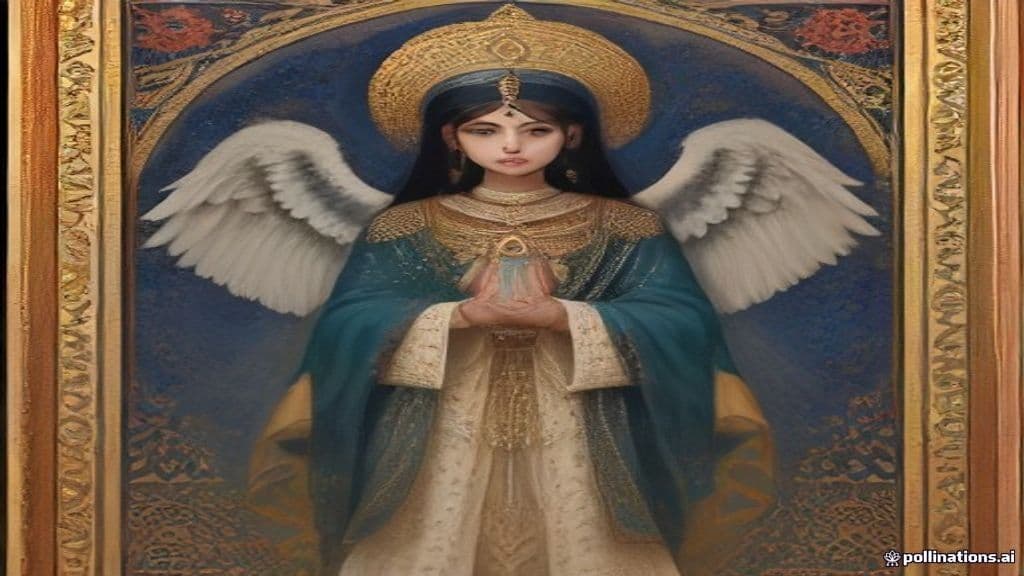
In the Avesta (notably the Frawardin Yasht, Yasht 13) fravashis are presented as immaterial beings that assisted Ahura Mazda in the original act of creation—'many hundreds... of mighty, victorious fravashis' are described as participating in bringing about material creation—and thereafter continue to sustain creation (cosmic bodies and natural orders). Middle Persian continuations preserve the term in forms such as fravard/fravahr, and the concept becomes integrated into calendrical and ritual practice (e.g., the month Farvardin and the festival Frawardigan/Hamaspathmaedaya). Multiple etymologies are attested in later sources (derivations from roots meaning 'to choose', 'to cover/ward', 'to cause to grow'), which reflect competing semantic traditions rather than a single unified etymology.
The Avesta gives no physical description of fravashis. Later cultural expression commonly associates the fravashi with the faravahar (winged‑disc) emblem, but that visual identification is a later traditional interpretation rather than an Avestan physical portrayal.
Scriptural descriptions (Yasht 13 and related Avestan passages) attribute to fravashis roles as creator‑assistants and ongoing sustainers: they are said to maintain the course of sun, moon, and stars, to nurture waters and plants, to strive for the prosperity of family/settlement/tribe/country, and to protect the unborn. They are invoked to aid and protect worshippers and are celebrated for martial assistance in battle (Yasht 13). In tradition the fravashi is closely connected with the urvan (often translated 'soul'): some passages describe the fravashi as sending out the urvan into the material world to act in the cosmic struggle, and other passages show the urvan returning after death to its fravashi (on the morning of the fourth day) where experiences are gathered to benefit future generations; Avestan texts sometimes co‑identify fravashi and urvan, indicating textual fluidity.
Weaknesses
- othernone attested in provided sources
Wards
- mantrakshnuman (invocation from Yasht 13)
- ritualFrawardigan / Hamaspathmaedaya observance (year‑end rites honoring fravashis)
Community Record
- [1]Frawardin Yasht (Yasht 13) — Khorda Avesta (English translation). Khorda Avesta, Frawardin Yasht (Yasht 13) summary and textacademic
- [2]Fravashi — Wikipedia. Wikipedia article 'Fravashi' (summary of Avesta and later tradition)wiki
- [3]J.J. Modi, The Religious Ceremonies and Customs of the Parsees, Part 5. Modi, listing Afrinagans and liturgical practices related to fravashisacademic
- [4]Wikidata: Fravashi. Wikidata entry summarizing terms and formsother