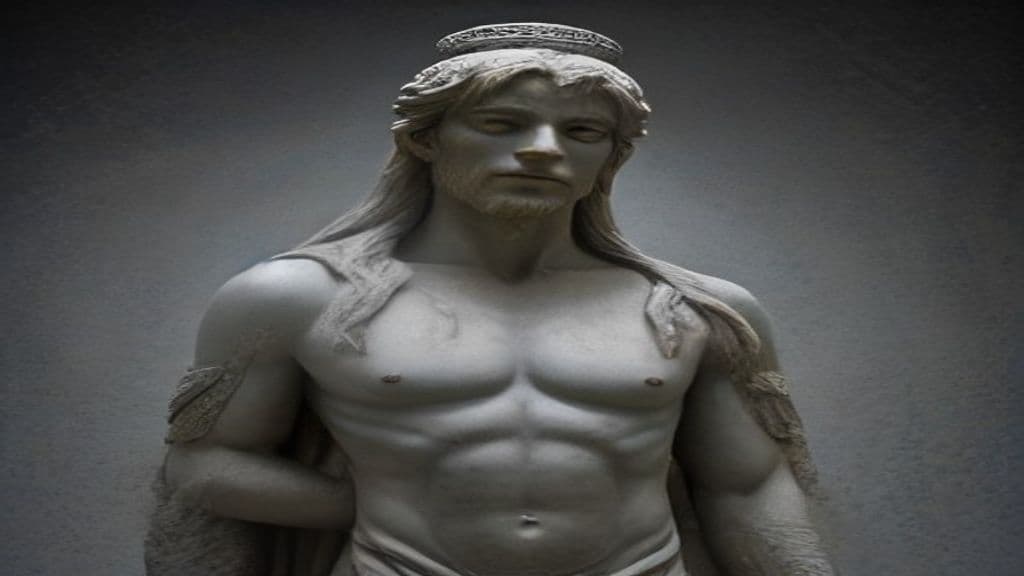
Freyr is a son of the Vanir god Njörðr and his sister-wife and is twin brother to Freyja; in mythic accounts he receives Álfheimr as a teething present and is linked to the Swedish Yngling royal lineage (epithet Yngvi-Freyr). Literary sources portray him as a central Vanir figure whose cultic association with Sweden (including an image at Uppsala reported by Adam of Bremen) and ties to kingship and fertility make him both a divine ancestor figure and a guarantor of agrarian and political well-being.
Surviving sources do not provide a single, detailed anthropomorphic portrait; instead they attest cult images and characteristic attributes. Adam of Bremen reports a phallic statue of the deity (Latinized as Fricco) in the Temple at Uppsala. Snorri's accounts emphasize Freyr's possessions— the dwarf-made ship Skíðblaðnir (which always has a favorable breeze and can be folded and carried in a pouch) and the boar Gullinbursti (whose mane glows to illuminate the way)—rather than fixed bodily description. Overall the literary record preserves symbolic and cultic representations (phallic imagery in Adam; named artifacts and attendants in Snorri) but no unified, detailed physical description.
Freyr's principal functions, ascribed in the Prose/Poetic Edda and in Adam of Bremen, are rulership, fertility, peace, prosperity, fair weather, and good harvest; he is a beneficent intermediary whose favor is sought in marriage and seasonal fertility rites (Adam records libations to his image at marriage). He possesses magical artifacts (Skíðblaðnir, Gullinbursti) that aid travel and illumination. Mythic narratives show him capable in combat—he slays the jötunn Beli with an antler after having given away his sword—but his prior gift of a self-fighting sword has decisive consequences: without it he is prophesied to fall to the fire jötunn Surtr at Ragnarök.
Weaknesses
- conditionabsence of the self-fighting sword (given away to win Gerðr)
Wards
- otherNo recorded wards or protective rites against Freyr in the supplied sources (literary and historical accounts record veneration and libation rather than warding)
Freyja
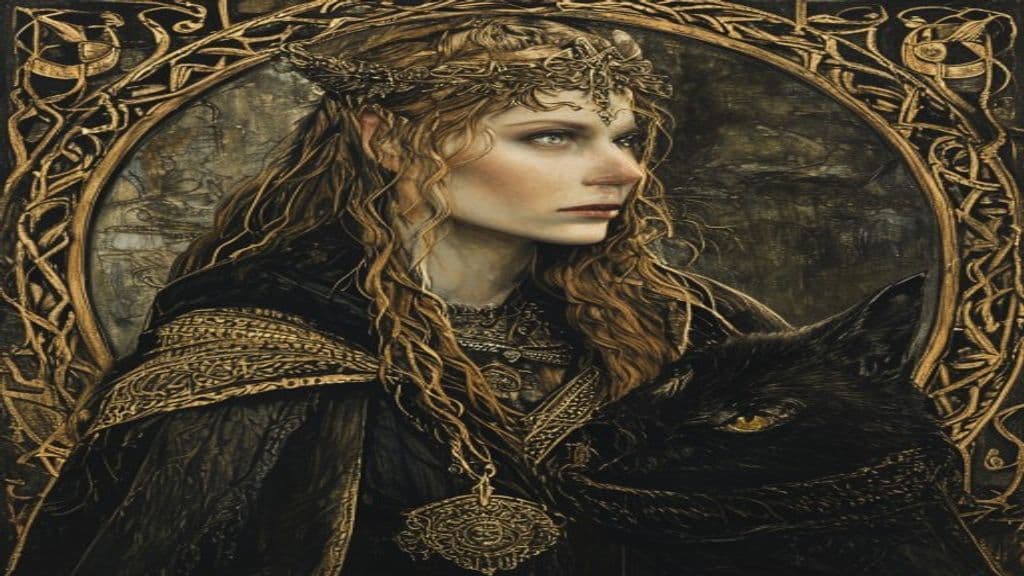
Freyja is a major Vanir goddess in Norse mythology associated with love, beauty, fertility, gold, war, and the seiðr form of magic. She rules the field Fólkvangr and the hall Sessrúmnir, where she receives half of those slain in battle, and is attested across the Poetic Edda, the Prose Edda, skaldic poetry, and later Scandinavian folklore.

Surtr
Surtr is a foremost fire-associated jötunn in Old Norse myth who stands at the frontier of Múspell (Muspelheim). In eschatological sources he leads the sons of Múspell from the south at Ragnarök, bears a bright flaming sword from which light shines more brightly than the sun, and flings fire that burns the world.
Community Record
- [1]Freyr - Wikipedia. Wikipedia contributors. "Freyr." Wikipedia, The Free Encyclopedia.wiki
- [2]Freyr - Wikidata. Wikidata: Q16424289other
- [3]Adam of Bremen (reported material as summarized in secondary sources). Adam of Bremen, as summarized in modern sources: report of a phallic statue at Uppsala and libations to 'Fricco' at marriages (see Freyr, Wikipedia entry).literary
- [4]Prose Edda / Snorri Sturluson (as summarized in secondary sources). Snorri Sturluson, Prose Edda: accounts of Skíðblaðnir, Gullinbursti, Skírnir's errand, giving away the sword and death at Ragnarök (summarized in modern sources).literary