
The narrative centers on Genevieve as wife of the palatine Siegfried of Treves who is falsely accused of adultery—often by the majordomo Golo or a rejected suitor—and sentenced to death. According to the popular version summarized in the sources, the executioner spares her, and she lives for six years with her son in a cave in the Ardennes nourished by a roe deer. Siegfried later discovers her while pursuing the roe, learns of Golo's treachery, and restores her honour. The literary popularity of the tale expanded from the late medieval period into early modern Europe; the story was widely circulated and was notably popularized in René de Cerisiers' 1638 L'Innocence reconnue, ou vie de Sainte Genevieve de Brabant. Some scholarship links the legend to a historical miscarriage of justice—Marie of Brabant, executed in 1256—and the change of name in popular retellings may reflect assimilation to the cult of St. Genevieve, patroness of Paris.
Primary sources and summaries supply no sustained physical description. In narratives she is portrayed socially as a noblewoman—the wife of a palatine—so popular imagery and dramatic renderings commonly depict her in the garb of a medieval noblewoman prior to her downfall. In the exile episodes she is represented as a fugitive mother living in a cave in the Ardennes for six years, physically reduced by hardship yet caring for an infant son and sustained by a roe deer; later restorative scenes show her reinstated to honour. The provided sources emphasize role and circumstance rather than fixed bodily traits.
The legend attributes no supernatural powers to Genevieve. Her 'abilities' are ethical and narrative: steadfast chastity, patience under unjust suffering, maternal care, and moral endurance. Her survival depends on non-magical plot devices recorded in the tradition—mercy from the executioner who spares her and provision from a roe deer that nourishes her and her child during years of hiding. Her role is primarily exemplificatory rather than supernatural.
Weaknesses
- conditionvulnerability to false accusation and social repudiation
- conditionreliance on providential mercy (e.g., executioner's pity, animal sustenance)
Wards
None recorded.
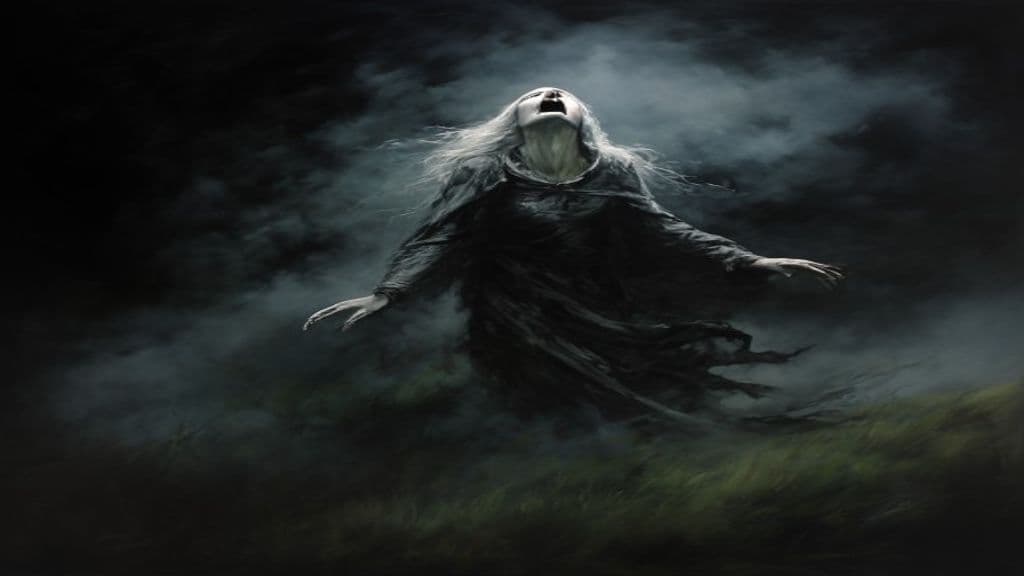
Banshee
A female spirit of Irish and Scottish folklore whose wail heralds an impending death in a family of Gaelic descent. Not a cause of death — a witness to it.
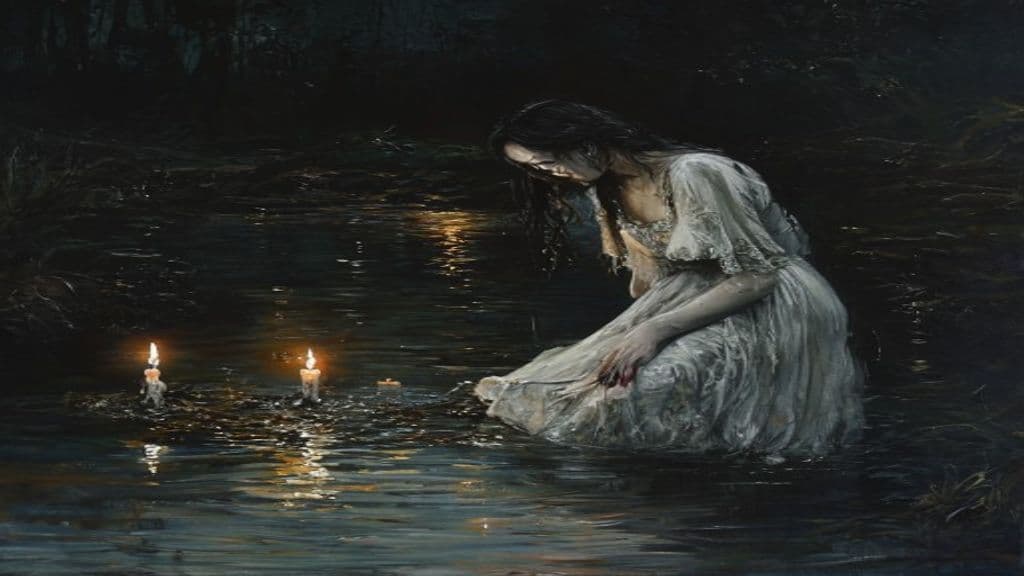
La Llorona
The Weeping Woman of Mexican folklore — the ghost of a mother who drowned her children and now wanders rivers and lakes, weeping for them and taking other children she finds at night.
Community Record
- [1]Genevieve of Brabant. Wikipedia, 'Genevieve of Brabant'wiki
- [2]Genevieve of Brabant (Wikidata). Wikidata entry Q269052other
- [3]L'Innocence reconnue, ou vie de Sainte Genevieve de Brabant (1638) — René de Cerisiers (noted in secondary summary). Referenced popularization in René de Cerisiers' 1638 work (noted in summaries and archival references)literary
- [4]Archive reference materials on Genevieve/Genoveva traditions. Archival source collection referenced in research notesother