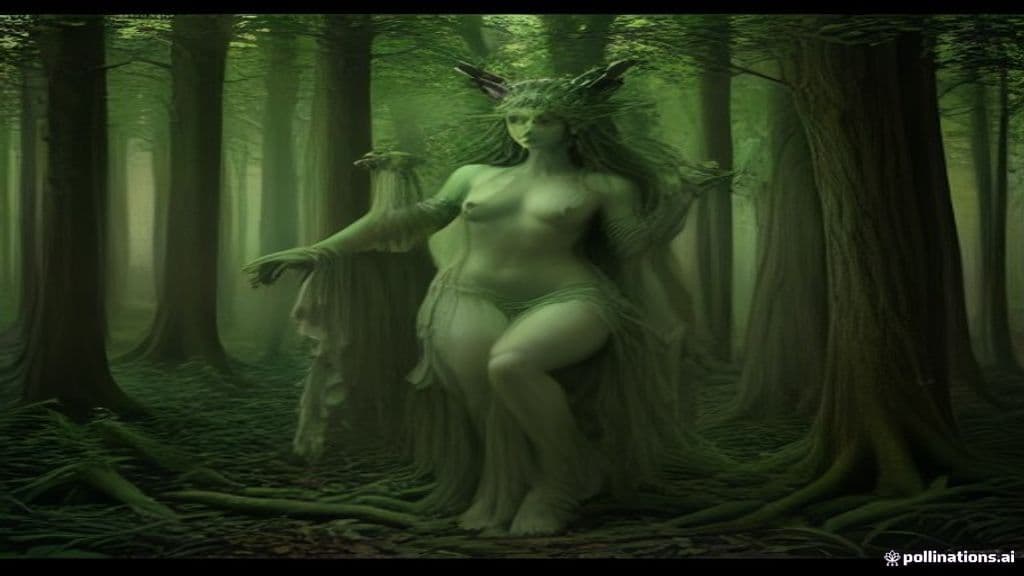
The term and concept come from ancient Greek mythic taxonomy of nymphs; the name (ἁμαδρυάς, hamadryás) combines háma ('together, concurrently') and dryás ('tree, wood nymph') and encodes the idea that the nymph's life is concurrent with a particular tree. Classical fragments and summaries treat hamadryads as either spirits born bonded to a single tree on which their life depends or, in some formulations, as the tree's animating presence itself. Myths preserve episodes in which harm to a hamadryad's tree brings divine or nymphal retribution, and remedial sacrifices to the nymph are recorded in narrative sources.
Classical sources identify hamadryads as tree-nymphs (female nature-spirits) tied to particular trees; trees associated with them are described as flourishing, tall, and beautiful. The surviving material does not supply standardized, detailed physical descriptions beyond their personhood as nymphs and their intimate association with a single living tree. Later modern summaries and roleplaying material stylize them further, but such portrayals are secondary to classical attestations.
Hamadryads' defining attribute is that their life is inextricably tethered to a specific living tree: if the tree dies, the hamadryad dies. Within mythic narratives they exercise reciprocal, moral agency toward humans who encounter their tree — rewarding those who protect or save the tree and punishing those who harm it. Classical stories record punishments (for example, the punishment of King Erysichthon and episodes cited in fragments and Apollonius of Rhodes) and also record that propitiatory sacrifices could be required to lift curses incurred by damaging a nymph's tree.
Weaknesses
- conditionmortality tied to tree
- otheroffence removable by sacrifice (narrative remedy)
Wards
- conditionrefrain from cutting, damaging, or killing trees (proper conduct to avoid offending hamadryads)
- ritualmake sacrifices to the offended nymph (propitiation advised in mythic narratives)
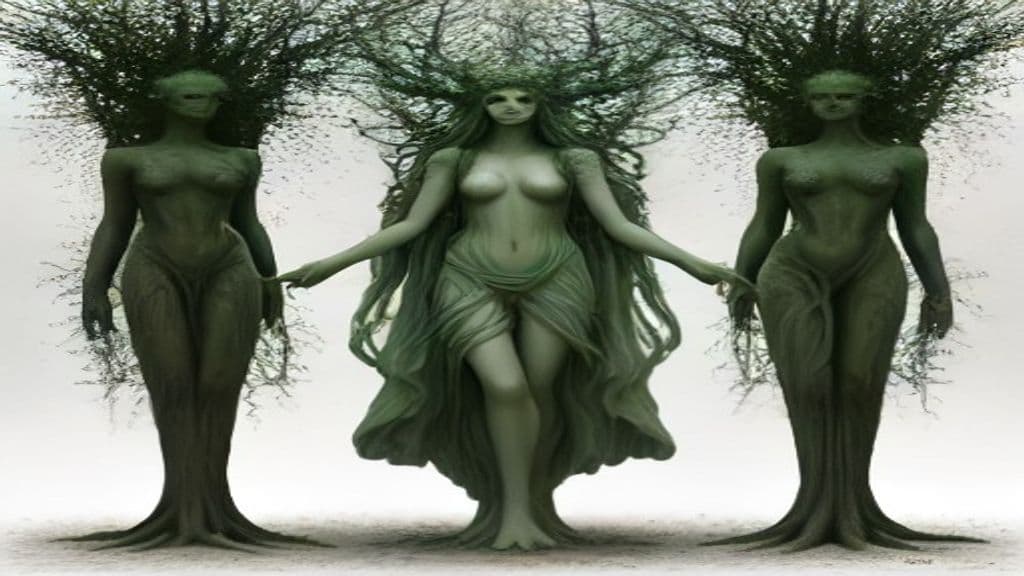
Dryad
A type of Greek nymph associated with trees—especially oak—often depicted as long‑lived nature spirits whose lives are connected to particular trees in some subtypes. Dryads enforce respect for trees and may punish mortals who harm them without prior appeasement.

Naiad
A class of female nature-spirits in ancient Greek religion whose being is bound to particular bodies of fresh water (springs, wells, fountains, streams). Naiads are local, embodied presences venerated in community cults and invoked in rituals of purification, healing, and life-cycle events, yet they may also act harmfully toward humans.
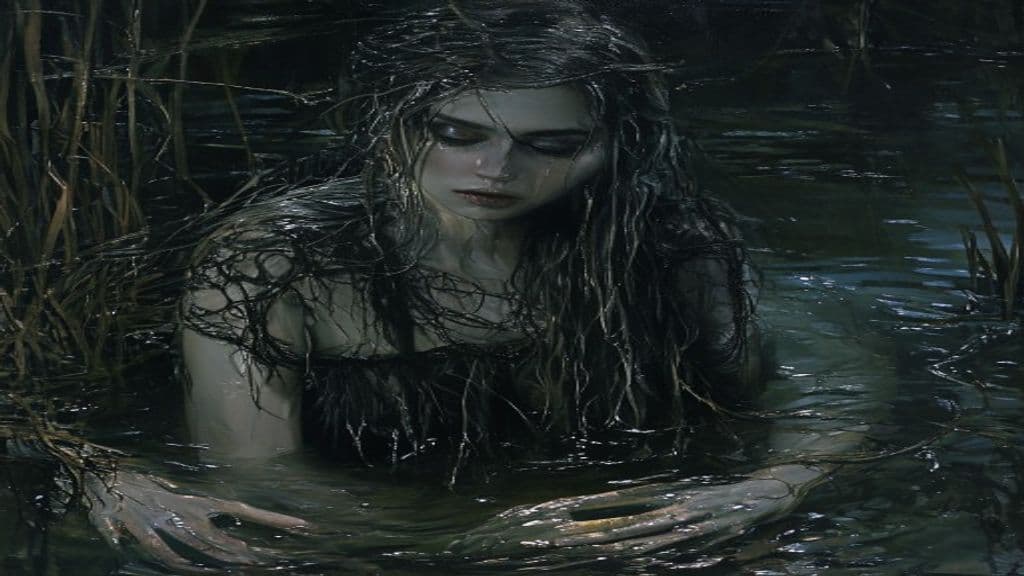
Rusalka
Water spirits in Slavic folklore — the spirits of young women who died by drowning or suicide, bound to rivers and lakes. Beautiful and dangerous, they can bewitch men to their deaths.
Community Record
- [1]Hamadryad - Wikipedia. Wikipedia, 'Hamadryad'.wiki
- [2]Hamadryads - Biblical Cyclopedia. Biblical Cyclopedia, 'Hamadryads'.other
- [3]Hamadryad (Pathfinder Bestiary entry, legacy). Aonprd Legacy Bestiary entry, 'Hamadryad' (modern secondary roleplaying source).other
- [4]Royal Hamadryad Hospital (name usage citation). Wikipedia, 'Royal Hamadryad Hospital' (modern cultural usage of the name).wiki
- [5]HMS Hamadryad (name usage citation). Cardiff Parks: 'HMS Hamadryad' (modern cultural usage of the name).other