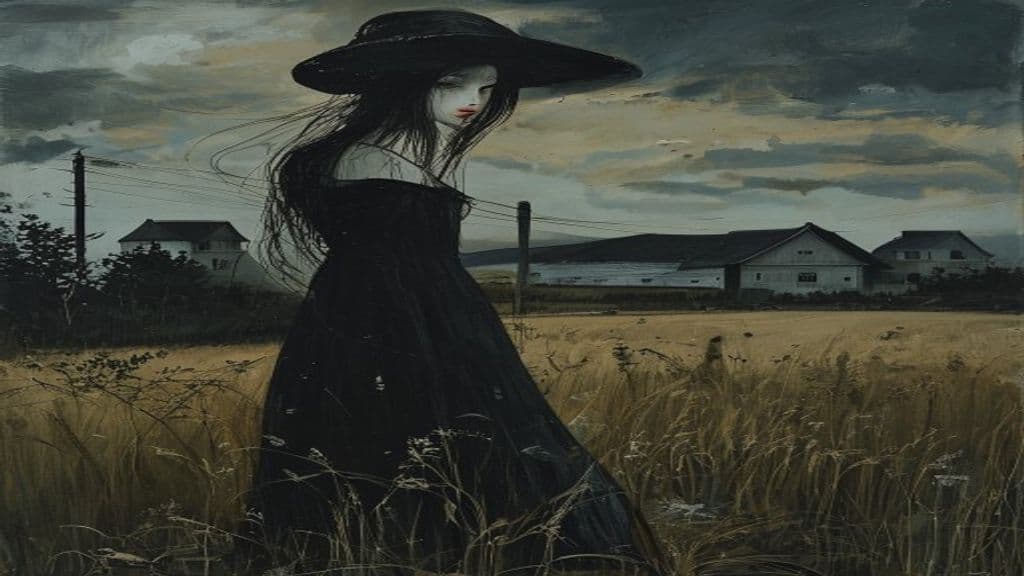
Hasshaku-sama is a figure that emerged in contemporary internet folklore; the earliest known public posting identifying the figure dates to 26 August 2008 on a Japanese textboard, and subsequent retellings and commentary circulated the trope as a modern yōkai-like ghost story. Sources present her not as part of classical religious hierarchies but as a place-bound menace of recent folkloric invention; commentators compare her to older mountain/wilderness female yōkai (notably Yama-onna) to show how the modern narrative adapts older motifs of giant female spirits associated with rural danger.
Accounts consistently describe Hasshaku-sama as an extremely tall woman — named for her height as 'eight shaku' (rendered in English as roughly eight feet or approximately over two metres in popular translations) — with pale skin, wearing a one-piece dress and a hat. Retellings emphasize the distinctive tall female silhouette and the hat rather than detailed costume variation; sources note that age and exact clothing details may vary between narrative instances, but the basic image (giant woman in dress with hat) is stable in the canonical accounts.
In the core anonymous tale and later summaries, Hasshaku-sama targets young boys and girls who enter or return to specific rural or isolated places, particularly at evening or night. She is said to produce an odd 'po po po' sound on appearance and to attempt to lure victims by mimicking familiar voices and knocking on windows or doors to draw them outside; victims taken by her are described as unlikely to survive past the following morning unless protected. Stories also present her as place-bound in that she can be contained or trapped within a geographical zone by protective objects such as Jizō statues.
Weaknesses
- ritualsealing by Jizō statues
- substancesalt (mounds of salt placed inside a sealed room)
- ritualprotective talismans placed on or around a room
- conditionrefusing to open the door and remaining inside until morning
Wards
- ritualplacement of Jizō statues
- ritualsealed room with talismans and salt
Harpocrates (Horus the Child)
Harpocrates is the Hellenistic form of the Egyptian Har-pa-khered (Heru-pa-khered), the infant aspect of Horus representing the newborn sun; in Ptolemaic Alexandria he was adapted into a minor god associated with silence, secrets, confidentiality, and the protection of reputations.
Harpy
In Greek and Roman myth, a harpy is a hybrid bird-human creature and personification of storm-winds that acts as an agent of divine punishment — snatching food, fouling victuals, and carrying off or tormenting wrongdoers, sometimes delivering them to chthonic justice.
Harsomtus
Harsomtus (also Harsomptus, Somtus) is an ancient Egyptian child-deity associated with fertility, birth and the solar-primordial creative principle. Worshiped in local temple contexts (notably Dendera and Edfu) and venerated in mammisi (birth-houses), he functions as a youthful or infant form of the Horus/Ra divine line and is integrated into regional triads and family-group theology.
Harut and Marut
A pair of figures named in the Qur'an (Surah 2:102) and elaborated in classical Islamic exegesis as heavenly beings associated with Babylon and the transmission of sorcery; their status (angels, kings, or men) and culpability are debated across commentaries. They function etiologically to explain the origin of illicit magic and as exemplars of divine testing or temptation.
Hashihime
Hashihime (橋姫, "Bridge Maiden/Princess") is a Japanese literary and folkloric figure variously depicted as a poetic emblem of lonely waiting at bridges and, in later tales and drama, as a woman who through ritual transforms into a violent, bridge-associated vengeful spirit.
Hashmal
In the supplied Jewish textual materials, Hashmal (Hebrew חַשְׁמַל; pl. Hashmallim) appears both as a luminous element in Ezekiel's prophetic theophany and as the name of an angelic rank in later Jewish angelology, described in secondary sources as administrative officers of Heaven.
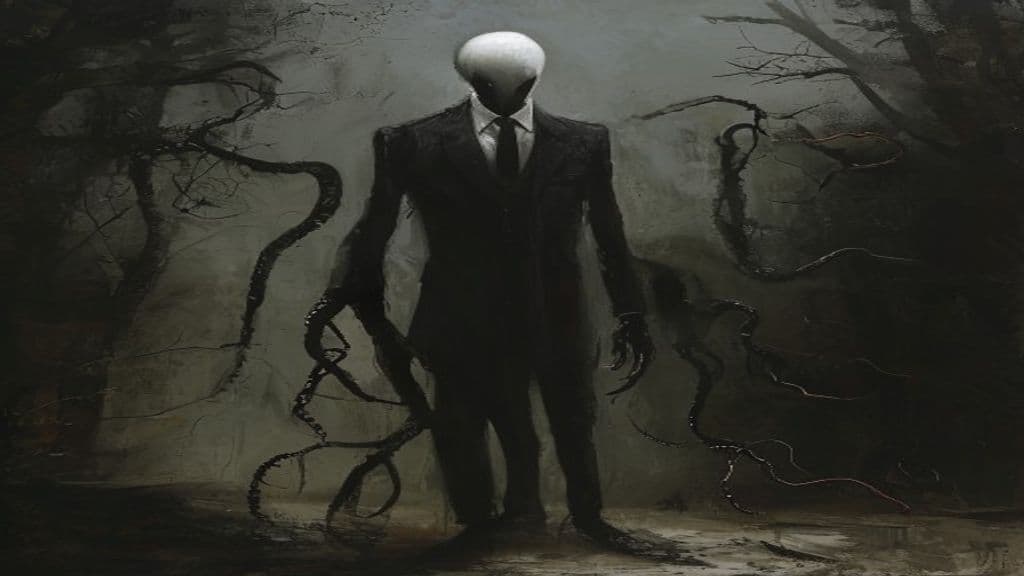
Hat Man
A modern popular-paranormal variant of the 'shadow person' phenomenon: described in sources as a humanoid, shadow-like figure discussed in paranormal communities and occasionally linked in contemporary notes to drug- or sleep-related experiences.
Hata no Kawakatsu
Hata no Kawakatsu (秦河勝 / Hada no Kōkatsu) is a semi-legendary Asuka-period courtier and leader of the Hata clan attested in classical chronicles. In the Nihon Shoki he appears as a high-ranking official who received a Buddha image from Prince Shōtoku, founded Hachioka-dera (Kōryū-ji), escorted foreign envoys, and suppressed the popular cult of Tokoyo-no-Kami. Later medieval traditions expand his biography with legendary accretions (e.g., claimed descent or identification with Qin imperial lineage, enshrinement as Ōsake Daimyōjin, and association with performing-arts ancestry).
Hathor
Hathor (Ancient Egyptian ḥwt-ḥr, 'House of Horus') is a major polyvalent goddess of ancient Egypt associated with the sky, maternal and royal motherhood, music, joy, fertility, and the Eye of Ra; she appears in multiple local manifestations and assisted the deceased into the afterlife.
Hatif
Hatif (Arabic: هَاتِف, hātif) is an auditory phenomenon in Arabic and Bedouin traditions described as a voice heard without discovering the body that made it. Sources record multiple, sometimes conflicting explanations: an unseen communicator such as a jinn, the voice of the dead near graves, or a psychological hallucination arising from loneliness.
Hatme
A highly fragmentary attestation: one metadata entry (Wikidata) labels Hatme as a "Spirit of the Prophet Muhammad," while the remainder of the provided corpus uses the lexeme "hatme/hatme yapmak" in non-ethnographic contexts (ritual-event names, building names, course tags, forum posts). No corroborating ethnographic description of a folkloric being is present in the supplied materials.
Hauhet
Hauhet is the feminine personification of endlessness or eternity in the Egyptian Ogdoad of Hermopolis (Khmun). She functions as the feminine counterpart to the male deity Heh and represents the boundless, pre-creation watery chaos (Nu) rather than acting as a localized, interventionist deity.
Community Record
- [1]Hasshaku-sama. Wikipedia: 'Hasshaku-sama (八尺様; "Ms. Eight Foot Tall") is a Japanese urban legend...' and related summaries on appearance, behavior, wards, and comparison to Yama-onna.wiki
- [2]Wikidata: Hasshaku-Sama. Wikidata entry summarizing metadata for the Hasshaku-sama topic.other
- [3]Otherside Picnic (archive entry). Archive synopsis noting Hasshaku-sama appears as one of the dangerous beings spoken of in real ghost stories within the fiction.literary
- [4]Archived fan/derivative materials referencing Hasshaku-sama. Archive item noted among source materials indicating later fan/derivative uses and parodic/erotic reinterpretations of the figure (used to show cultural diffusion rather than canonical ritual practice).other