Hecuba appears in the epic tradition as queen of Troy, wife of King Priam and mother of many children including Hector, Paris (Alexander), and Cassandra; Homeric and tragic sources present her as a Troy-based royal figure during the Trojan War. Genealogical variants appear in the wider classical tradition: some sources record differing parentages and later compilers (e.g., summaries of Stesichorus and mythographical compilations such as Pseudo-Apollodorus) preserve variant fates after the sack of Troy. Core narrative arcs place her in the Iliad during the war (notably Book 6 and Book 24) and in post-fall tragedy (Euripides’ Hecuba and The Trojan Women); later authors and scholiasts preserve alternate endings (Stesichorus’ summary that Apollo took her to safety in Lycia is one attested variant; other later traditions—cited to Lycophron and scholiasts in the compiled summaries—record metamorphosis or rescue by Hecate).
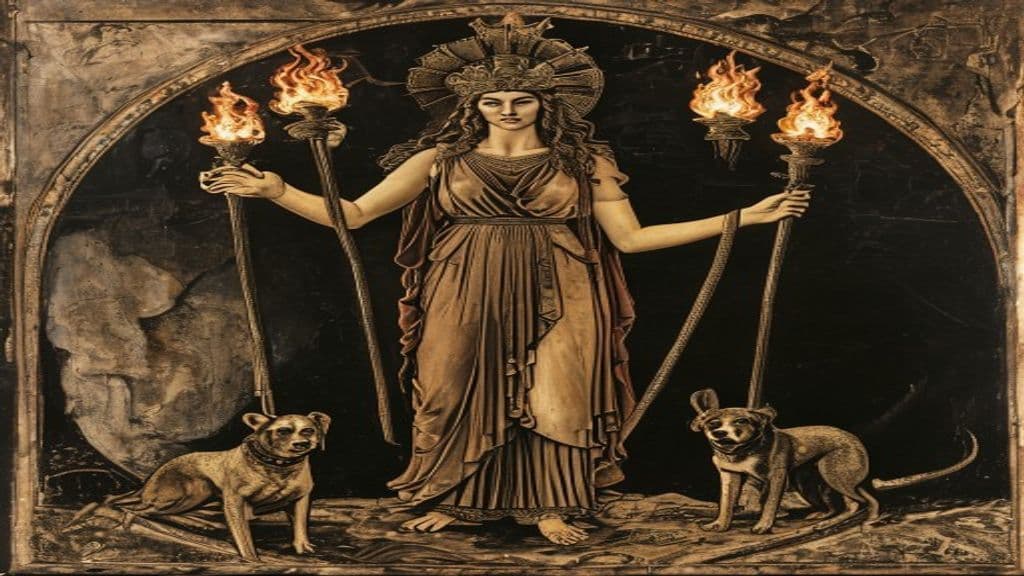
Classical descriptions in the compiled sources present two registers. In Byzantine and pseudo-historical summaries (e.g., Malalas) and in the Dares the Phrygian tradition she is described with physical attributes recorded as ‘‘dark, good eyes, full grown, long nose, beautiful, generous, talkative, calm’’ (Malalas) and as ‘‘beautiful, her figure large, her complexion dark’’ (Dares); these are presented as individual attestations rather than a unified canonical portrait. In epic and dramatic literature Hecuba is depicted primarily as an aged, grieving queen whose appearance is shaped by mourning and stately matronly status (Iliad and Euripides’ plays). In later variant traditions summarized in the sources, narrative versions transform her into a canine form (described as ‘‘a she-dog with fiery eyes’’ in some accounts) or portray her as one of Hecate’s canine retinue—physical descriptions that belong to post-classical metamorphosis motifs rather than the core Homeric/Euripidean portraits.
Primary sources show Hecuba’s capacities as social, ritual, and rhetorical: she performs libations, dedicates garments to goddesses, leads Trojan women in temple supplication, and delivers formal lamentations (episodes summarized from Iliad Book 6 and Book 24). In Euripidean tragedy her agency includes cunning and violent revenge: after learning that her son Polydorus was murdered by King Polymestor, she tricks Polymestor, blinds him, and kills his sons (Euripides’ Hecuba summary). Later traditions attribute transformative outcomes to divine response (e.g., a curse and subsequent metamorphosis into a dog, or rescue by Hecate), but these are presented in the sources as variant narrative endings rather than inherent supernatural powers.
Weaknesses
- conditionmortal vulnerability and suffering (no supernatural invulnerability attested)
Wards
None recorded.
Community Record
- [1]Hecuba — Wikipedia. Wikipedia, entry 'Hecuba'.wiki
- [2]Hecuba (play) — Internet Classics Archive (Euripides). Euripides, Hecuba (translation), Internet Classics Archive.literary
- [3]The Tragedies of Euripides, Volume I — Project Gutenberg. Euripides, collected tragedies (Project Gutenberg edition).literary
- [4]Trojan Women and Other Plays — Archive.org. Euripides, Trojan Women and other plays (Archive.org edition).literary
- [5]Euripidis Tragoediae : ad optimorum librorum fidem accurate editae — Archive.org. Critical edition of Euripides (Archive.org).literary
- [6]De Amsteldamsche Hecuba — Joost van Vondel (Project Gutenberg). Joost van Vondel, De Amsteldamsche Hecuba (translation/adaptation; Project Gutenberg).literary
- [7]Hecuba (Wikipedia page on the play). Wikipedia, entry 'Hecuba (play)'.wiki
- [8]Malalas (description) and Dares summaries — cited in compiled sources. Summaries in the compiled source set attributing physical descriptions to Malalas and to Dares the Phrygian (as reported in the compiled material).other
- [9]Stesichorus / Lycophron variant attributions — compiled summaries. Compiled source summaries attributing the Apollo/Lycia rescue to Stesichorus and the Hecate/canine variants to Lycophron and later scholiasts (as summarized in the source compilation).other