
Hymnic evidence presents Hendursaga as a divinity invested with nocturnal municipal duties rather than as an origin-figure. A hymn states that the goddess Nanshe bestowed upon him his functions and his insignia (a staff or possibly a torch), and other hymns and god lists place him among local/state-associated deities. In later bilingual sources (from the Old Babylonian period onward) he is equated with the Akkadian god Išum.
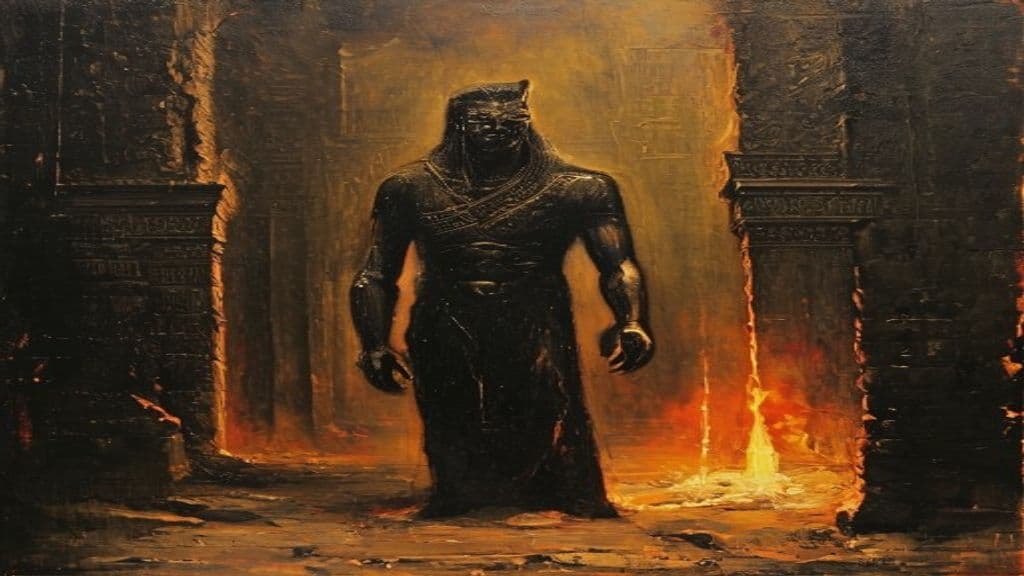
No detailed anthropomorphic iconography for Hendursaga is preserved in the supplied sources. Hymnic language records that he received an insignia described as a staff or perhaps a torch from Nanshe. A Sumerian hymn also states he is assisted by three groups of seven attendants; the first group's members are each associated with a creature (fox, dog, two birds—one pecking at insects possibly a raven and another a large vulture—wolf, a nin-imma bird possibly an owl, and a shark). The sources do not resolve whether these attendants are animal, hybrid, or spirit-forms.
Hendursaga's core functions are to patrol city thoroughfares at night, provide visible protective presence (epithets include 'watchman of the street,' 'lamp of the people,' and 'herald of the silent night'), and to act against hostile supernatural beings. Hymnic and incantatory material records invocations requesting his protection from named demon types (galla, maškim, udug, and an 'evil lamma'). He is described in a hymn as cooperating with Nanshe and her steward Enniglulu and as having attendant heptads who assist his nocturnal duties.
Weaknesses
- otherNone attested in the provided sources
Wards
- ritualLighting a torch and invoking Hendursaga's name
Community Record
- [1]Hendursaga - Wikipedia. Wikipedia contributors, 'Hendursaga,' Wikipedia, The Free Encyclopedia.wiki
- [2]Hendursaga - Wikidata. Wikidata entry Q5714073.wiki