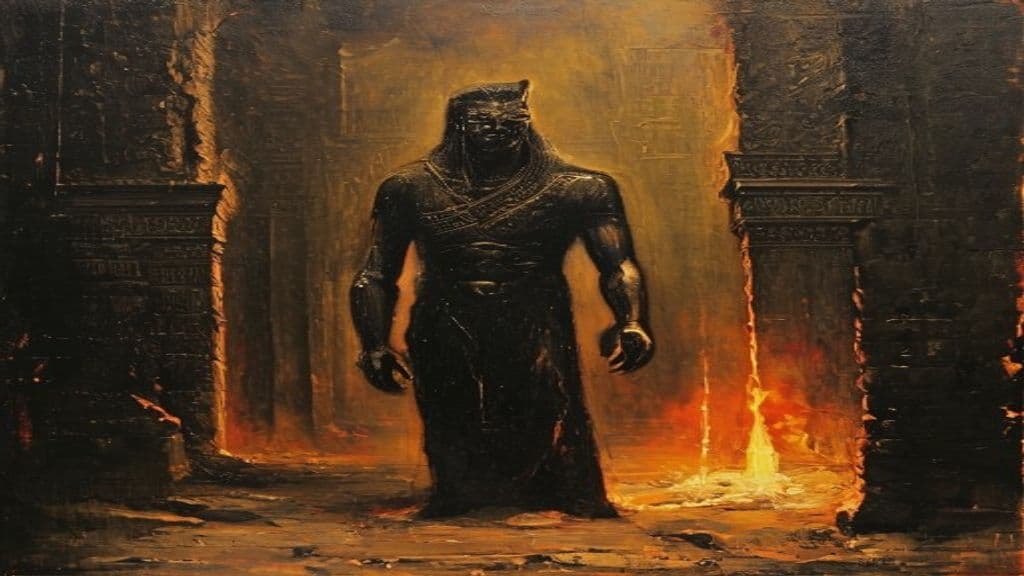
Ishum is attested in Mesopotamian sources from the Early Dynastic period onward through later periods; the oldest evidence for his worship includes theophoric names. Originally an Akkadian minor god without a clear Sumerian precursor, in later bilingual theology he was equated with the Sumerian Hendursaga and, after the Old Babylonian period, often came to be seen as the sukkal (attendant) of Nergal, replacing an earlier attendant such as Ugur. These developments reflect syncretic and re‑hierarchizing tendencies in Mesopotamian religion rather than a single linear origin narrative.
No pictorial representations of Ishum have been positively identified in surviving material, and no fixed iconography is preserved. Textual associations link him with fire imagery (for example, he is called a 'firebrand' [diparu] in the Epic of Erra), but this is an attribute in literature rather than a confirmed visual emblem.
Textual sources depict Ishum as a divine night watchman and herald of the street — epithets include 'Herald (nimgir) of the Street', 'Headman of the Street', 'Hero who Goes about at Night', and 'Minister (sukkal) of the Night'. He patrols urban streets at night and is invoked in personal devotion (theophoric names, cylinder seals) as a protector of households by safeguarding them from the exterior danger of the streets. In later tradition he serves as the attendant (sukkal) or companion of underworld/martial deities such as Nergal/Erra and appears alongside figures like Shubula and Laṣ in literary and ritual lists.
Weaknesses
- otherNo attested weaknesses
Wards
- ritualInvocation and offerings / theophoric naming
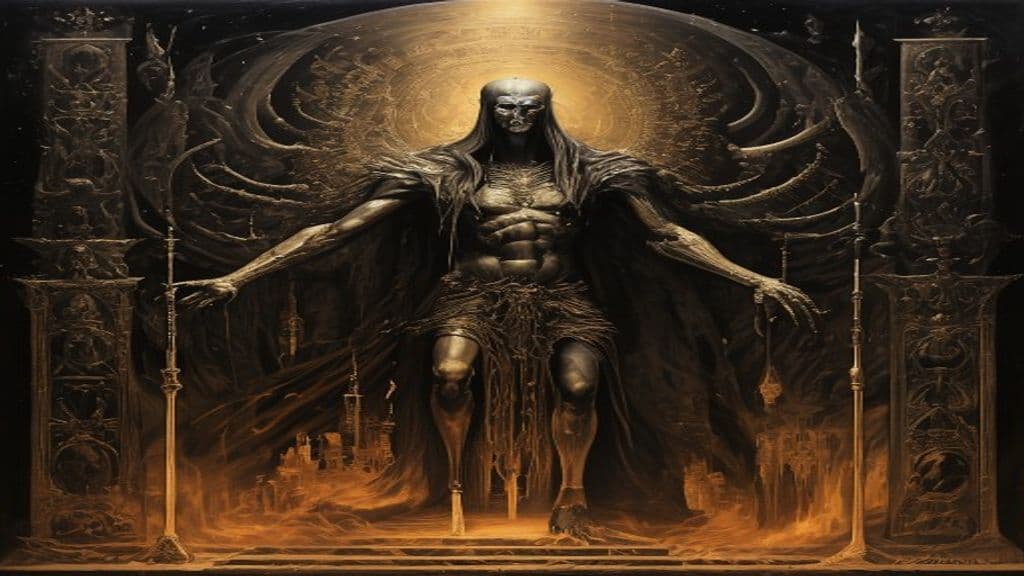
Nergal
Nergal is a major Mesopotamian deity associated with war, disease, inflicted death, and rulership of the underworld. Principal cult center at Kutha (temple E‑Meslam), he appears in hymns and myths (e.g., the Epic of Erra, "Nergal and Ereshkigal") and is sometimes equated with or called Erra or Meslamtaea.

Hendursaga
Hendursaga (Sumerian Dḫendur-saŋ) is a Mesopotamian deity described in hymnic and god-list sources as a divine night watchman who patrols city streets, bears an insignia (staff or torch), and protects nocturnal travelers from hostile supernatural beings. He is attested in connection with the state of Lagash and is equated with the Akkadian Išum in later bilingual contexts.
Community Record
- [1]Ishum. Wikipedia contributors, 'Ishum,' Wikipedia, The Free Encyclopedia.wiki
- [2]Ishum (Wikidata entry). Wikidata: Q1676195, Ishum.other
- [3]Erra and Ishum (The Erra Epic). Erra and Ishum / The Erra Epic (translation/summary as provided in supplied sources).literary
- [4]Erra and Ishum - GatewaysToBabylon. Erra and Ishum (text and commentary as provided in supplied sources).literary
- [5]Ninmug. Wikipedia contributors, 'Ninmug,' Wikipedia, The Free Encyclopedia (for spousal association cited in supplied sources).wiki