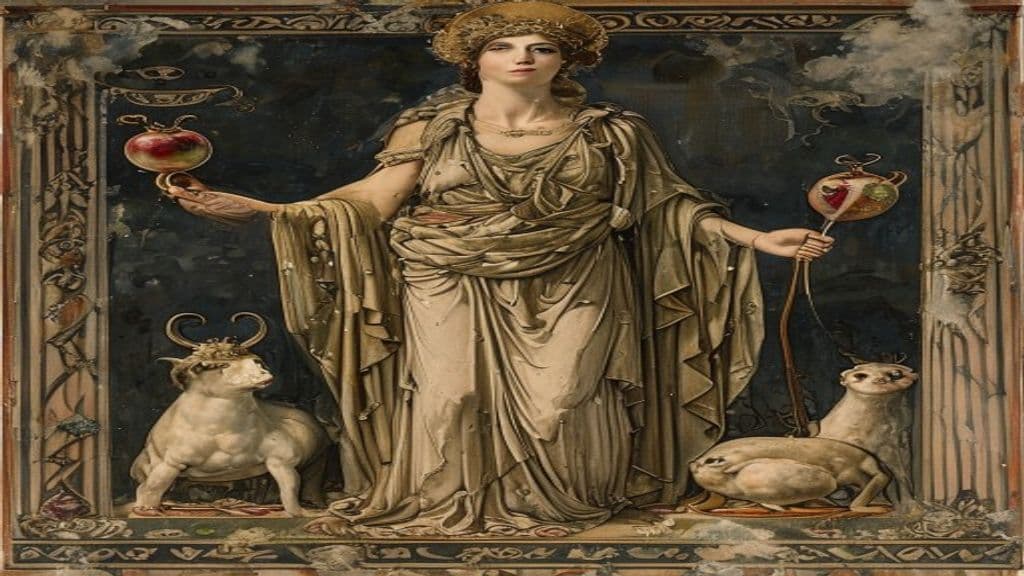
Hera is attested in Mycenaean Linear B as e-ra and appears throughout Homeric and later literary tradition as the consort of Zeus and one of the Twelve Olympians. Scholarly discussion in the sources indicates multiple, sometimes competing theories about her name and deeper origins (including possible pre-Greek, Anatolian, or Proto‑Indo‑European connections), and the evidence shows layered development: Mycenaean attestations, Homeric epithets linking her to older nature-goddess imagery, and diverse local cult practices at centers such as Argos, Samos, and Knossos that preserve archaic fertility or earth-bride motifs alongside her Olympian role.
Literary and iconographic conventions depict Hera as a dignified, matronly, often enthroned figure crowned with a polos or diadem and sometimes veiled to mark married status; Homeric epithet boōpis (‘cow-eyed’) and emblems such as the pomegranate appear in sources. Sacred animals associated with her in the literature include the cow, cuckoo, and peacock.
Sources describe Hera primarily in functional and relational terms: she presides over and legitimizes marriages, acts as protector of women in childbirth, and serves as tutelary deity for particular polities (notably Argos). In myth she exhibits a marked jealous and vengeful temperament toward those—especially Zeus's lovers and illegitimate offspring—who offend her; in cult contexts she is invoked in festivals and rites that reaffirm marital and civic order. Some local rites and archaic festivals associate her with fertility and earth-bride motifs.
Weaknesses
- conditionpolitical/relational limitation
- othermythic constraint relative to Zeus's supremacy
Wards
- ritualobservance of lawful matrimonial rites
- ritualcivic cult observance at Hera's sanctuaries (e.g., Argos)
- ritualfestival participation (sacred marriage/processional rites)

Zeus
Zeus (Ancient Greek: Ζεύς) is the supreme deity of the classical Greek pantheon, a sky-and-thunder god who rules as king of the gods on Mount Olympus and functions as a sky‑father who assigns roles among the immortals.
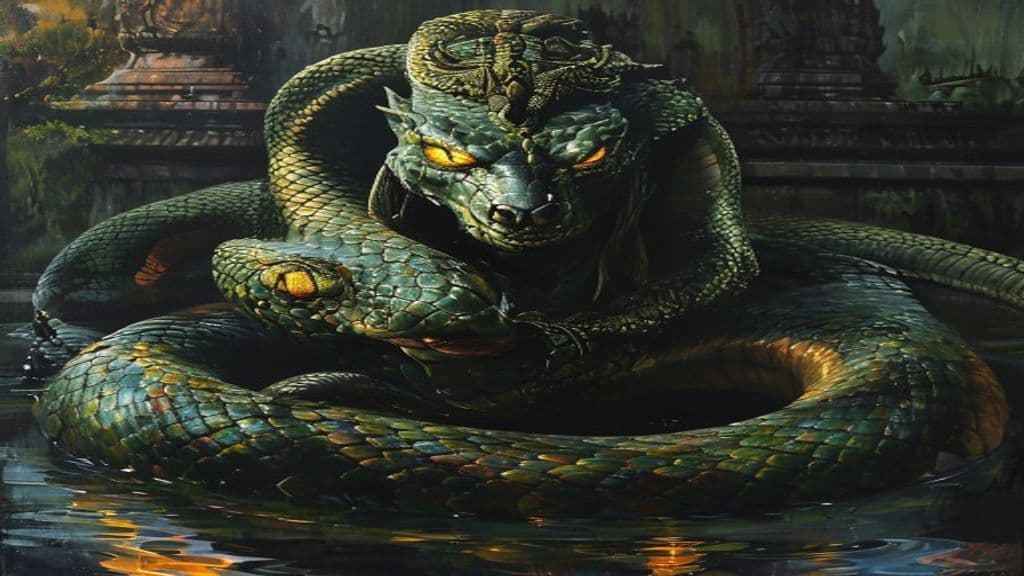
Naga
Divine serpent beings of Hindu, Buddhist, and Jain cosmology — powerful guardians of water, earth, and underground treasures. Revered as deities in South and Southeast Asia.

Apsara
Celestial dancers and water nymphs of Hindu cosmology — beautiful semi-divine beings who dance at the court of Indra and, by his command, descend to earth to distract sages from excessive asceticism.
Community Record
- [1]Hera — Wikipedia. Wikipedia contributors, 'Hera', Wikipedia, The Free Encyclopediawiki
- [2]Hera — Wikidata. Wikidata entry Q16427584other
- [3]Linear B attestations and cult loci mentioned in summaries. Summary material citing Mycenaean Linear B e-ra and references to Argos, Samos, Knossos (as collated in the provided notes)wiki