
Heshana Qaghan appears in Chinese and other near-contemporary records as Ashina Daman of the Ashina ruling clan who rose to the khaganate of the Western Turks in the early 7th century CE. He is presented as the second khagan of the Western Turkic Khaganate (per the cited summary) operating within the fractious environment of Turkic tribal confederations and imperial Chinese influence. His tenure is recorded through a series of political and military events between circa 605 and 619 CE: imposition of heavy taxation on the Tiele, a massacre of many Tiele chieftains that provoked rebellion, flight and military defeat, diplomatic engagement with the Sui court including imperial recognition and marriage in 611, and final loss of power and execution after being handed over in 619.
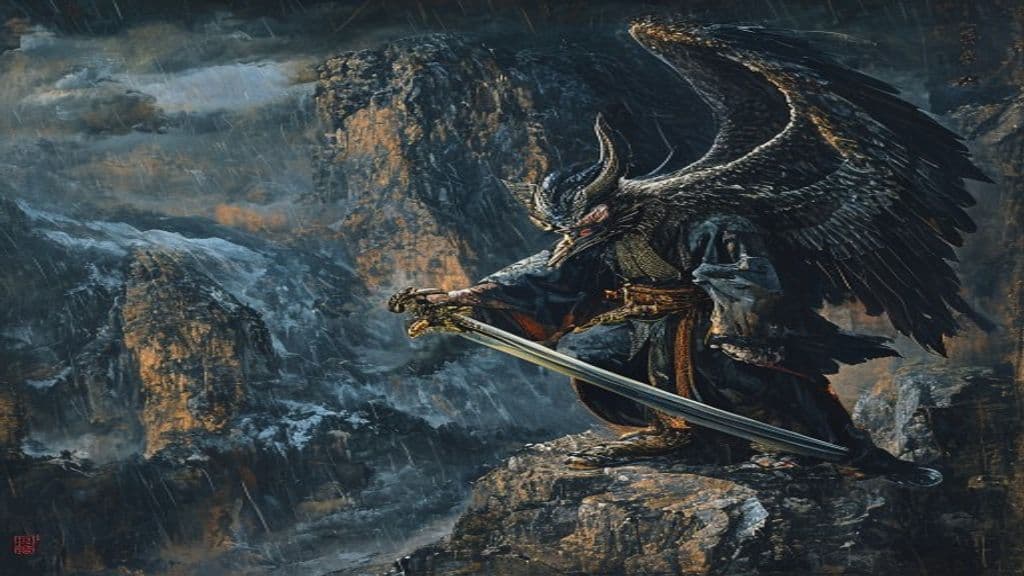
Contemporary sources cited in the available summary provide no physical description of Heshana Qaghan's person, dress, or features. Records identify him by title and clan name (Ashina Daman) and by honorific/transcribed khagan titles used in Chinese annals, but they do not preserve details of his appearance or emblematic regalia in the excerpted material.
The sources record Heshana Qaghan's capacities in political and military terms rather than supernatural powers. As khagan he exercised fiscal extraction and punitive authority over subject tribes, notably collecting excessive taxes from the Tiele and allegedly convening and killing about 100 Tiele chieftains, an action that provoked wide rebellion. The Tiele backed rival leaders (Geleng as Yiwuzhenmohe Khan and Yishibo as Yiedie Khan), driving Daman from Dzungaria toward the Ili River around 605. He was militarily challenged and routed by Shikui, after which he fled to Gaochang. Sui imperial diplomacy intervened: Pei Ju was dispatched to persuade him to come to the Sui court (he submitted after threats against his mother) and in 611 Emperor Yang granted him the title Heshana Qaghan and arranged a marriage to a Chinese princess. By 619 he had lost control of his khaganate and was at Chang'an, where, under pressure from Shibi khagan, Emperor Gaozu of Tang had him delivered to Eastern Turk emissaries to be executed.
Weaknesses
- conditionloss of tribal support
- conditionmilitary defeat by subordinates or rivals (e.g., Shikui)
- conditionvulnerability to Chinese imperial political leverage (threats to kin, promises of titles/marriage)
Wards
None recorded.
Community Record
- [1]Heshana Qaghan — Wikipedia. Wikipedia contributors, 'Heshana Qaghan', Wikipedia, The Free Encyclopedia, https://en.wikipedia.org/wiki/Heshana_Qaghanwiki