The sources do not present a single origin tale for 'Hyperbius' but record multiple independent personae bearing the name across Greek mythic cycles. One Hyperbius is listed as a son of Ares and reputedly the first to have killed an animal; another appears among the sons of Aegyptus who married (and in the standard Danaid narrative were killed by) the Danaids. A Theban Hyperbius, son of Oenops, is named among the defenders of Thebes during the war of the Seven against Thebes and is assigned the defense of the Oncaidian Gate. In civic-inventor traditions, an Athenian Hyperbius (brother of Agrolas or Euryalus in some versions) is credited with inventing brick-building and constructing the first brick houses and a wall around the Acropolis, while a Corinthian Hyperbius is credited with inventing the potter's wheel. These attributions function as local explanations for technologies and topographic features in mythic time (heroic/foundational eras). (Sources: classical mythographic summaries and Pausanias' genre of local antiquarian reporting as summarized in the provided materials.)
The extant references do not provide a consistent or detailed physical description for any Hyperbius. When described in narrative contexts the references are functional and genealogical (for example, identified as 'son of Ares' or 'son of Oenops') or occupational (inventor/builders). One literary context (the account of the Theban defenders in Seven Against Thebes) attributes to the defender of the Oncaidian Gate a shield bearing an image of Zeus, indicating an associated emblem rather than a personal physical portrait. No standardized iconography or bodily description is preserved in the cited excerpts.
Hyperbius figures are credited with ordinary/héroic human capacities rather than supernatural powers. Across traditions the name denotes: martial prowess and foundational violent acts (the son of Ares said to have been first to kill an animal; the Theban Hyperbius defending a gate in the Seven against Thebes), technical and artisanal invention (an Athenian Hyperbius credited with introducing brick-building and constructing Acropolis walls; a Corinthian Hyperbius credited with inventing the potter's wheel), and participation in mythic genealogies (a son of Aegyptus who is slain in the Danaid narrative). These behaviors are cultural attributions that explain technologies, civic features, and narrative events in heroic-age myth, not indications of supernatural agency.
Weaknesses
- othersubject to ordinary human fate (murder, death, mortality)
Wards
None recorded.

Daedalus
Daedalus (Greek Δαίδαλος) is a legendary master craftsman, architect, and inventor of Greek mythic tradition credited with complex constructions (the Labyrinth), ingenious devices (a wooden cow), and mechanical inventions (wings for flight). He functions as an archetypal artisan whose skill alters human affairs and whose pride produces moral and social consequences.
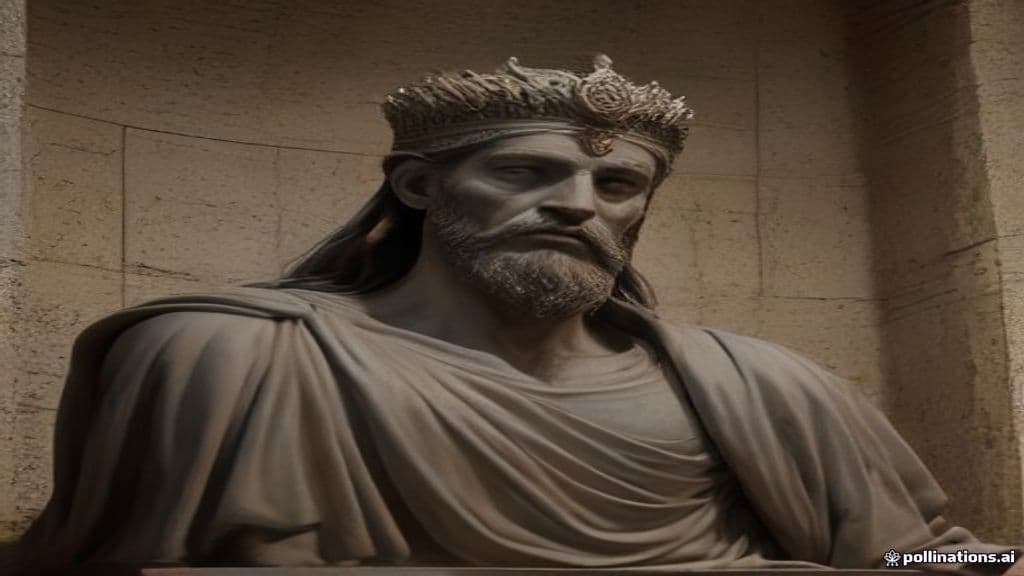
Eteocles
Eteocles is a mytho-historical Theban king of the Greek tradition, son of Oedipus, who becomes central to the dynastic feud with his brother Polynices that culminates in the war of the Seven against Thebes and the mutual killing of the two brothers.
Community Record
- [1]Hyperbius. Wikipedia entry 'Hyperbius' (summary of classical references)wiki
- [2]LP0010 The Bull of Marathon (Pausanias excerpt context). Archive recording containing Pausanias material and commentary situating inventor-attributions on the Acropolisother
- [3]Wikidata: Hyperbius. Wikidata item for Hyperbius, listing the multiple mythic personaewiki