
In the mythic-historical genealogies cited in the sources, Idomeneus belongs to the Cretan royal house descended from Europa and Zeus that includes Minos and Rhadamanthys. Sources identify him as a member of that dynastic network (variously rendered in the excerpts as son of Deucalion or otherwise tied into Minos' line), placing him in the generation of princes who became leaders at Troy. He is named among the suitors of Helen and thereby bound into the oath-cycle that precipitated the Trojan expedition, a motif used by the sources to explain his martial role and attendance at the war.
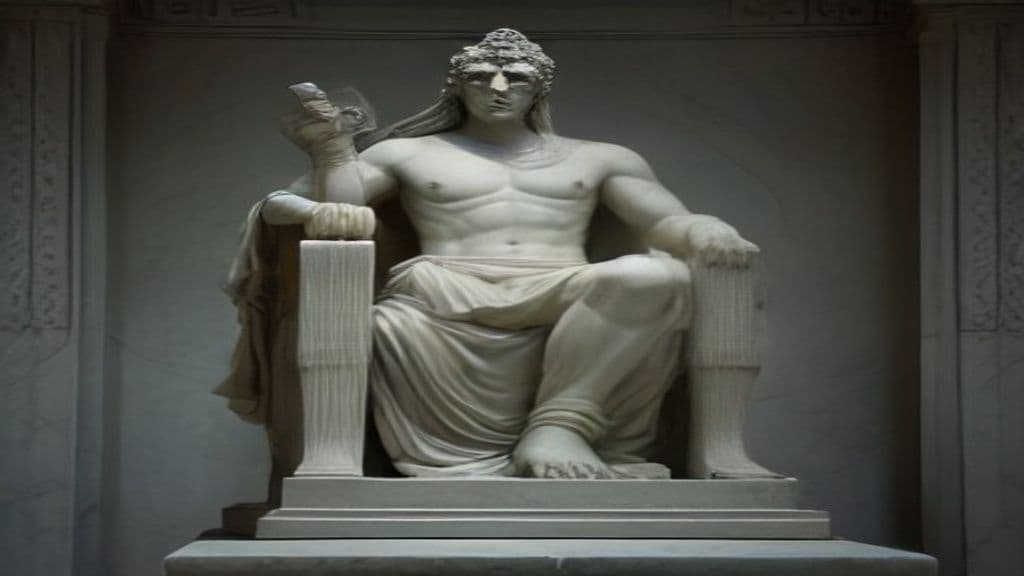
The provided sources do not supply a physical description of Idomeneus; ancient and modern excerpts treat him by social role and function (king, commander, father) rather than by bodily characteristics. Descriptions in the cited material emphasize his status — 'Cretan king and commander' — and later dramatic costume or staging is attested only indirectly through the existence of Mozart's opera rather than by specific bodily details.
Sources attribute to Idomeneus martial and political capacities typical of an epic-era king: he mustered and led the Cretan forces to Troy (explicitly described as commanding 'eighty black ships' in one account) and served among the network of Greek princes (he is listed as one of Helen's suitors). He is described as a comrade of Telamonian Ajax and as having Meriones as his charioteer and companion. These accounts present him as a powerful human commander and dynastic figure rather than as a supernatural agent; his postmortem role in local cult (entombed remains honored with sacrifices) indicates a commemorative, hero-cult function rather than extraordinary magical powers.
Community Record
- [1]Idomeneus (son of Deucalion) — Wikipedia. 'In Greek mythology, Idomeneus was a Cretan king and commander who led the Cretan armies to the Trojan War, in eighty black ships. He was also one of the suitors of Helen, as well as a comrade of the Telamonian Ajax. Meriones was his charioteer and brother-in-arms.' — Wikipedia entry: Idomeneus of Cretewiki
- [2]LP0021 The Cretans (Legendary Passages from Diodorus). 'Cousins Idomenus, son of Deucalion, and Meriones, son of Molus, fought in the Trojan war, and their entombed remains are honored with sacrifices.' — Legendary Passages (Diodorus reception) as presented on LP0021literary
- [3]Idomeneo, re di Creta, K. 366 (opera archive entry). Archive entry documenting the operatic work Idomeneo, re di Creta (K. 366) and associated performance materials and lineage (Mozart, Varesco after Campra/Danchet).other