Iphimedeia is presented in the sources as a Thessalian princess, daughter of Triopas. In Homeric and Hesiodic threads she becomes the lover of Poseidon, who is said to have answered her by fathering the twins Otus and Ephialtes (the Aloadae). Other traditions name her as wife of Aloeus, a genealogical variant that links her sons to a mortal paternal figure and produces the eponymous designation Aloadae. Her narratives include an episode in which she and her daughter Pancratis are abducted during Dionysian celebrations and later rescued by their sons; later antiquity displays her memory in tombs and paintings and places her among heroines encountered at the entrance of the Underworld.
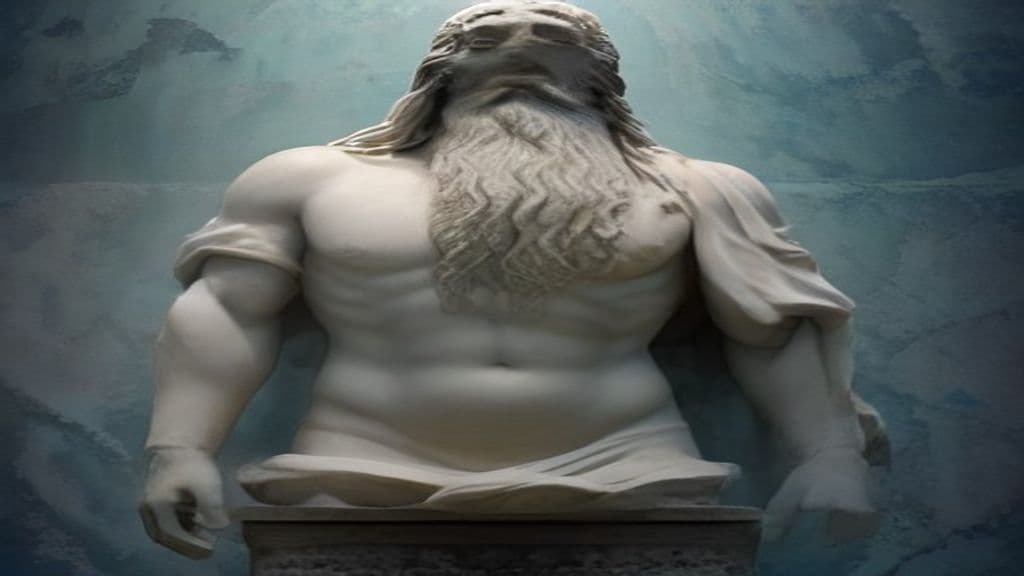
Surviving literary and topographical sources supply little consistent physical description. Ancient authors identify her socially and visually through markers of status and commemoration: she is a Thessalian princess and mother of notable sons, she was painted by Polygnotus (as Pausanias records), and a tomb attributed to her and her sons was shown at Anthedon. These attestations link her iconography to heroic/hero-cult imagery and to chthonic remembrance, but no extant, consistent portrait (dress, stature, facial type) is preserved in the cited materials.
No personal supernatural powers are explicitly ascribed in the provided sources. Her primary significance is relational and cultic: she acts as lover of the sea-god Poseidon in certain traditions and thereby becomes mother to the Aloadae (giant heroic figures), and she features among heroines in underworld catalogue literature. The anecdote that she "would often come to the sea shore where she poured the sea water in her lap, until the god came and answered her feelings" records a ritualized or symbolic supplication at the sea‑shore that evokes liminal contact with a sea-divinity, while later scholarly commentary sometimes situates her memory within chthonic or underworld frameworks. These features make her a nexus between mortal dynasties, a sea-divine liaison, and local hero-cult remembrance rather than an independently powerful supernatural agent.
Weaknesses
- otherNo hostile or vulnerable features recorded in the provided sources; she is treated as mortal heroine/ancestor rather than an antagonistic spirit
Wards
- otherNone attested in the cited materials; no apotropaic prescriptions or specific protective rites against Iphimedeia are preserved in the provided sources
Community Record
- [1]Iphimedeia - Wikipedia. Wikipedia: Iphimedeia (summary of attested traditions including Homer, Hesiod fragments, Pausanias)wiki
- [2]Wikidata entry for Iphimedeia. Wikidata: Iphimedeiaother
- [3]Pancratis - Wikipedia. Wikipedia: Pancratis (daughter attributed to Iphimedeia in some accounts)wiki
- [4]Aloadai (Aloadae) - Theoi Classical Texts Library summary. Theoi: Aloadae (background on Otus and Ephialtes as sons related to Iphimedeia)literary
- [5]Boiotia, Athens, the Peisistratids, and the Odyssey’s Catalogue of Heroines. Scholarly article discussing the Odyssey's catalogue of heroines including Iphimedeia's Nekyia appearanceacademic
- [6]Pausanias (as reported in secondary summaries). Pausanias (report cited in summaries): notes a painting of Iphimedeia by Polygnotus, honors at Mylasa, and a tomb shown at Anthedonliterary
- [7]Mycenaean Linear B attestation (Pylos) - i-pe-me-de-ja. Linear B record from Pylos rendered 𐀂𐀟𐀕𐀆𐀊, transliterated i-pe-me-de-ja (attestation of the name in pre-classical records)academic