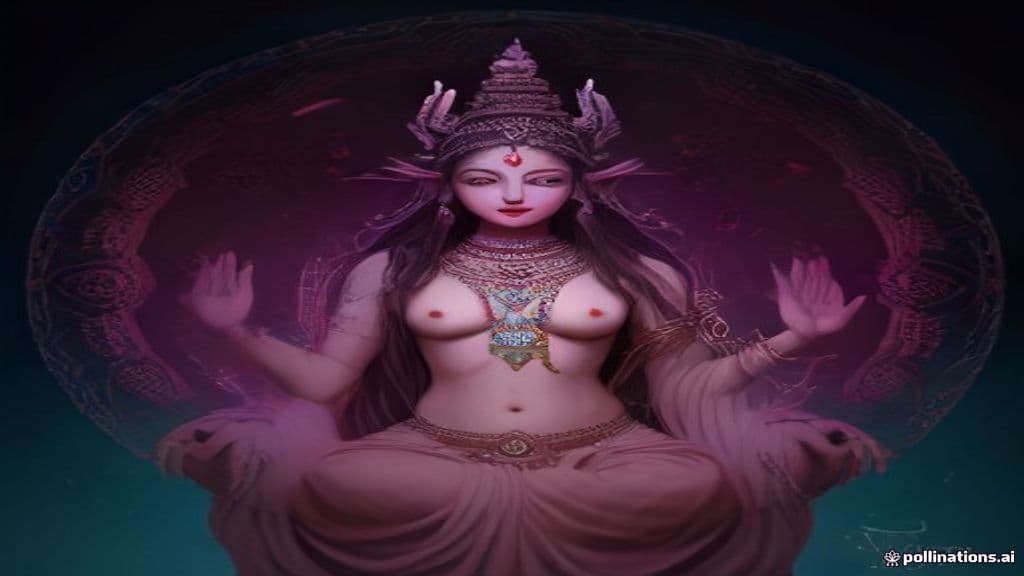
Īśvara is not a singular mythic progenitor but a term that emerges and evolves across Sanskrit textual traditions. The word itself is Sanskrit (ईश्वर, Īśvara) formed from īś- (owner, ruler) + vara and carries usages ranging from ruler/king and husband to divine lord or Supreme Self. The term does not appear in the Rigveda in the sense of a supreme personal deity but occurs in later literature (for example in various Dharmasūtras where it sometimes denotes the Vedas or a king), and it is elaborated in classical philosophical and devotional texts (Yoga Sutras, Vedanta commentaries, Bhakti literature) where its ontological status is variously defined and debated.
Sources do not supply a single physical depiction of Īśvara because the term functions as a theological and conceptual category rather than a uniform anthropomorphic being. Where traditions identify Īśvara with particular deities, the visual appearance corresponds to that deity (for example Śiva in Shaivism or Viṣṇu/Nārāyaṇa/Venkatesvara in Vaiṣṇavism) and thus inherits their iconography. In Advaita Vedanta Īśvara is the Saguna (with‑qualities) manifestation of Brahman and is discussed more as a qualified, manifest Absolute than as a distinct bodily figure. In Patanjali’s Yoga the term can denote a ‘special Self’ or personal devotional object (īśvara) used in remembrance and surrender—again more an object of contemplation than a consistently depicted form. The collected sources therefore present Īśvara variably as deity‑icon, manifest Absolute, or contemplated Self depending on doctrinal and devotional context.
Described abilities and functions vary by school: in theistic Vedantic and Bhakti traditions Īśvara is presented as the Supreme Being who governs the cosmos and the destinies of individuated souls. In Advaita Vedanta Īśvara functions as Saguna Brahman—the manifested, personal form that relates the impersonal Absolute to the world. In Patanjali’s Yoga Īśvara is a unique Self or object of devotion (īśvara praṇidhāna) whose remembrance and surrender can assist practitioners toward samadhi; Yoga Sutras mention Īśvara in multiple verses emphasizing its role in spiritual practice. Conversely, some systems (classical Sāṃkhya, early Mīmāṃsā) deny the necessity or relevance of a supreme personal Īśvara and argue philosophically against a creator who is both free and the author of nature. In legal and dharmic texts the term sometimes denotes authoritative non‑divine referents (e.g., the Vedas or a king), in which case its 'powers' are juridical or textual rather than supernatural.
Weaknesses
- otherNo mythic weaknesses recorded — Īśvara is primarily a theological/conceptual category and not presented in sources as a vulnerably adversarial being
Wards
- ritualNone — sources do not record wards against Īśvara; rather devotional practices (e.g., īśvara praṇidhāna) are affirmative acts of surrender

Shiva
Shiva (Sanskrit: Śiva) is one of the principal deities of Hinduism, central to Shaivism and pan-Hindu worship. Portrayed as a paradoxical figure—ascetic yogi, householder, warrior and cosmic agent—he is described as the auspicious One who creates, protects and transforms the universe and is commonly associated with dissolution within the Trimurti framework.

Naga
Divine serpent beings of Hindu, Buddhist, and Jain cosmology — powerful guardians of water, earth, and underground treasures. Revered as deities in South and Southeast Asia.
Community Record
- [1]Ishvara — Wikipedia. Wikipedia entry 'Ishvara'wiki
- [2]Ishvara — Wikidata. Wikidata item Q71684wiki
- [3]The Yoga Sutras of Patanjali (paraphrase and commentary by Djwhal Khul / Alice A. Bailey). Paraphrase/commentary referencing Īśvara in the Yoga Sūtrasother
- [4]Ishvara Temple, Arasikere — Wikipedia. Article noting temple use of theophoric namewiki
- [5]Ishvara pranidhana | Yoga with Bijam (web page). Contemporary teacher resources on īśvara praṇidhānaother
- [6]Notes from class on Ishvara Pranidhana - by Nick Beem. Class notes discussing īśvara praṇidhāna in Yoga contextother
- [7]Universal‑Path.org — Ishvara. Contemporary explanatory material on Īśvara and devotional usageother
- [8]Ishvara Puri — Stephen Knapp. Hagiographic material referencing Ishvara used as a personal name in devotional traditionother
- [9]Ishvara Puri — StephenKnapp.info. Hagiographic material on Ishvara Puriother
- [10]Jnanasankalini Tantra (reference page). Reference mentioning tantric usages and related terminologyother