The documentary corpus does not preserve a mythic birth narrative for Itūr‑Mēr. Modern scholarship records two principal interpretive proposals based on the theonym's structure and archival context: (a) that Itūr‑Mēr originated as a deified ancestor, hero or household/foundation figure whose name has the grammatical form of a theophoric sentence (proponents: Ichiro Nakata, Stephanie Dalley, Daniel Schwemer, Jack M. Sasson); and (b) that Itūr‑Mēr represents a local hypostasis or manifestation of a more general deity Mēr (advocated by Dietz Otto Edzard, Herbert B. Huffmon, Wilfred G. Lambert, Andrew R. George). The primary texts cited in the available material do not resolve which origin is correct, so both scholarly positions are reported in the sources.
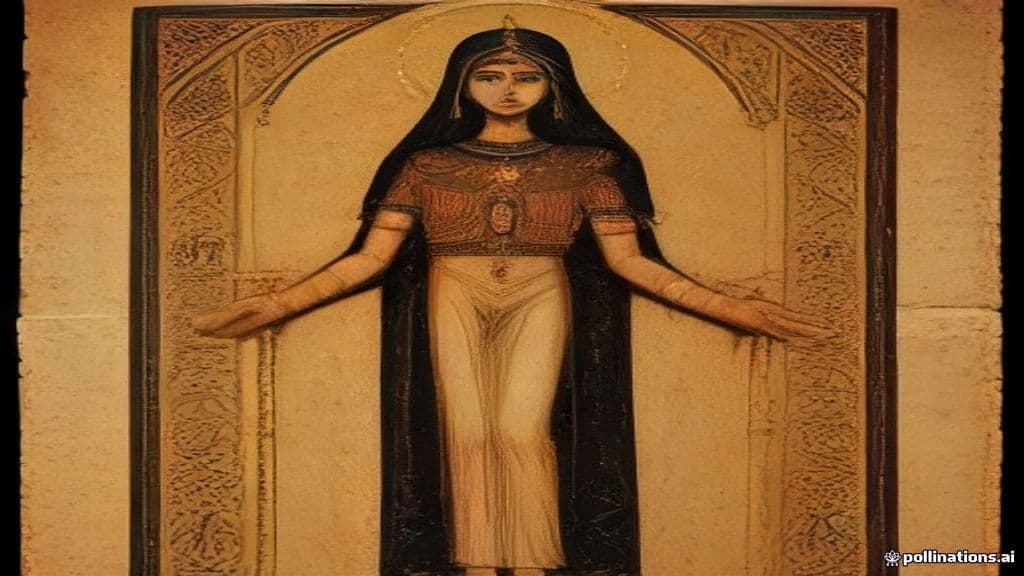
The surviving archival evidence does not supply a standardized iconographic description of Itūr‑Mēr. Texts, however, attest to the existence of a temple, cult personnel, and cult images or emblems (e.g., statues) used in oath-taking and processions: oaths could be sworn in the temple or by the presence of his statue or emblem, and a cult statue was once carried about the city in a processional rite to investigate stolen oxen.
Documentary attestations attribute civic and juridical functions to Itūr‑Mēr: he was commonly invoked as guardian of oaths (appearing in legal oaths alongside Dagan, Ḫanat and the king), served as Mari's tutelary and dynastic patron (sometimes titled 'king of Mari' — lugal ma‑riki), could be mobilized in forensic contexts (a statue procession led to the recovery of stolen oxen; another text reports he 'reclined over a city gate' to show the king that messengers were not guilty), and is credited in royal correspondence with aiding in warfare when invoked with Dagan. A small number of texts also record healing intervention (a boy from Aleppo healed in Abbatum through the god's help). Beyond these documentary roles, the sources do not ascribe other specific supernatural powers or iconographically attested attributes.
Weaknesses
None recorded.
Wards
- ritualOath‑taking before temple or cult statue/emblem
- ritualProcessional invocation of the cult statue to investigate crime

Community Record
- [1]Itūr‑Mēr — Wikipedia. Wikipedia entry 'Itūr‑Mēr', summary and citations of Mari archival evidence and secondary scholarship.wiki
- [2]Itūr‑Mēr — Wikidata. Wikidata item Q21082968 summarizing identifiers and brief data for Itūr‑Mēr.wiki
- [3]Selected archival and secondary excerpts provided in research notes. Compilation of Mari letters, legal texts and scholarly commentary as summarized in the supplied research notes (examples cited: oath texts invoking Dagan and Itūr‑Mēr; statue‑procession to recover oxen; report of Itūr‑Mēr 'reclining over a city gate'; letter describing a boy healed through the god's intervention; epithet 'king of Mari').other