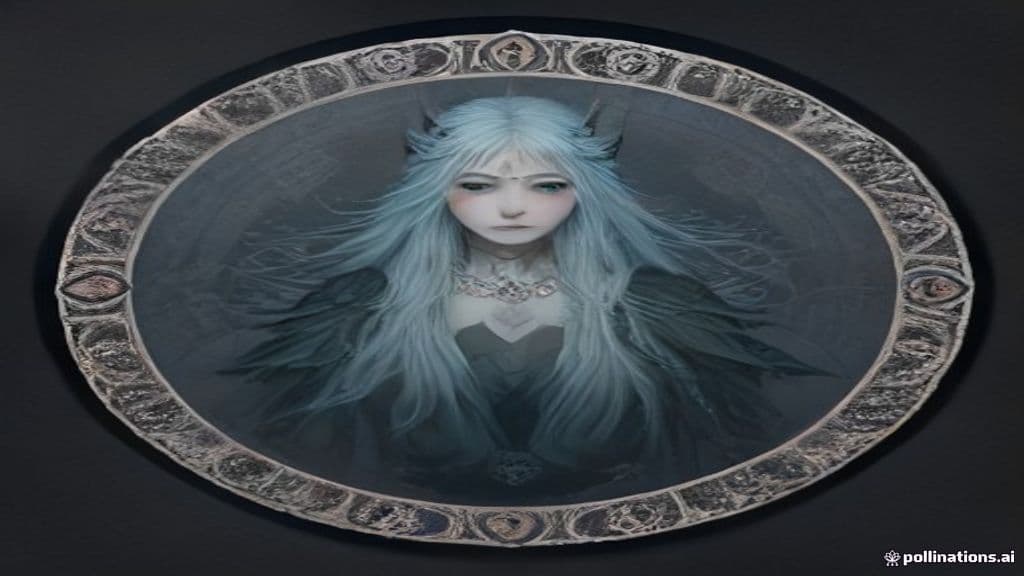
In medieval Old Norse sources Jörð is presented as the personified Earth and a named goddess. The Prose Edda lists her among the ásynjur and identifies her as Odin's partner and the mother of Thor. Genealogical listings vary across manuscripts: some manuscript traditions (noted in critical commentary) present Jörð as daughter of Night and, in at least one manuscript witness of Gylfaginning (the U manuscript reading), as wife of Dellingr and mother of Dagr, while other manuscripts (R/W/T) read Nótt in that role. Scholars (cited in the supplied material) note these manuscript divergences and interpret Jörð's placement as reflecting fluid boundaries between goddess and giantess categories in Norse tradition.
Extant sources cited give no physical description or fixed iconography for Jörð. Her presence in the corpus is nominative and genealogical rather than pictorial: she appears as the lexical item jǫrð ('earth, land') used interchangeably as a common noun and theonym in kennings and skaldic verse. Alternative poetic names (Fjörgyn, Hlóðyn/Hludyn) recur in verse as synonyms or kennings for the earth and as matronymic markers (e.g., Thor as 'son of Iord'), but no bodily attributes or visual representations are supplied in the cited texts.
The sources record Jörð's primary functions as relational and poetic: she is mother of Thor and a sexual partner of Odin in the genealogies preserved in the Prose Edda, and she is widely used in skaldic diction as a term for the land and as an element in kennings. The provided materials do not attribute specific supernatural feats, magical actions, or ritual powers to her; scholarly commentary emphasizes her status as an earth-personification whose categorization alternates between ásynja (goddess) and jötunn (giantess) in different contexts.
Community Record
- [1]Jörð — Wikipedia (lead and article sections summarized in research notes). Wikipedia: 'Jörð (Old Norse: Jǫrð, lit. "earth"), also named Fjörgyn or Hlödyn, is the personification of Earth and a goddess in Norse mythology.'wiki
- [2]Poetic Edda (Völuspá, Lokasenna) — attestations summarized. Poetic Edda poems (Völuspá; Lokasenna) cited for occurrences of Jörð and alternative names in skaldic/poetic contexts (as referenced in the supplied material).literary
- [3]Prose Edda (Gylfaginning, Skáldskaparmál) — genealogies and kennings. Prose Edda (Gylfaginning §25; Skáldskaparmál §90) cited for listing Jörð among the ásynjur, her role as Odin's partner and Thor's mother, and for kennings describing Earth.literary
- [4]Gesta Danorum (Saxo Grammaticus) — Iuritha reference. Saxo Grammaticus, Gesta Danorum (12th century) referenced for the form Iuritha as an attestation related to Jörð.literary
- [5]Rudolf Simek — scholarly commentary as cited. Rudolf Simek: notes Jörð is presented as an Æsir goddess though she is also called a giantess.academic
- [6]John Lindow — scholarly commentary as cited. John Lindow: discussion of Jörð's familial and conceptual placement within Norse mythic networks (as summarized in the supplied material).academic
- [7]Haukur Thorgeirsson — manuscript-variation note (as cited). Discussion of manuscript variation in Gylfaginning (U vs. R/W/T) regarding whether Jörð or Nótt is read as wife of Dellingr and mother of Dagr (as summarized in the supplied material).academic