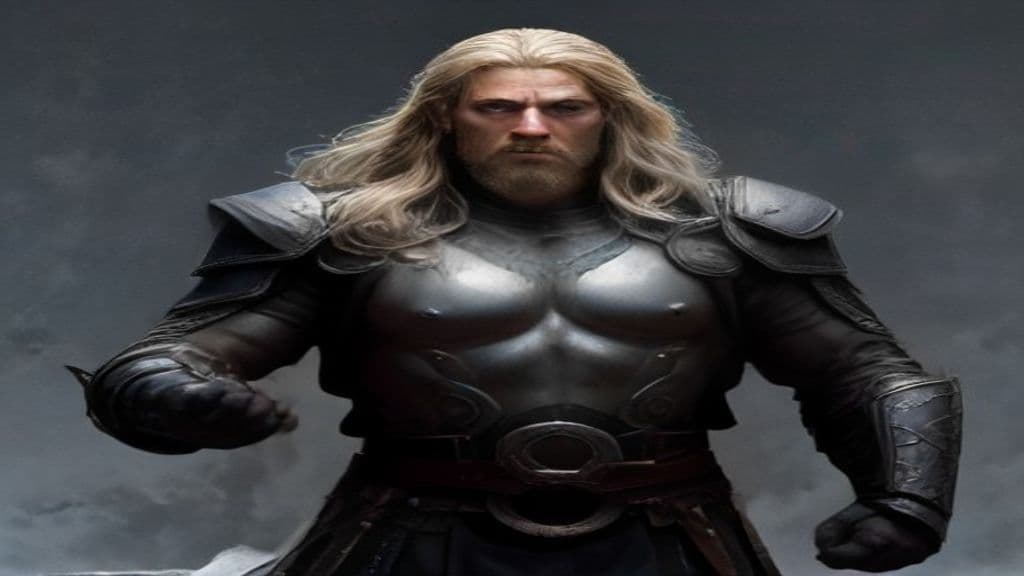
Thor is attested across Germanic-speaking regions and historical periods: his name and cult are traceable from Roman-period Germania, through the Migration Period, and especially in Viking-Age material preserved in medieval Icelandic texts. Etymologically the theonym derives from Proto-Germanic *Þun(a)raz (variously reconstructed), literally 'Thunder', aligning Thor with an Indo-European pattern of thunder-deities. Medieval Old Norse sources present Thor as a son of Odin and Jörð (the personified Earth) and portray him as a prominent Æsir deity whose name and symbols (notably the hammer Mjölnir) appear in personal names, place-names, and material culture such as hammer amulets from the Viking Age.
Medieval sources and later summaries emphasize Thor as a physically powerful, martial figure and inventory his characteristic equipment rather than a single standardized portrait. He is consistently described as hammer-wielding (Mjölnir), wearing the belt Megingjörð and iron gloves Járngreipr, and traveling with a chariot drawn by two goats, Tanngrisnir and Tanngnjóstr. Gríðarvölr is attested as a staff given to Thor by the jötunn Gríðr in one tale rather than as a universally owned item. Poetic and prose sources depict him with great appetite and formidable strength; specific visual details (exact coloration, height) vary between texts or are not consistently specified in the surviving corpus.
Thor's primary functions are control over thunder and storms, prodigious physical strength, and martial protection of humans and the divine order against chaotic, monstrous forces—most famously his repeated confrontations with the world-serpent Jörmungandr, with which he is fated to slay and be slain at Ragnarök. His equipment (Mjölnir, Megingjörð, Járngreipr) is integral to his combative capacities in the narratives. Thor is also associated with fertility and the welfare of farmers, a role supported by onomastic and archaeological evidence (theophoric personal names, place-names, and hammer amulets) indicating cultic veneration and social functions tied to protection and prosperity.
Weaknesses
- conditionfated death at Ragnarök (mutual death with Jörmungandr)
Wards
- symbolMjölnir amulet (hammer emblem worn as personal protection and a mark of devotion)
- othertheophoric personal names and place-names invoking Thor (social/cultural form of propitiation and identification)
Odin
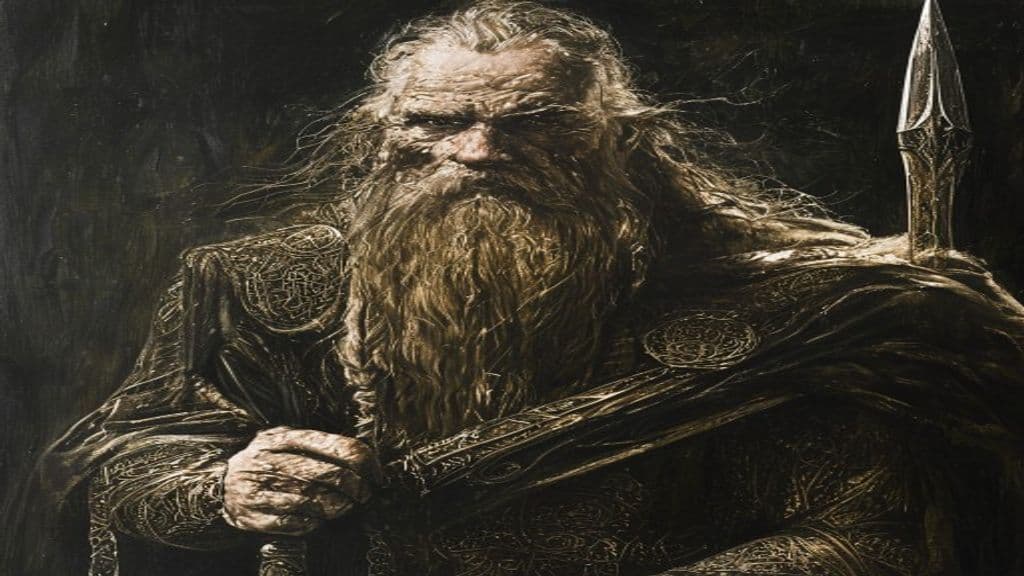
Odin (Old Norse: Óðinn) is the chief god of the Norse (Æsir) pantheon, a multifaceted deity associated with wisdom obtained by sacrifice, poetic inspiration, death and warfare, and rulership over the hall Valhöll where chosen slain warriors (einherjar) dwell. He appears throughout Germanic tradition from Roman-era accounts through the Viking Age and in later folklore as leader of the Wild Hunt.

Jörmungandr
In Norse mythology, Jörmungandr is an unfathomably large sea-serpent, the Midgard Serpent or World Serpent, that dwells in the world sea and encircles Midgard, biting its own tail; Jörmungandr releasing his tail is described as one of the signs of the beginning of Ragnarök. The name has been reused in modern astronomy for near-Earth asteroid 471926 Jormungandr (provisional 2013 KN6), discovered 28 May 2013.
Community Record
- [1]Thor - Wikipedia. Wikipedia contributors, 'Thor', Wikipedia, The Free Encyclopediawiki
- [2]Thor (Marvel Comics) - Wikipedia. Wikipedia contributors, 'Thor (Marvel Comics)', Wikipedia, The Free Encyclopediawiki
- [3]Wikidata: Thor. Wikidata entry Q2428812other
- [4]Project Gutenberg: Sir Thor and Damsel Thure (Ballad). Borrow and Wise, 'Sir Thor and Damsel Thure', Project Gutenbergliterary
- [5]Project Gutenberg: The Land of Thor. J. Ross Browne, 'The Land of Thor', Project Gutenbergliterary