
Accounts differ by locality. In many provincial traditions kamaitachi are conceived as small weasel-like yōkai (the name literally combining kama 'sickle' and itachi 'weasel') riding whirlwinds and cutting passersby. In some mountain and agricultural districts the phenomenon is explained as nogama—vengeful or animated sickles (tsukumogami) caused by neglected tools. Eastern-Aichi and related lore links the phenomenon to izuna/izuna-related spirit activity that rides winds and preys on blood. Other East-Japanese accounts attribute certain tales to the curse of crushed insects (giant mantis or longhorn beetle). An older etymological hypothesis once proposed the name derived from kamae tachi, but later literary depictions (e.g., Toriyama Sekien) reinforced the weasel imagery now common in many tellings.
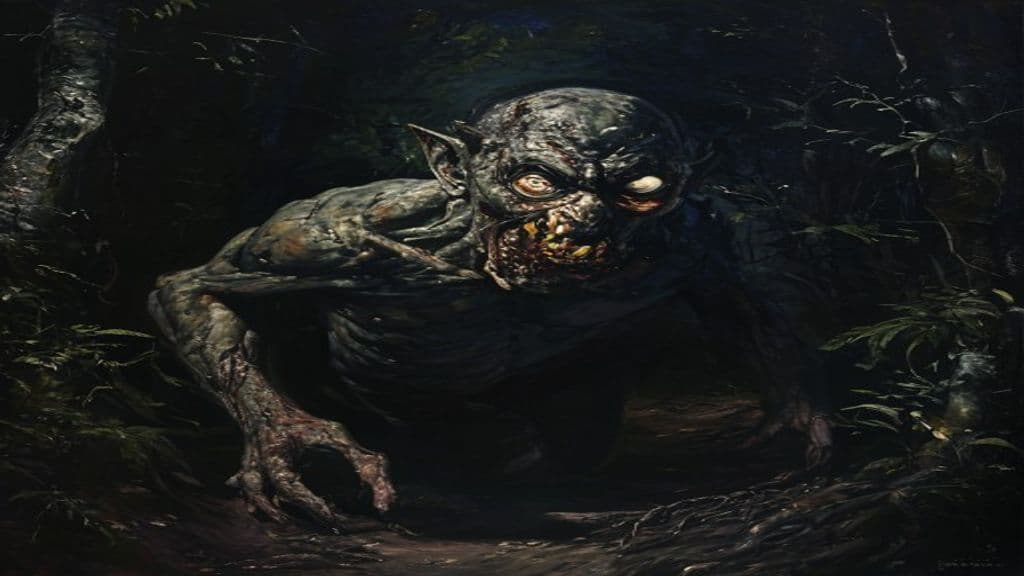
Regional descriptions vary. Many tellings depict kamaitachi as small, swift, weasel-like creatures with sickle-like front claws and the tendency to ride dust devils or whirlwinds; this weasel imagery was popularized in Edo-period yōkai art. Other older literary accounts (e.g., Mimibukuro) record more unusual forms—a beast with fur like a hedgehog, a dog-like cry and winged flight, and limbs like sickles. In numerous narratives the being is invisible or unseen, so only the whirlwind and the resulting cut are perceived, producing accounts that emphasize effects rather than a consistent visible form.
Kamaitachi are credited with producing sudden, sharp cuts to people by appearing on gusts or dust devils. A common motif describes an initial lack of pain and little or no bleeding at the moment of injury, followed later by severe pain and heavy bleeding; some historical essays report wounds deep enough to expose bone. In several regions kamaitachi operate as a trio: one knocks the victim down, another cuts, and a third applies medicine (a narrative device explaining delayed symptoms). Other local explanations frame the wound as caused by blood-sucking spirit activity or by animated agricultural tools; speed and association with whirlwinds are near-universal elements.
Weaknesses
- otherCarrying an old calendar in the hand (folk protective practice in western Japan)
- ritualBurning an old calendar and applying the charred remains to a wound (Tōhoku and Hokuriku curative practice)
- mantraIya-region incantation quoted against nogama (Tokushima) to halt an attack
Wards
- otherKeep an old calendar on the person as an apotropaic object (regional household practice)
- mantraRecite the traditional Tokushima/Iya chant addressing Buddha and a kurotake stump to repel a nogama-style field-sickle spirit
- ritualImmediate placement of a charred old calendar on the wound (protective/curative step in Tōhoku/Hokuriku)
Community Record
- [1]Kamaitachi - Wikipedia. Wikipedia: Kamaitachi (article summarizing regional folklore, appearance, calendar remedies, three-god motif, and regional variants)wiki
- [2]Mimibukuro (quoted in Wikipedia). Mimibukuro account cited in the Wikipedia article describing an older literary depiction: 'a beast with fur like that of a hedgehog and a cry like that of a dog which flies through the air with wings.'literary
- [3]Wikidata: Kamaitachi. Wikidata entry linked to the kamaitachi concept and associated labels in modern media and datasets.other