
Kenmet does not appear with an independent origin myth in the provided sources. Instead, it is attested as a named component within Egyptian temple and ritual texts (Temple of Esna, Esna IV) and within ritual drama (the Sacred Drama of Horus). In the Esna IV passage Kenm.t appears in a list of cosmic figures in a liturgical context and is described as acting to head or equip the divine stars in their course, situating Kenmet functionally within the corpus of beings that articulate celestial order rather than as the subject of an origin narrative (Temple of Esna, Esna IV; Attalus Sacred Drama of Horus).
No consistent, detailed standalone visual description of Kenmet is preserved in the cited passages. The Esna IV text gives only the name in a liturgical listing. In decanal/astronomical commentary Kenmet is discussed as placed in the third section of Cancer (Decanal Iconography), and that same corpus treats lion-headed serpents and solar‑ray motifs within adjacent constellation-related iconography; however the sources do not directly depict Kenmet itself as a lion-headed serpent and do not provide a standardized iconographic portrait — any visual association beyond placement in decanal imagery is inferential (Esna IV; Decanal Iconography; Sacred Drama of Horus).
The clearest functional description from the Temple of Esna (Esna IV) says in translation that 'Kenmet is equipped, heading the divine-stars in their orbit,' indicating a role connected to directing or accompanying the divine stars and their motion within the Egyptian cosmological/astronomical schema. Beyond this decanal/stellar function, Kenmet appears in ritual drama lines (Sacred Drama of Horus) as part of a dramatic scene, but the drama does not ascribe additional supernatural powers or hostile behaviors to Kenmet in the provided excerpt.
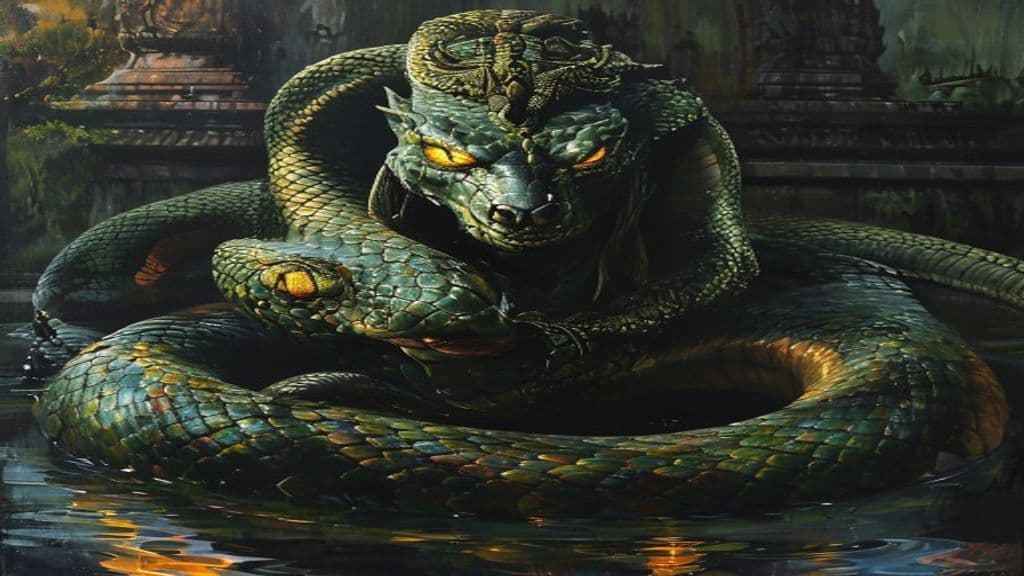
Naga
Divine serpent beings of Hindu, Buddhist, and Jain cosmology — powerful guardians of water, earth, and underground treasures. Revered as deities in South and Southeast Asia.
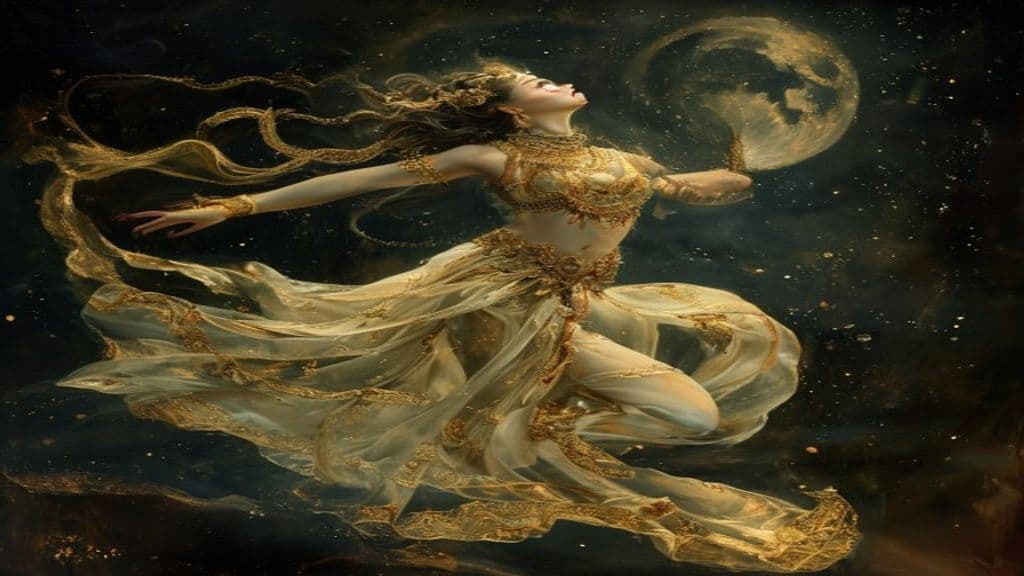
Apsara
Celestial dancers and water nymphs of Hindu cosmology — beautiful semi-divine beings who dance at the court of Indra and, by his command, descend to earth to distract sages from excessive asceticism.
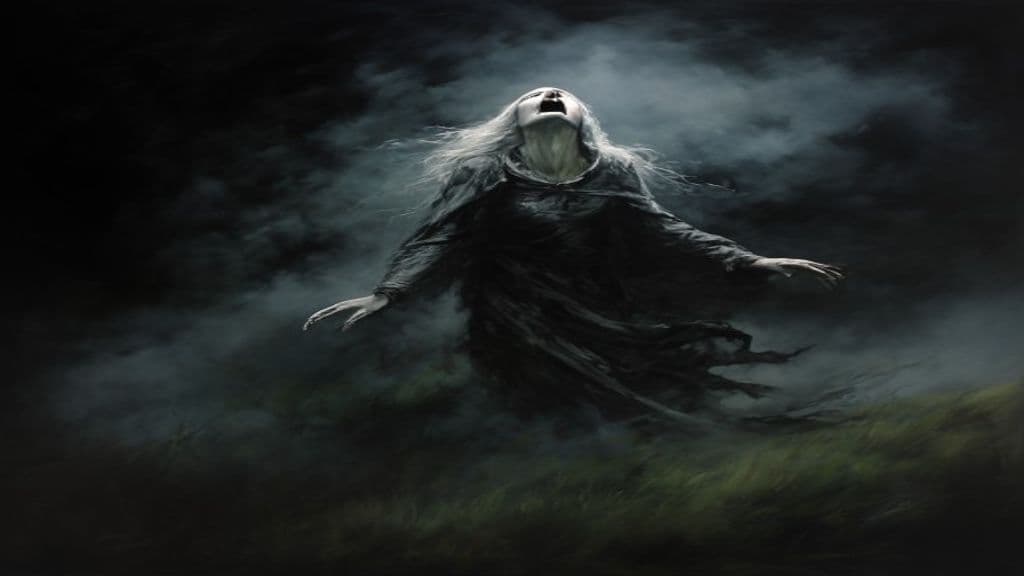
Banshee
A female spirit of Irish and Scottish folklore whose wail heralds an impending death in a family of Gaelic descent. Not a cause of death — a witness to it.
Community Record
- [1]Bay B (406-412) | The Temple of Esna. An Evolving Translation: Esna IV. Temple of Esna translation (Esna IV / Bay B 406–412) — includes the line rendering Knm.t and the gloss that 'Kenmet is equipped, heading the divine-stars in their orbit.'academic
- [2]Egyptian Texts : Sacred Drama of Horus. Sacred Drama of Horus (Attalus edition) — contains the dramatic line 'Alas, alas in Kenmet. The boat is light and he who is in it is a child…' where Kenmet appears in an exclamatory theatrical context.literary
- [3]Decanal Iconography and Natural Materials in the Sacred Book of Hermes to Asclepius (Spyros Piperakis). Decanal Iconography commentary — discusses placement of Kenmet 'in the third section of Cancer and not the first of Leo' and treats related decanal iconographic motifs (lion-headed serpent and solar rays) in the same corpus.academic
- [4]Wikidata: Kenmet. Wikidata entry noting Kenmet as an ancient Egyptian named entity (used as a citation of attestation rather than as a primary textual source).wiki