
Sources present La Sayona as a legendary, vengeful female spirit from Venezuelan popular tradition whose role is to punish or confront men who conduct love affairs outside their marriages. The available excerpts treat her as a moralizing apparition within the repertoire of Venezuelan specters and urban legends; they do not supply a detailed biographical life-story or extended origin narrative in the provided material, but consistently frame her as a spectral enforcer of marital fidelity in popular accounts and media compilations.
La Sayona is identified by wearing a long white dress resembling a medieval undergarment — the term 'sayona' is said to refer to this cloth. In many tellings she first appears as a beautiful woman or as the likeness of a loved woman to attract men. In some versions, when a victim tries to see her face it is revealed to be a skull with horrible teeth; in other variants she is said to display animal-like features at the moment of attack.
The legend portrays La Sayona as a selective, moral-avenging apparition: she appears to men who have affairs outside marriage or who dwell on sexual longing, often when they are away from home. She lures victims by assuming the form of a beautiful or familiar woman and, in roadside or forest encounters, may ask for a ride or otherwise draw men close. Variant accounts describe her as revealing a monstrous visage and then killing, mangling, or in some tellings devouring the man; in some versions victims are later found dead or mutilated. She functions narratively as an enforcement figure punishing male infidelity.
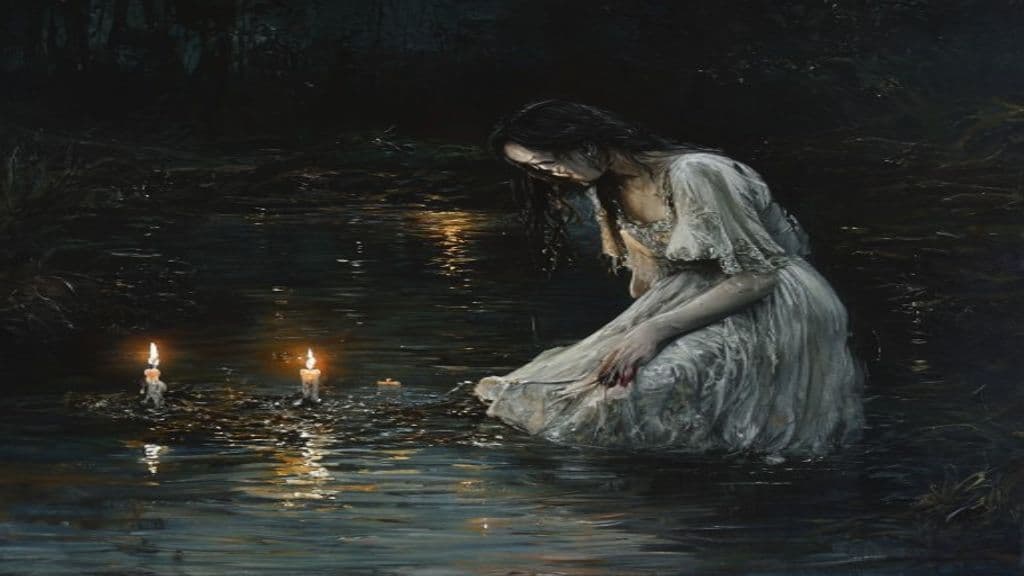
La Condená
A sparsely documented feminine-named restless spirit attested in a small set of tertiary sources. The only clear descriptive line in the supplied corpus calls her a "ghost doomed to walk the earth in penance for carnal sins." Other claims about regional rooting or attributes come from a single unverified fandom entry and are not corroborated in the provided materials.
La Galigo
Supernatural being central to the Bugis creation myth, holding significant importance in their cosmology. (Note: - Summary is vague; more specific information about La Galigo's role in the creation myth would improve accuracy. - Power tier: Since there is no mention of "Primordial" abilities, it's unclear what t)
La Guita Xica
La Guita Xica is a Catalan mule–dragon figure tied to the Patum de Berga Corpus Christi festivities. Historically described as threatening or demonic, twentieth-century traditions reframe it as a protective festival spirit embodied by large effigies that parade and theatrically spit fireworks.
La Llorona
La Llorona is presented in the supplied source as a vengeful female ghost in Hispanic American folklore who roams near bodies of water mourning children she drowned; hearing her crying is said to bring misfortune, death, or ruin to listeners.
La Llorona
The Weeping Woman of Mexican folklore — the ghost of a mother who drowned her children and now wanders rivers and lakes, weeping for them and taking other children she finds at night.
La Patasola
La Patasola is a legendary one-legged female monstrous figure from Colombian and northern South American folk narrative who inhabits virgin forests and mountains. She appears as a beautiful woman to lure men, then reveals a single leg with a cleaved hoof and a bestial face, and is portrayed as punitive toward men who transgress social or ecological norms.
La Sirène
La Sirène is a mermaid-like water spirit (lwa) within Haitian Vodou, represented in ritual art and drapo (Vodou flags) and situated in Vodou pantheon lists alongside other named lwa. She is associated with marine imagery and participates in the visual and religious culture of Haitian Vodou rather than appearing only as a folkloric sea creature.
La Vaca
La Vaca is not attested in the supplied sources as a supernatural being. In the provided materials the term appears as a Spanish toponym and lexical item: notably a small wetland in Bogotá (Humedal La Vaca / Techovita), an islet on Lake Nicaragua (Isla La Vaca), and as lexical occurrences in media or personal names. No folkloric, mythological, or supernatural attributes are documented in the sources provided.
Labasu
Labasu is a Mesopotamian malignant spirit or demon of disease attested in Sumerian–Akkadian textual tradition. It appears in medical, astrological and anti-witchcraft corpora as a named etiological agent for fever and related illnesses and commonly occurs alongside Lamashtu and Ahhazu in ritual lists and expulsions.
Labdacus
Labdacus (Ancient Greek: Λάβδακος, Lábdakos) is a legendary/mythic king of Thebes in Greek tradition. He is chiefly significant as a dynastic ancestor — grandson of Cadmus, son of Polydorus, and father of Laius — and appears in variant accounts that place his brief rule and early death within the genealogical history that leads to Oedipus.
Lacedaemon
Lacedaemon (Lakedaimon, Lacaedemon) is a mythic eponymous king in classical Greek tradition: the legendary founder whose name is given to the region and polis of Lacedaemon/Sparta. He is presented genealogically as a son of Zeus and the Pleiad Taygete and as husband of Sparta, serving an etiological function linking the city to divine ancestry.
Lacritus
Lacritus (Ancient Greek: Λάκριτος) is attested in classical sources as a historical sophist from Phaselis, best known from a forensic speech of Demosthenes brought against him concerning a disputed loan; he was a pupil of Isocrates and tutor of Archias of Thurii.
Community Record
- [1]Sayona (Wikipedia). Wikipedia, 'Sayona' entrywiki
- [2]Sayona - PathfinderWiki (bestiary adaptation). PathfinderWiki entry for 'Sayona' (game-world adaptation/bestiary)other
- [3]La Sayona – Astrid Dalmady. Blog/article 'La Sayona' by Astrid Dalmady (retelling/commentary)folk
- [4]Why Men Shouldn't Cheat – Vampires (mentions Sayona motif). Popular online article referencing Sayona motifother
- [5]Avak Avakyan — Baba Yaga (archive mentions list of death-figures including 'Sayona'). Archive item listing mythic/death-associated names including 'Sayona'other
- [6]Sayona (Wikidata). Wikidata entry Q7429274, label: 'legendary figure from Venezuela'wiki
- [7]Los 7 espectros de los mitos populares más aterradores (archive of a video listing specters). Archive.org capture of a popular compilation listing Sayona among specters of popular mythsother
- [8]Leyendas Urbanas OPENING DEMO (archive). Leyendas Urbanas project description listing 'el Silbón, la Sayona, y la Llorona' among Venezuelan traditionsother
- [9]Zoom sur l’Abitibi (archive) — media mention. Archive.org capture referencing Venezuelan legends (includes Sayona in media contexts)other