
The lamiai occupy both an individual and a classificatory place in Greek tradition. In older mythic references one figure called Lamia is portrayed as a monstrous, child‑devouring female; over time the name also denoted a broader class of malignant female night‑spirits (Lamiai). By Late Antiquity and in folkloric summaries the category blurred with other nocturnal phantoms such as the empousai, and some later commentators and popular writers even describe a race of ‘Libyan’ lamiai. Narrative exempla preserved in later retellings (for example tales connected with Apollonius of Tyana and a named Corinthian Lamia) show the lamiai functioning as localized predators whose menace could be confronted in story by a knowledgeable specialist or hero.
Descriptions vary across sources. Classical summaries present the lamiai principally as monstrous female figures—child‑devourers—while later material and artistic commentary attribute serpentine elements to them, apparently from conflation with a so‑called Libyan race of lamiai. Late antique and folkloric accounts that equate lamiai with empousai further represent them as shape‑changing nocturnal phantoms capable of assuming a deceptive, attractive human guise in order to seduce victims, yet sometimes revealing monstrous features. Overall their appearance is variable: from overtly monstrous to alluringly human, with later traditions sometimes adding serpentine or repulsive traits.
Across the attested tradition lamiai are night‑haunting predators: they feed upon humans (classically described as child‑eaters and in some localized tales as seducers who devour handsome young men), operate after dark as daimonic phantoms, and use deception and seduction to approach victims. Late antique conflation with the empousai implies capacities for disguise or transformation and for intimate assault. Narrative material also implies that learned or thaumaturgic individuals (e.g., the Apollonius cycle) could identify and drive them off, suggesting lamiai are vulnerable to identification and confrontation in stories, though specific esoteric mechanics are not preserved in the supplied sources.
Weaknesses
- otherIdentification and confrontation by a specialist or hero (narrative means rather than a recorded ritual)
Wards
None recorded.
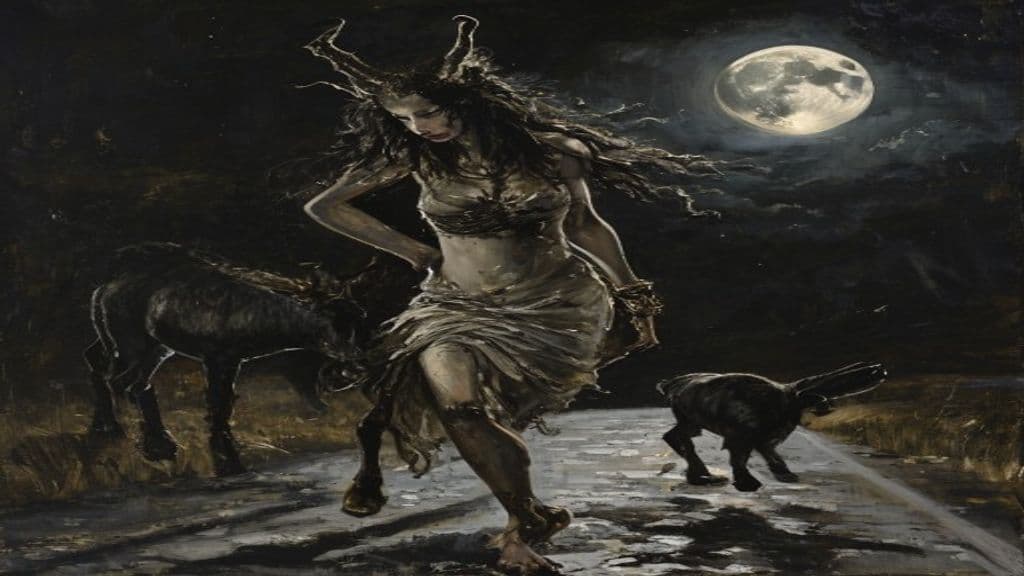
Empusa
A shape-shifting seductress-demon of ancient Greek folklore — sent by the goddess Hecate to ambush travellers at night, taking the form of beautiful women to feed on the blood and flesh of young men.

Apsara
Celestial dancers and water nymphs of Hindu cosmology — beautiful semi-divine beings who dance at the court of Indra and, by his command, descend to earth to distract sages from excessive asceticism.
Community Record
- [1]Lamia - Wikipedia. Wikipedia, 'Lamia' entry (summary of Lamia/Lamiae as child‑eating monster and later night‑haunting daimon).wiki
- [2]Lamiai - Wikidata. Wikidata entry summarizing Lamia/Lamiae.other
- [3]Empousai (Empusa) - Theoi Project. Theoi Project, 'LAMIA & EMPUSA (Empousa) - Vampiric Monsters of Ancient Greek Legend' — discusses Late Antique conflation of empousai and lamiai and phantom characteristics.folk
- [4]Corinthian Lamia - Theoi Project. Theoi Project, 'Corinthian Lamia' — local lamia who haunted Korinthos and preyed on handsome young men.folk
- [5]Empusa - Wikipedia. Wikipedia entry on Empusa noting Late Antique descriptions equating empousae with lamiai and discussing theatrical/fantastic portrayals of phantom women.wiki
- [6]Les Vampires mirror — Ancient examples. Summary noting a lamiai tale told about Apollonius of Tyana in Greek and Roman tellings.folk
- [7]Scary Studies - What Is A Lamia. Modern popular summary describing Lamia as the child‑devouring sea/monster and later night‑phantom; provides folkloric detail such as repulsive smell noted in later sources.other
- [8]Lazarus Corporation - Lamia artwork notes. Art commentary noting that serpentine qualities were later ascribed and may reflect confusion with a Libyan race of lamiai (modern interpretive/artistic source).other
- [9]New Jersey Stage — Lamiai (film blurb). Contemporary cultural reception referencing Lamiai in modern artistic work; cited as an example of later reception rather than an ancient primary source.other