Laodamas is not introduced as a singular origin figure but as a recurring compound personal name (literally 'tamer of the people') used by different traditions. Bearers include: (1) Laodamas son of Eteocles, placed in Theban royal succession after Eteocles; (2) Laodamas son of Alcinous, a Phaeacian prince who appears in Homer's Odyssey during Odysseus' reception at the Phaeacian court; (3) one or more Trojan or allied warriors named Laodamas (sons of Antenor, a Lycian Laodamas, and a supposed son of Hector in variant genealogies). The name functions within genealogical and heroic frameworks and is reused by poets and local historians rather than indicating a unified mythic origin.
Because each Laodamas is mortal, ancient sources provide mundane, narrative descriptions rather than supernatural iconography. Homer (Odyssey Book 8) describes Laodamas son of Alcinous as 'the most handsome of the Phaeacians' and the foremost boxer, dancer, and runner among his people; he sits beside his father in the court and gives his chair to Odysseus. The Theban Laodamas is presented primarily through genealogy and role (king, prince, or warrior) with variant fates (killed in battle or surviving and fleeing), and no standardized physical portrait is preserved for the Theban or Trojan bearers in the supplied summaries.
No supernatural powers are attributed to any Laodamas in the provided sources. Described capacities are social, athletic, martial, and political: the Phaeacian Laodamas excels in athletic contests (boxing, dancing, foot-racing) and participates in courtly hospitality scenes (Odyssey Book 8); the Theban Laodamas functions as a king or prince involved in dynastic conflict and warfare in the Epigoni cycle (killing and being killed in variants, or fleeing to the Encheleans and later leading expeditions in alternative accounts); Trojan and Lycian bearers appear as warriors slain in the Trojan War narratives. These attributes—leadership, athletic skill, and battlefield competence—are the recurrent behavioral patterns attached to the name.
Weaknesses
- othernone attested
Wards
- othernone attested
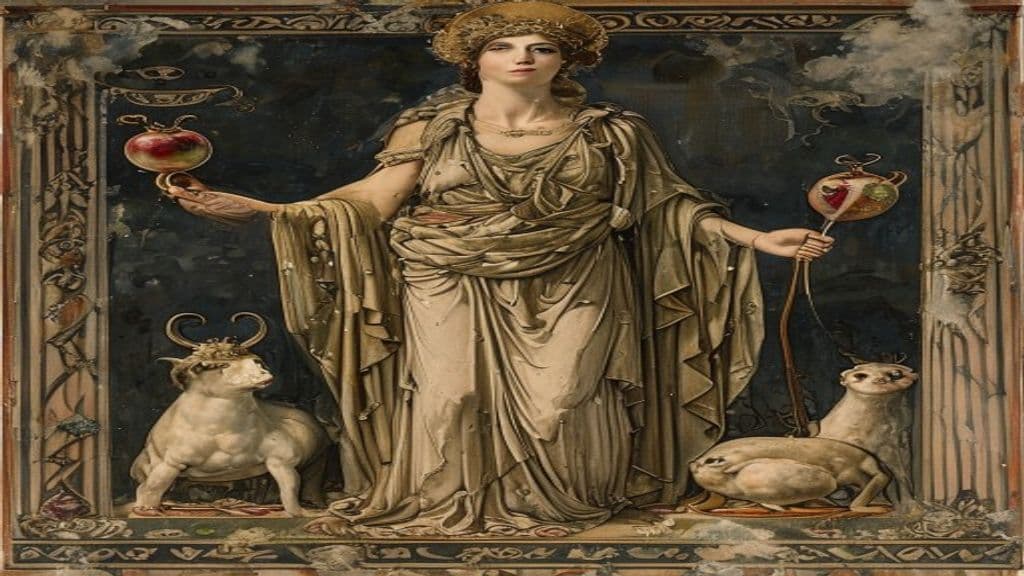
Hera
Hera is an ancient Greek goddess, queen of the Olympian gods, and a principal tutelary deity of marriage, women, and family. She functions in myth and cult as protector of lawful marriage and women in childbirth, a civic tutelary figure (notably of Argos), and a sometimes-jealous consort of Zeus with archaic fertility associations in certain local rites.

Odysseus
Odysseus is a legendary mortal king of Ithaca from ancient Greek epic tradition, best known as the protagonist of Homer's Odyssey. Celebrated for his intellect, craft (mêtis), and long nostos (homecoming), he functions as an exemplar of heroic cunning rather than a supernatural being.
Community Record
- [1]Laodamas (Wikipedia). Wikipedia contributors, 'Laodamas,' Wikipedia, The Free Encyclopedia.wiki
- [2]Laodamas (Wikidata). Wikidata entry Q765456 for Laodamas.other
- [3]LP0061 Thebes Mythical History (Archive.org). Archive: summary of Theban mythical history (Pausanias summaries and related materials).other
- [4]LP0063 - The Sanctuary of Heracles - A tour of Thebes, from Pausanias' Description of Greece (Archive.org). Archive: Pausanias' accounts relating to Thebes and associated monuments.literary
- [5]Odyssey, Book 8 (Archive.org). Homer, Odyssey Book 8 — episode of Odysseus entertained in Phaeacia describing Laodamas son of Alcinous.literary