In the medieval Irish corpus Lir functions primarily as the named personification of the sea (the Old Irish word for 'sea' is Ler/Lir) and as an ancestral figure whose lineage includes the better-attested sea-figure Manannán mac Lir. Sources record Lir within the mythic population of the Tuatha Dé Danann and place him in narrative contexts such as The Children of Lir, where he appears as a king and father. The surviving excerpts do not provide an account of his birth or a distinct origin tale separate from his etymological identification with the sea.
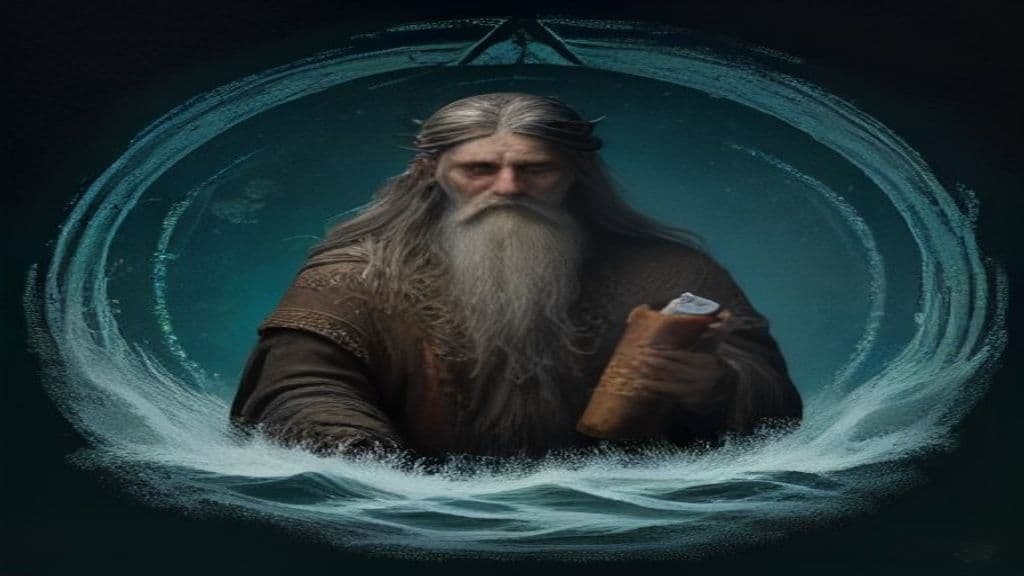
Surviving excerpts do not supply a consistent physical description. In narrative contexts (The Children of Lir) he is portrayed as a king and patriarchal figure; beyond his role as an eponymous sea-personification and familial actor, no specific attributes, attire, or visage are recorded in the provided material.
The sources supplied do not ascribe explicit powers to Lir himself. Medieval glosses and narratives associate his son, Manannán mac Lir, with seafaring, navigation, and weather knowledge, and Lir's name and role as 'Sea' link him conceptually to the maritime domain. Thus Lir functions as an elemental ancestor whose identity legitimizes or anchors maritime expertise in descendant figures, but direct personal abilities or interventions are not documented in the provided excerpts.
Community Record
- [1]Lir — Wikipedia. Wikipedia contributors, 'Lir', Wikipedia, The Free Encyclopediawiki
- [2]Sanas Cormaic (as cited in Wikipedia entry). Quoted passage from Sanas Cormaic as cited in the Wikipedia article on Lirliterary
- [3]Archive: Wiki - LiR Test Wiki. Archive copy referenced in research notesother