Lugal‑irra and Meslamta‑ea are primarily attested as a coordinated twin pair (Sumerian Maštabba, "the divine twins") rather than as wholly independent solitary beings; Meslamta‑ea's name places him ontologically as one "who came out of Meslam," linking him to Meslam, the temple-name element connected with Nergal and underworld cult. The pair are associated with Nergal and appear in temple lists and cult contexts (e.g., E‑Meslam), with local patronage attested in Kisiga and Dūrum. Sources indicate sustained cultic pairing, though individual attestations occur in the broader corpus.
Iconographic and apotropaic statuette evidence presents them as armed warrior figures wearing tillû garments and horned headdresses. Lugal‑irra is described in statuettes as holding a bow and arrows and possibly rendered with a bright pigment (reported as uncertain), while Meslamta‑ea is depicted holding a single‑bladed axe in his left hand and a mace with a stone head in his right, with Meslamta‑ea figurines sometimes decorated with a dark substance (IM.GI6, often described as "black paste"). Neo‑Assyrian practice placed such statuettes buried beneath building entrances. A hymn source summarized in the literature also refers to them metaphorically as a black and white pair of ravens, though this detail is reported without full textual context.
They function as warrior and guardian gods of doorways, gates, and liminal spaces, often envisioned as gatekeepers of the underworld or attendants within Nergal's court. Ritual and incantation literature portrays them with violent protective capacities (for example, the Maqlû series describes them as "guard‑gods who tear out the heart and compress the kidneys"). They are also attested in late Ur III judicial contexts associated with river ordeals, indicating a role in testing or adjudication. Astral tradition (MUL.APIN) identifies them with the Great Twins (mulMAŠ.TAB.BA.GAL, Alpha and Beta Geminorum), linking their cultic function to stellar symbolism.
Weaknesses
None recorded.
Wards
- ritualburied apotropaic statuettes of Lugal‑irra and Meslamta‑ea
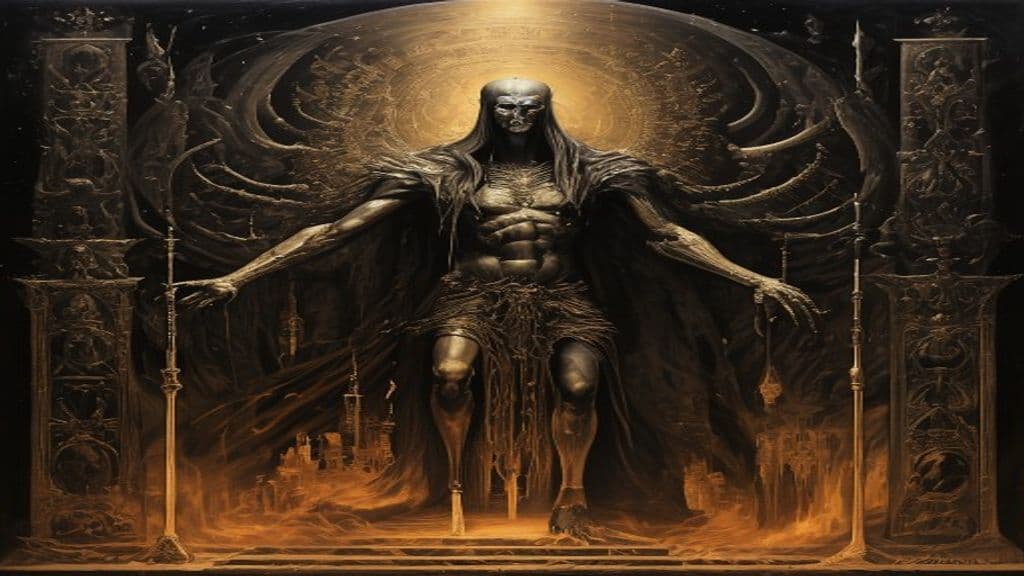
Nergal
Nergal is a major Mesopotamian deity associated with war, disease, inflicted death, and rulership of the underworld. Principal cult center at Kutha (temple E‑Meslam), he appears in hymns and myths (e.g., the Epic of Erra, "Nergal and Ereshkigal") and is sometimes equated with or called Erra or Meslamtaea.

Lamassu
Lamassu are protective tutelary beings of ancient Mesopotamia, represented both as a Sumerian mediating goddess (Lama) and later as hybrid monumental guardian figures (human-headed, winged bulls or lions) placed at thresholds, gates, and palaces to protect households and polity.

Laḫmu
Laḫmu (Laḫamu for the feminine counterpart) is an apotropaic Mesopotamian supernatural being attested both as a class of protective attendants in ritual contexts and as an individual primordial figure in some theogonies (notably variants of the Enūma Eliš). Generally regarded as protective household and temple guardians, Laḫmu are also incorporated in certain mythic genealogies.
Community Record
- [1]Lugal‑irra and Meslamta‑ea (Wikipedia). Wikipedia: summary entry on Lugal‑irra and Meslamta‑ea (articles and footnoted scholarship summarized therein).wiki
- [2]Wikidata: Lugal‑Irra and Meslamta‑ea. Wikidata entry linking data and identifiers related to Lugal‑irra and Meslamta‑ea.wiki
- [3]Assyria: A Study of Symbols (Assyrian symbol studies summary). Assyrian symbol study summarizing apotropaic figures and burial of protective statuettes beneath thresholds.other
- [4]Mesopotamian Deities (popular summary). Online synthesis summarizing names, functions, and iconographic attributes of Mesopotamian deities including Lugal‑irra and Meslamta‑ea.other
- [5]Kingdoms of Mesopotamia - Kisiga / Kuara (historical place summary). Summary of city‑level cultic attributions mentioning Kisiga in relation to divine patrons.other
- [6]Old European culture: White raven (blog reference to raven imagery). Blog noting comparative white/black raven imagery; cited here because secondary summaries reference a hymn likening the twins to black and white ravens (textual basis not preserved in provided excerpts).other