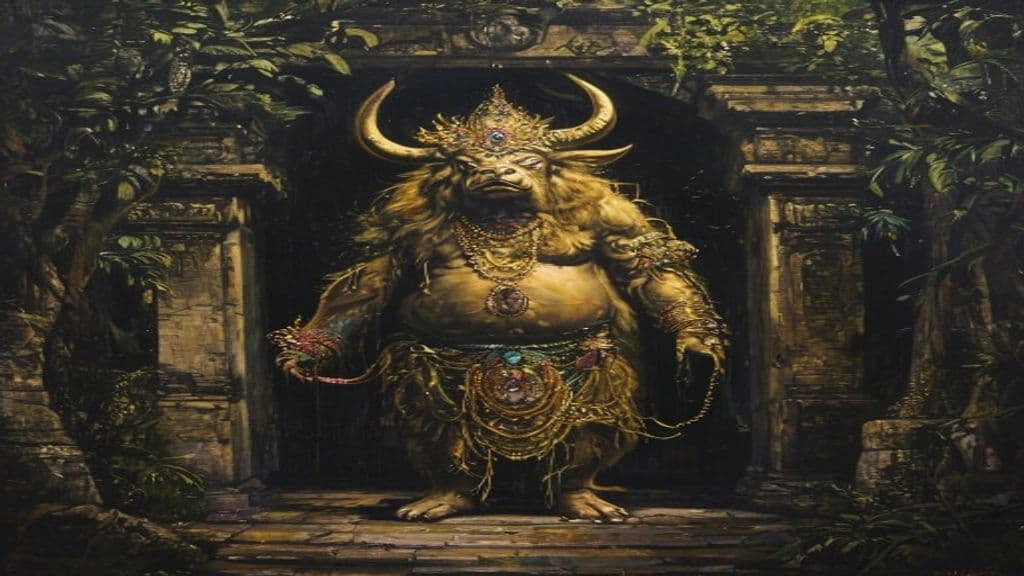
According to popular folklore recorded in the sources, Mahasona was originally a giant who was defeated and decapitated in a duel by another giant named Gotaimbara; his head was then replaced with that of a bear or tiger (Source 1). This narrative of defeat and monstrous reconstitution is the origin story given in the documented accounts.
Sources describe the traditional narrative form of Mahasona as a giant with a replaced head (bear or tiger head) following decapitation (Source 1). Mahasona is also represented in Sinhalese ritual material culture: he appears as a subject of ritual masks and objects held in museum collections that document Sinhalese ritual dance and exorcistic mask repertoires (Sources 8, 9). The museum documentation indicates regional variation in Yakku-related masking traditions in which Mahasona is included (Sources 8, 9).
Documented accounts describe Mahasona as haunting the afterlife and as an agent that can kill or afflict the living: he is said to kill people by crushing their shoulders or by afflicting them with disease (Source 1). Because of these beliefs, Mahasona is invoked in exorcistic ritual repertories and is a named target of traditional exorcism ceremonies (Source 5).
Weaknesses
- conditionrepulsion by exorcism rites
Wards
- ritualMahasona Samayama
- ritualSanni Tovil
- othermasked ritual performance (use of Mahasona/Yakku masks and objects in exorcistic ceremonies)
Community Record
- [1]Maha Sona (Wikipedia). Wikipedia: Maha Sona — article describing Mahasona as a devil in Sinhalese folklore, origin story involving Gotaimbara, and his role causing death and disease; notes use of traditional exorcism rituals (Source 1).wiki
- [2]Of Demons and Drama: Ritual Syncretism of Sinhala Exorcism and Forum Theatre. Scholarly article noting that Mahasona Samayama and Sanni Tovil are two of the most common Sinhalese exorcism ceremonies performed throughout Sri Lanka and situating Mahasona within exorcistic ritual repertory (Source 5).academic
- [3]From Ceylon to Norway: Sinhalese Ritual Dance Masks and Objects at the Museum of Cultural History. Museum of Cultural History (University of Oslo) collection pages documenting Sinhalese ritual dance masks and objects and listing Mahasona among Yakku/masked ritual representations (Sources 8, 9).other
- [4]Sangam.org "Sri Lankan General Admits War Crimes; US May Hold Crucial Supporting Evidence" (excerpt). Media/political reportage excerpt cited in the research notes that uses Mahasona as a cultural reference in political context (Source 3).other
- [5]Satanath Records - Reviews: SAT361 (excerpt referencing a song about Mahasona). Popular/cultural reference noting a musical piece that recounts Mahasona's origin story (Source 7).other
- [6]Lanka Bandaranayake (Wikipedia / Wikitia references). References to contemporary cultural production (short film "Mahasona") indicating ongoing cultural presence of the figure (Sources 4, 6).wiki