Sources name Maymun as the last of the seven kings of the jinn and place him within a hierarchical supernatural order: manuscripts report he acts under the supervision of the angel Kasfa'il and is in the service of a minister called Dikianos (the latter associated in the sources with Iblis and plagues). The supplied materials do not provide a creation myth or full origin narrative for Maymun.
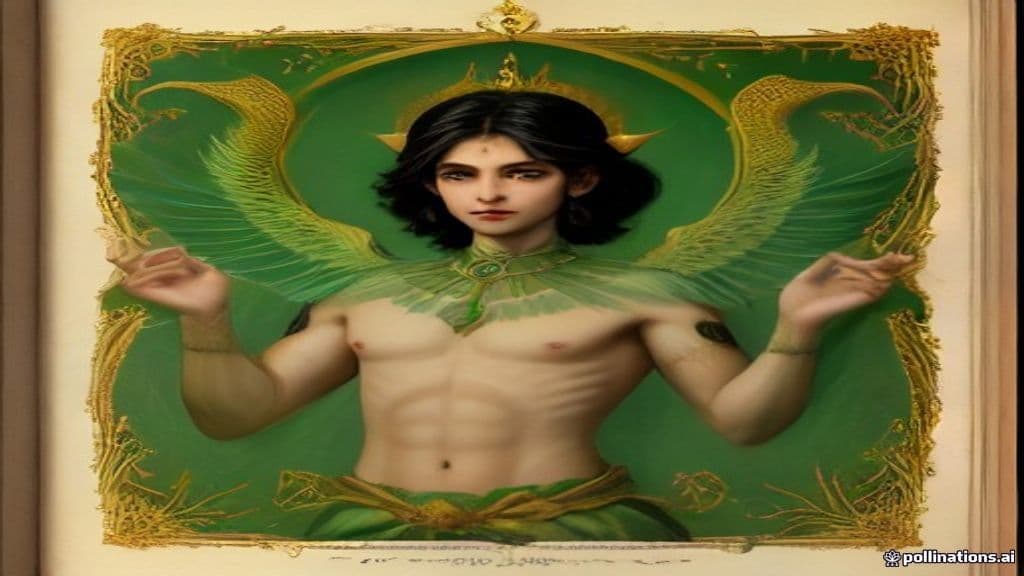
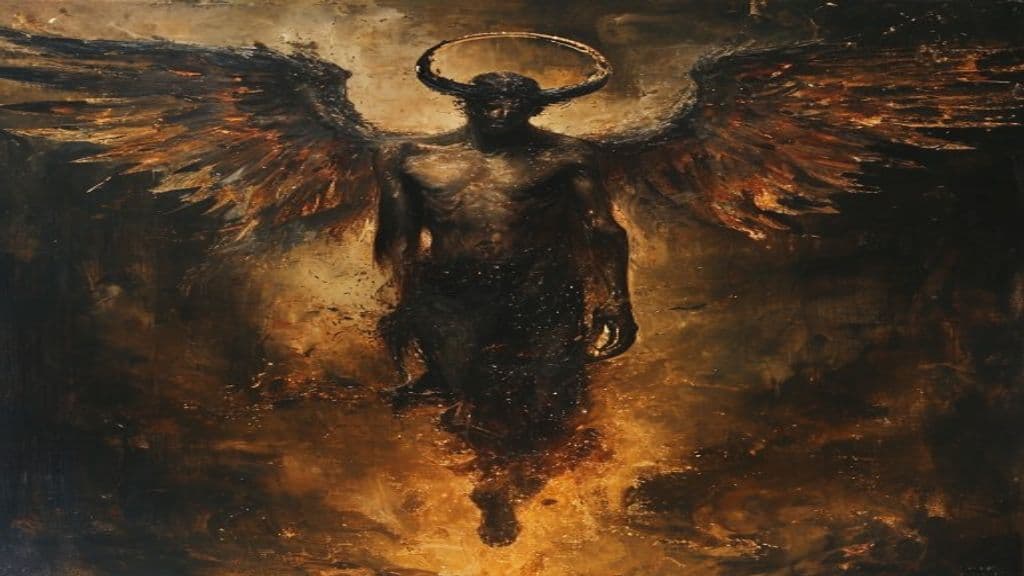
Manuscript descriptions attributed to al‑Buni and the Book of Wonders depict Maymun as a winged, monkey‑faced jinn with cow horns, goat ears, fangs, green eyes, and large outstretched wings with gold and red feathers; a muscular torso likened to the Zawba'a jinn and a lower body enveloped in red flames. He is shown descending among oriental‑style clouds, sometimes carrying the half‑naked body of a sleeping person. In Moroccan folk variants the figure is feminized (Lalla Mimuna) and presented as wearing a white or white‑and‑green gown with a gem‑adorned crown and large wings, a very charming appearance distinct from the manuscript feral iconography.
Within the occult/manuscript tradition Maymun is described as leader of wind jinns (implying authority over wind/directional jinn), possessing physical strength unmatched by other jinn and displaying ruthlessness in battle. The iconography of him bearing sleeping humans indicates an attributed power to abduct sleeping or unaware persons. Through his service relationships (Dikianos and links to Iblis) sources also connect his presence to causes of anxiety, sadness, and melancholy. In North African vernacular practice the reworked Lalla Mimuna is credited with miracle‑working, exorcism, protection of lovers, and local resistance narratives.
Community Record
- [1]Maymun (Wikipedia). Wikipedia article 'Maymun', accessed via provided research noteswiki
- [2]Summary notes citing al‑Buni and the Book of Wonders. Research notes summarizing manuscript descriptions attributed to al‑Buni and the Book of Wonders (provided in the assignment materials)other
- [3]North African variants (Sidi Mimun / Lalla Mimuna) — research notes. Research notes summarizing Moroccan folk adaptations and cultic roles (provided in the assignment materials)folk