In the Genesis narrative (Genesis 14) Melchizedek appears as the king of Salem who meets Abram after the latter's military success. He functions as priest of 'the Most High God' (El Elyon) and blesses Abram; the episode is later cited and reinterpreted in various Jewish and Christian sources. Later interpreters (e.g., Targum Pseudo-Jonathan, Jubilees, Philo, Josephus, Rashi, the Epistle to the Hebrews, and mystical commentaries like the Zohar) use the brief Genesis episode as a precedent concerning priestly legitimacy, tithing, and typology, though the supplied materials note that some scholars view the episode as a later textual insertion to serve such institutional concerns.
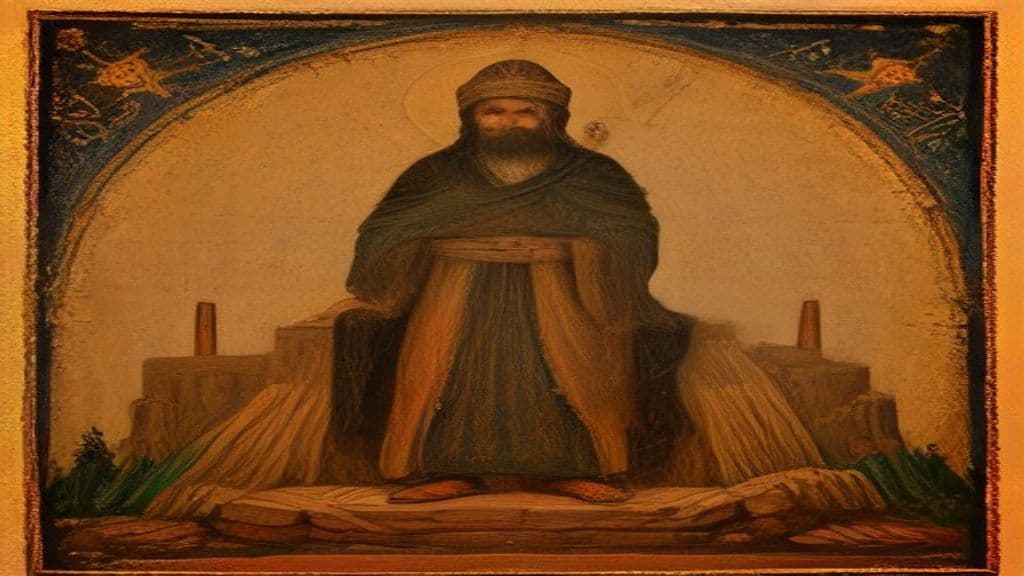
The canonical text gives no physical description. Genesis reports only his actions (bringing out bread and wine, blessing Abram) and his titles ('king of Salem' and 'priest of the Most High'). Later traditions mentioned in the sources discuss his identity and significance (for example, some rabbinic texts that identify him with ancestral figures or read him typologically), but the provided materials do not supply any reliable physical attributes.
No supernatural powers are ascribed in the supplied sources; Melchizedek's capacities are cultic and social: he functions as a priest (offers blessing, presents bread and wine) and as a local king. In later Christian reading (Epistle to the Hebrews) he becomes a typological model for an eternal priesthood ('in the order of Melchizedek'), and in Jewish and antiquity sources the episode is used to discuss precedence in tithe and priestly authority. The Genesis narrative also records a tithe episode whose grammatical ambiguity has led many interpreters to read Abraham as giving a tithe to Melchizedek, an interpretation appealed to in later theological arguments about priestly legitimacy.
Community Record
- [1]Melchizedek — Wikipedia. Wikipedia contributors, 'Melchizedek,' Wikipedia, The Free Encyclopedia.wiki
- [2]Melchizedek — Wikidata. Wikidata entry Q219395 for Melchizedek.wiki
- [3]Statutes at Bey (archive item). Archive item referenced in source list (STATUTES AT BEY).other
- [4]Patmos Christians (Vance Havner) (archive item). Archive item referenced in source list (Patmos Christians, Vance Havner).other