
The name Merops occurs repeatedly in Greek mythic tradition as the name of several distinct mortal personages rather than a single biographical individual. In one tradition Merops appears as a king associated with the island of Kos (sources note a Merops the king of Kos). In another set of accounts a Merops is cited in familial relation to the Phaethon narrative—one recension identifies Merops as the adoptive father of Phaethon, husband of the Oceanid Clymene. Other scattered references place figures named Merops in the wider Aegean genealogical and heroic milieu (for example in contexts that mention Paros and Minos-related characters). The attestations are fragmentary and do not combine into a single unified life story; rather, Merops functions as a recurring personal name that anchors local rulership, fosterage, and genealogical ties within Greek mythography.
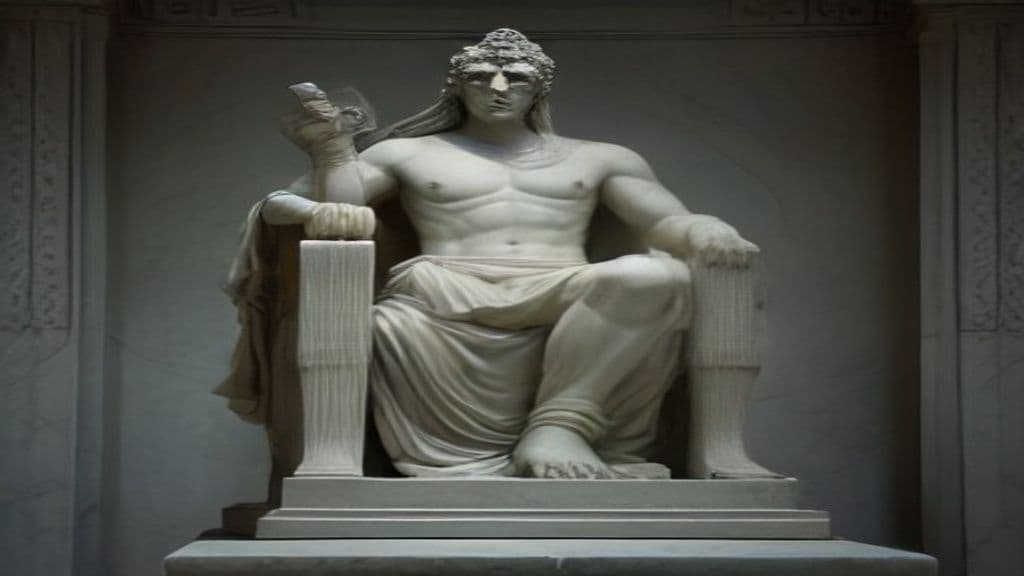
In the mythic sources Merops is represented as a human figure—typically a king, husband, or foster-father—without a standardized non-human or monstrous form. Literary mentions treat Merops as a mortal protagonist in royal or familial roles; there is also an iconographic echo in a Pompeian wall scene discussed in scholarship that references Merops and Clymene in a domestic/mythological depiction. Modern and scientific uses of the word (for example the bird genus Merops, the bee-eaters) are lexical homonyms and are not descriptions of the mythic characters in the ancient sources.
The provided sources do not attribute supernatural powers to bearers of the name Merops. Their roles in the narratives are social and familial—kingship (e.g., Merops of Kos), fosterage or adoption (a Merops identified as adoptive father of Phaethon), and participation in genealogical networks that connect mortals to divine or semi-divine figures. One scholarly commentary on a Pompeian depiction notes exploitation of a semi-divine status in a scene mentioning Merops and Clymene, but the primary attestations in the excerpts record Merops as mortal rulers or paternal figures rather than as beings with catalogued magical abilities or cosmic functions.
Community Record
- [1]Merops (Wikipedia). Wikipedia, "Merops (mythology)"wiki
- [2]Merops (general Wikipedia). Wikipedia, "Merops"wiki
- [3]Antoninus Liberalis, The Metamorphoses (index mention) / Apollonius Rhodius, Argonautica (index mention). Referenced in research notes: Antoninus Liberalis. The Metamorphoses; Apollonius Rhodius. Argonautica (index-like citation in source list)literary
- [4]Phaethon narrative reference (Merops as adoptive father). Research notes source 12: "Merops has adopted Phaethon, for Phaethon is the son of Merops wife, the Oceanid Clymene..."literary
- [5]Titanis (mythology) / Kos king identification. Research notes source 6: discussion that Merops might have been identical with Merops the king of Koswiki
- [6]Pompeii, Domus of Apollo — wall scene commentary referencing Merops and Clymene. Research notes source 14: commentary noting a Pompeian depiction related to Merops and Clymene and mention of semi-divine status exploitationother
- [7]Merops as bird genus and modern uses (contextual note). Research notes: modern taxonomic use of Merops for bee-eater birds (Meropidae) cited to distinguish lexical homonymyother