In the Eleusinian episode of the Demeter–Persephone cycle, Demeter wanders in search of Persephone and comes to the house of Celeus of Eleusis disguised as a woman (in some accounts named Doso). Metanira, Celeus’s wife and queen, receives the disguised goddess into the household. Demeter nurses one of their children by night and, according to several ancient and later retellings, attempts a private ritual by placing the child by or in the hearth fire to purge mortality and confer immortality. A household discovery—variously ascribed to Metanira or to other housewomen such as Praxithea—results in a cry of alarm that interrupts the rite. Demeter abandons the burning ritual; in many versions she then reveals herself and, rather than making the child immortal, instructs Triptolemus (or otherwise bestows agricultural gifts) and teaches the secrets of grain and cultivation to Eleusis, producing an etiological link between the interrupted attempt at personal immortality and the cultural gift of agriculture.
Classical sources give no distinctive physical description of Metanira beyond her social identity as queen of Eleusis and mother in Celeus’s household. She is depicted in narrative contexts as the supervising maternal figure who enters the private chamber and cries out. Later dramatic retellings and modern dramatizations stage her in mourning robes or seated with daughters in scenes of lamentation, but these are theatrical renderings rather than features recorded in the ancient mythic sources.
Metanira is a mortal queen and mother; she has no supernatural powers recorded in the sources. Her narrated role is behavioral and social: her entrance into the private scene and her audible reaction (a scream or cry) are the decisive human actions that interrupt Demeter’s secret transformative ritual. Some versions portray her reaction as ordinary maternal fright or curiosity; other commentators describe it as foolish meddling. In a related variant of the tradition, a child of the household who mocked or offended Demeter (named variously Abas or Ascalabus in different accounts) is transformed into a lizard—attribution and details vary among sources.
Weaknesses
- conditionmortal human (no supernatural agency)
Wards
None recorded.
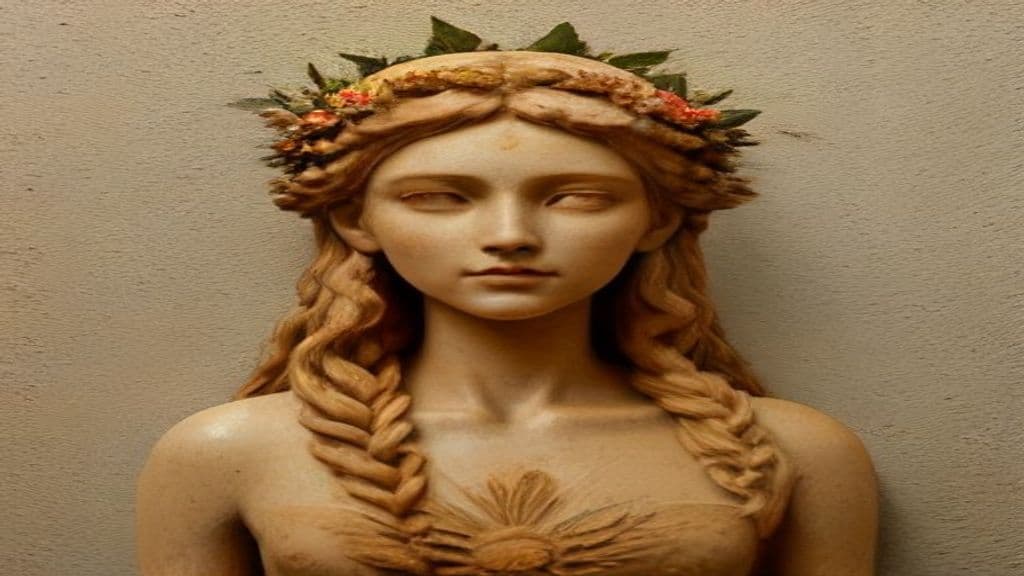
Demeter
Demeter is an Olympian goddess of ancient Greek religion who presides over agriculture, grain, and the fertility of the earth. She functions as a divine mother-figure and guardian of social customs, sacred law, and the cycle of life and death, and is central to the Eleusinian Mysteries alongside her daughter Persephone.
Celeus
Celeus (Greek Κελεός, Keleós) is a mythic king of Eleusis in Attica who, as a hospitable mortal, becomes an early recipient of Demeter's favors and teachings; his household events (the attempted immortalization of his son Demophon and the instruction of Triptolemus in agriculture) are foundational to the Eleusinian origin-myths.
Community Record
- [1]Metanira — Wikipedia. Wikipedia, entry 'Metanira'wiki
- [2]Metanira — GreekMythology.com. GreekMythology.com, entry 'Metanira'literary
- [3]The Sacred Children of Eleusis — Plays by Edouard Schuré. Rudolf Steiner Archive, 'The Sacred Children of Eleusis' (dramatization referencing the Eleusinian episode)literary
- [4]Archive: LP0026 The Gigantomachy (summary including Apollodorus retelling). Archive item summarizing Apollodorus-style retelling of the Demeter/Metanira episodeother
- [5]elefsina — Eleusinian research page. Elefsina research page summarizing the Eleusinian traditions and the Metanira episodeother
- [6]Tanglewood Tales — Chapter 6 (retelling). Tanglewood Tales, chapter retelling of the Demeter/Metanira storyliterary
- [7]The Tragic Myth of Persephone’s Abduction by Hades — TheCollector. TheCollector, article discussing variants of the Persephone abduction and Demeter's wandering including the Eleusis episodeother