
Accounts vary in parentage: some traditions make Molus the illegitimate son of Deucalion (who himself is a son of Minos), while other accounts list him directly as a son of Minos. He is named in the genealogies as father—by Melphis or Euippe—of Meriones, the Cretan charioteer/warrior who joins Idomeneus at the expedition against Troy. These variant filiations are preserved in the classical genealogical summaries cited by later compilers and epitomists.
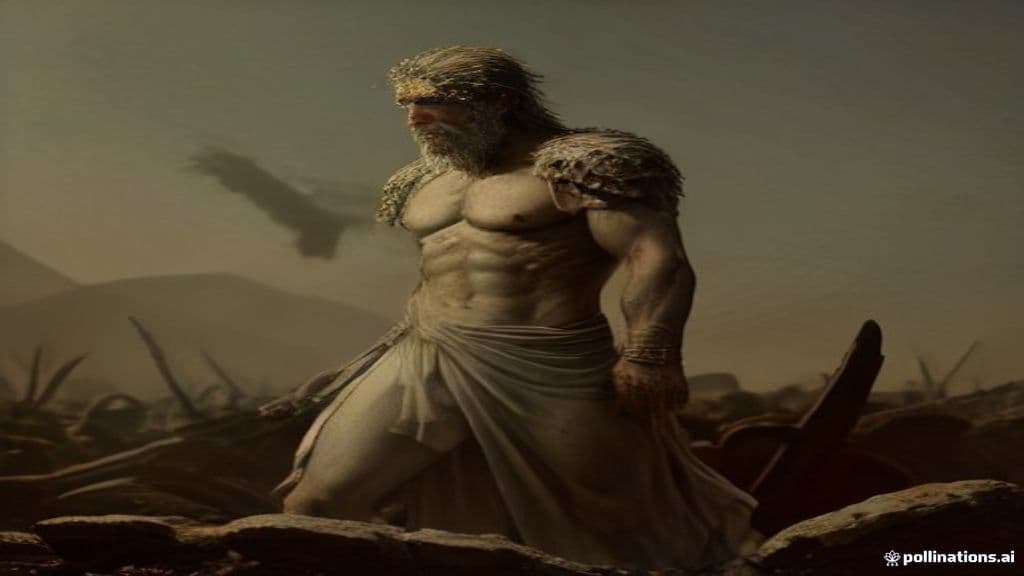
Narrative details about Molus's bodily appearance are minimal. The sole distinctive physical motif preserved in the sources is a ritual or festival image: "the image of a man without a head, who was called Molus," exhibited at a Cretan festival and tied to the account that Molus was afterwards found decapitated following an attempted violation of a nymph. Apart from being described as a mortal male of the Cretan royal house, no other iconographic or corporeal description is provided in the surviving excerpts.
Surviving sources attribute no supernatural powers or particular abilities to Molus. His primary roles in the record are genealogical—fathering Meriones and situating a Cretan heroic line—and narrative: one account reports that he attempted to violate a nymph and was later found without a head. There is no evidence in the cited material of Molus acting as a guardian, supernatural agent, or possessing magical capacities; his significance is familial and commemorative rather than functional as a powered being.
Weaknesses
- otherno weaknesses recorded in sources
Wards
- otherno wards or apotropaic practices against Molus recorded in sources
Community Record
- [1]Molus of Crete (Wikipedia entry). Wikipedia, 'Molus of Crete'wiki
- [2]LP0020 Europa (archival recording). Archive: LP0020 Europaother
- [3]LP0020 Europa - Joel's album (archival recording). Archive: LP0020 Europa - Joel's albumother
- [4]LP0021 The Cretans (archival recording). Archive: LP0021 The Cretansother